




Aug 06, 2006
iPointer
Via Textually.org
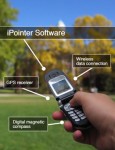
iPointer is a location-based application developed by Intelligent Spatial Technologies, which allows delivering on-demand information about the user location and surroundings.
From the company website:
"When users wish to identify a landmark, they point the hand-held device and press a button. The iPointer device receives coordinate signals from GPS satellites and orientation information from the digital magnetic compass to identify the user's location and device's pointing angle. These coordinates are then sent over the wireless network to the database. iST's geospatial database's selection algorithms identify the selected landmark and sends information back over the wireless network to be displayed in text, visuals and audio on the user's device"
20:28 Posted in Pervasive computing, Wearable & mobile | Permalink | Comments (0) | Tags: pervasive computing
Institute for Ethics and Emerging Technologies

The Institute for Ethics and Emerging Technologies is an organization that fosters "the ethical use of technology to expand human capacities"
From the Institute website:
Futurists have been examining the potential impacts of emerging technologies for decades, creating scenarios that inform anticipatory democratic debate and prospective social policy-making. In the program on the Consequences and Ethics of Emerging Technologies the IEET seeks to catalog the emerging technologies we believe will extend human capacities and to create a database of their projected consequences. This database will then be the basis for proposed policies to ensure the fullest realization of human potential.
The IEET portal has interesting stuff, including full-text articles, podcasts and reports covering a range of different topics (i.e. health, life, emerging technologies).
There is also a blog (RSS)
12:00 Posted in Research institutions & funding opportunities | Permalink | Comments (0) | Tags: research organizations
The ASSC William James Prize for Contributions to the Study of Consciousness
11:15 Posted in Research institutions & funding opportunities | Permalink | Comments (0) | Tags: funding opportunities and awards
Aug 05, 2006
e-CIRCUS

The project e-Circus (Education through Characters with emotional Intelligence and Role-playing Capabilities that Understand Social interaction) aims to develop synthetic characters that interact with pupils in a virtual school, to support social and emotional learning in the real classroom. This will be achieved through virtual role-play with synthetic characters that establish credible and empathic relations with the learners.
The project consortium, which is funded under the EU 6th Framework Program, includes researchers from computer science, education and psychology from the UK, Portugal, Italy and Germany. Teachers and pupils will be included in the development of the software as well as a framework for using it in the classroom context. The e-Circus software will be tested in schools in the UK and Germany in 2007, evaluating not only the acceptance of the application among teachers and pupils but also whether the approach, as an innovative part of the curriculum, actually helps to reduce bullying in schools.
11:48 Posted in AI & robotics, Emotional computing | Permalink | Comments (0) | Tags: artificial intelligence
Aug 04, 2006
The state of the art in Assisted Cognition
The article entitled "Assistive technology for cognitive rehabilitation: State of the art", by LoPresti et al. provides a comprehensive review of Assisted Cognition, a research field that aims to develop and assess technological tools for individuals with either acquired impairments or developmental disorders.
The full-text of this article is available here
Authors: Edmund Frank LoPresti; Alex Mihailidis; Ned Kirsch
Neuropsychological Rehabilitation, Volume 14, Numbers 1-2/March-May 2004, pp. 5-39(35)
Abstract: For close to 20 years, clinicians and researchers have been developing and assessing technological interventions for individuals with either acquired impairments or developmental disorders. This paper offers a comprehensive review of literature in that field, which we refer to collectively as assistive technology for cognition (ATC). ATC interventions address a range of functional activities requiring cognitive skills as diverse as complex attention, executive reasoning, prospective memory, self-monitoring for either the enhancement or inhibition of specific behaviours and sequential processing. ATC interventions have also been developed to address the needs of individuals with information processing impairments that may affect visual, auditory and language ability, or the understanding of social cues. The literature reviewed indicates that ATC interventions can increase the efficiency of traditional rehabilitation practices by enhancing a person's ability to engage in therapeutic tasks independently and by broadening the range of contexts in which those tasks can be exercised. More importantly, for many types of impairments, ATC interventions represent entirely new methods of treatment that can reinforce a person's residual intrinsic abilities, provide alternative means by which activities can be completed or provide extrinsic supports so that functional activities can be performed that might otherwise not be possible. Although the major focus of research in this field will continue to be the development of new ATC interventions, over the coming years it will also be critical for researchers, clinicians, and developers to examine the multi-system factors that affect usability over time, generalisability across home and community settings, and the impact of sustained, patterned technological interventions on recovery of function.
19:05 Posted in Brain training & cognitive enhancement | Permalink | Comments (0) | Tags: assisted cognition
Call for papers: Pervasive Computing in Healthcare
From the IEEE Pervasive Computing Journal website
Author guidelines: www.computer.org/pervasive/author.htm
Submission address: http://cs-ieee.manuscriptcentral.com
WIP Deadline: See below
Publication date: January 2007
IEEE Pervasive Computing invites articles about the use of pervasive computing technology in healthcare applications. We welcome papers that focus on novel applications of embedded sensor and actuators as well as user interfaces for use by caregivers and/or patients. We also encourage surveys of available technologies, and reporting on user experiences. Example topics include:
- Sensors and mobile devices for continuous patient monitoring
- Actuators and prompters for rehabilitation and behavior modification
- Mobile and wearable technologies for next generation drug trials
- Intelligent prosthetics
- Medical data-mining from health records
- Privacy architectures for medical records
- Applications for first responders including paramedics and emergency rooms
- Hospital work-flow management
- Intelligent implantable devices for applications in hearing, pain management, etc.
- Devices to monitor dietary intake and/or caloric expenditure
- Technologies for collaborative and/or competitive exercise support groups
- Issues in healthcare technology standards, interoperability, security, usability, cost, etc
Submissions should be 4,000 to 6,000 words long and should follow the magazine's guidelines on style and presentation. All submissions will be peer-reviewed in accordance with normal practice for scientific publications. Submissions should be received by 5 September 2006 to receive full consideration.
In addition to full-length submissions, we also invite work-in-progress submissions of 250 words or less (submit to mmraz@computer.org) These will not be peer-reviewed but will be reviewed by the Department Editor, Anthony Joseph, and, if accepted, edited by the staff into a feature for the issue. The deadline for work-in-progress submissions is 1 November 2006.
Walter Menning, Mayo Clinic
18:00 Posted in Call for papers, Pervasive computing | Permalink | Comments (0) | Tags: pervasive computing
Using Simulation and Virtual Reality Technology to Assess Continuing Nurse Competency
Education and Practice Collaboration: Using Simulation and Virtual Reality Technology to Assess Continuing Nurse Competency in the Long-Term Acute Care Setting.
J Nurses Staff Dev. 2006 July/August;22(4):163-169
Authors: Landry M, Oberleitner MG, Landry H, Borazjani JG
Assessment of continuing competence of staff is a challenge for many healthcare organizations. There is no clear consensus as to what constitutes continuing competence or how to measure that competence. Methods for assessing continued competence of nurses are varied. A novel method, simulation and virtual reality technology, was used to assess the competency of nurses employed in long-term acute care hospitals in Louisiana. This article will describe the project which was the result of a collaborative effort between a large healthcare organization and a school of nursing.
17:35 Posted in Virtual worlds | Permalink | Comments (0) | Tags: virtual reality
Tablescape Plus: Upstanding Tiny Displays on Tabletop Displays
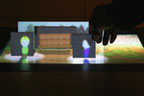
Placing physical objects on a tabletop display is common for intuitive tangible input. The overall goal of our project is to increase the possibility of the interactive physical objects. By utilizing the tabletop objects as projection screens as well as input equipment, we can change the appearance and role of each object easily. To achieve this goal, we propose a novel tablescape display system, "Tabletop Plus." Tabletop Plus can project separate images on the tabletop horizontal screen and on vertically placed objects simlutaneously. No special electronic devices are installed on these objects. Instead, we attached a paper marker underneath these objests for vision-based recogniton. Projected images change according to the angle, position and ID of each placed object. In addition, the displayed images are not occluded by users' hands since all equipment is installed inside the table.
Example application :: Tabletop Theater (pictured above): When you put a tiny display on a tabletop miniature park, an animated character appears and moves according to the position and direction of it. In addition, the user can change the actions of the characters by their positional relationships.
17:21 Posted in Future interfaces | Permalink | Comments (0) | Tags: future interfaces
Artificial feedback for remotely supervised training of motor skills
Artificial feedback for remotely supervised training of motor skills.
J Telemed Telecare. 2006;12 Suppl 1:50-2
Authors: van Dijk H, Hermens HJ
Electromyographic (EMG) biofeedback can be used to train motor functions at a distance, which makes therapy at home a possibility. To enable patients to train properly without the presence of a therapist, artificial feedback is considered essential. We studied the combined effect of age and timing of artificial feedback on training muscle relaxation in 32 healthy subjects (younger: 20-35 years; older: 55-70 years). All subjects improved their performance significantly (F = 6.1, P<0.001). The effect of different timing of feedback (feedback provided during or after performance) was similar in young and older adults. However, this conclusion should be interpreted with caution owing to the small sample size. It can be argued that the artificial feedback used was too complicated for older adults to interpret. When designing remotely supervised treatment programmes, one should consider carefully the way that artificial feedback is being applied as it may enable (elderly) subjects to train without the presence of a therapist.
17:14 Posted in Biofeedback & neurofeedback | Permalink | Comments (0) | Tags: biofeedback, telemedicine
Whole-brain connectivity diagrams
Via BrainTechSci
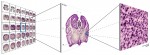
In a previous post I covered BrainMaps, the interactive zoomable high-resolution diagram for whole-brain connectivity. Now the project provides a powerful new feature, the interactive visualization of brain connectivity in 3D.
From the download page:
Welcome to nodes3D, a 3D graph visualization program written by Issac Trotts in consultation with Shawn Mikula, in the labs of Edward G. Jones. On startup, nodes3d will download a graph of gross neuroanatomical connectivity from the MySQL database at brainmaps.org. Future versions will probably support loading of graphs from files or other databases
12:50 Posted in Information visualization, Research tools | Permalink | Comments (0) | Tags: neurotechnology
TransVision06

The TransVision 2006 annual conference of the World Transhumanist Association, Helsinki 17-19 August 2006, organized by the WTA and the Finnish Transhumanist Association, will be open to remote visitors in the virtual reality world of Second Life.
TransVision06, August 17-19: University of Helsinki, Finland, Europe
This year the theme of the conference will be Emerging Technologies of Human Enhancement. We'll be looking at recent and ongoing technological developments and discussing associated ethical and philosophical questions.
We will hold a mixed reality event between the Helsinki conference hall and Second Life:
The Second Life event will take place in the uvvy island in SL. To attend, use the Second Life map in the client, look for region uvvy and teleport.
The real time video stream from Helsinki will be displayed in SL.
Some presentations will also be displayed in SL in Power Point -like format.
Some PCs running the SL client will be available in the conference hall in Helsinki for SL users (at least 3 plus myself (gp)).
Some SL users will be simultaneously present in both worlds who can relay questions from the remote SL audience to speakers.
The SL event will be projected on a screen in Helsinki.
There will be a single text chat space for Second Life users and IRC chat users. So those whose computers are too slow or for some other reason don't want to use Second Life can use a combination of IRC and the video feed to interact with the conference participants in both Helsinki and Second Life.
See also:
http://community.livejournal.com/transvision06/
http://community.livejournal.com/transvision06/1346.html
12:35 Posted in Brain training & cognitive enhancement, Positive Technology events | Permalink | Comments (0) | Tags: Transhumanism
Aug 03, 2006
Virtual bots teach each other
From New Scientist Tech
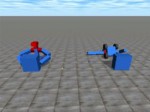
"Robots that teach one another new words through interaction with their surroundings have been demonstrated by UK researchers. The robots, created by Angelo Cangelosi and colleagues at Plymouth University, UK, currently exist only as computer simulations. But the researchers say their novel method of communication could someday help real-life robots cooperate when faced with a new challenge. They could also help linguists understand how human languages develop, they say..."
Continue to read the full article on New Scientist
Watch the video
21:11 Posted in AI & robotics, Virtual worlds | Permalink | Comments (0) | Tags: artificial intelligence
empathic painting
Via New Scientist
A team of computer scientists (Maria Shugrina and Margrit Betke from Boston University, US, and John Collomosse from Bath University, UK) have created a video display system (the "Empatic Painting") that tracks the expressions of onlookers and metamorphoses to match their emotions:
"For example, if the viewer looks angry it will apply a red hue and blurring. If, on the other hand, they have a cheerful expression, it will introduce increase the brightness and colour of the image." (New Scientist )

See a video of the empathic painting (3.4MG .avi, required codec).
20:50 Posted in Cyberart, Emotional computing | Permalink | Comments (0) | Tags: emotional computing
Forehead Retina System
Va Technovelgy
Researchers at at the University of Tokyo, in joint collaboration with EyePlusPlus, Inc., have developed a system that uses tactile sensations in the forehead as a "substitute retina" to enable visually impaired people to "see" the outlines of objects.
The Forhead Retina System (FRS) uses a special headband to selectively stimulate different mechanoreceptors in forehead skin to allow visually impaired people to perceive a picture of what lies in front of them.

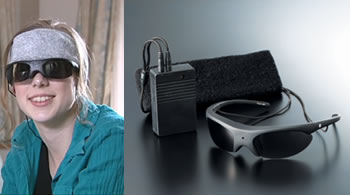
The system has been presented at the Emerging Technology session of Siggraph 2006. From the conference website:
Although electrical stimulation has a long scientific history, it has not been used for practical purposes because stable stimulation was difficult to achieve, and mechanical stimulation provided much better spatial resolution. This project shows that stable control of electrical stimulation is possible by using very short pulses, and anodic stimulation can provide spatial resolution equal to mechanical stimulation. This result was presented at SIGGRAPH 2003 as SmartTouch, a visual-to-tactile conversion system for skin on the finger using electrical stimulation. Because the Forehead Retina System shows that stable stimulation on the "forehead skin" is also quite possible, it leads to a new application of electrical stimulation.
Goals
According to a 2003 World Health Organization report, up to 45 million people are totally blind, while 135 million live with low vision. However, there is no standard visual substitution system that can be conveniently used in daily life. The goal of this project is to provide a cheap, lightweight, yet fully functional system that provides rich, dynamic 2D information to the blind.
Innovations
The big difference between finger skin and forehead skin is the thickness. While finger skin has a thick horny layer of more than 0.7 mm, the forehead skin is much thinner (less than 0.02mm). Therefore, if the electrode directly contacts the skin, concentrated electrical potential causes unnecessary nerve stimulation and severe pain. The Forehead Retina System uses an ionic gel sheet with the same thickness and electrical impedance as the horny layer of finger skin. When the gel sheet is placed between the electrode and the forehead, stable sensation is assured.
Compared to current portable electronic devices, most of the proposed "portable" welfare devices are not portable in reality. They are bulky and heavy, and they have a limited operation time. By using electrical stimulation, the Forehead Retina System partially solves these problems. Nevertheless, driving 512 electrodes with more than 300 volts is quite a difficult task, and it normally requires a large circuit space. The system uses a high-voltage switching integrated circuit, which is normally used to drive micro-machines such as digital micro-mirror devices. With fast switching, current pulses are allocated to appropriate electrodes. This approach enables a very large volune of stimulation and system portability at the same time.
Vision
This project demonstrates only the static capabilities of the display. Other topics pertaining to the display include tactile recognition using head motion (active touch), gray-scale expression using frequency fluctuation, and change in sensation after long-time use due to sweat. These will be the subjects of future studies.
The current system uses only basic image processing to convert the visual image to tactile sensation. Further image processing, including motion analysis, pattern and color recognition, and depth perception is likely to become necessary in the near future.
It is important to note that although many useful algorithms have been proposed in the field of computer vision, they can not always be used unconditionally. The processing must be performed in real time, and the system must be small and efficient for portability. Therefore, rather than incorporating elegant but expensive algorithms, the combination of bare minimum image processing and training is practical. The system is now being tested with the visually impaired to determine the optimum balance that good human interfaces have always achieved.
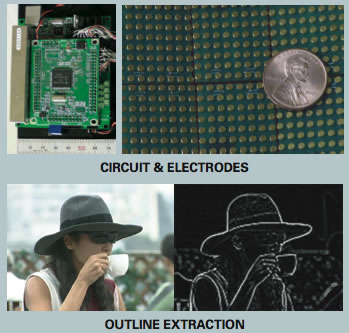
18:14 Posted in Brain training & cognitive enhancement | Permalink | Comments (0)
Sixth International Conference on Epigenetic Robotics
Via Human Technology
Sixth International Conference on Epigenetic Robotics: Modeling Cognitive Development in Robotic Systems
Dates: 20-22 September 2006
Location: Hopital de la Salpêtrière, Paris, France

From the conference website:
In the past 5 years, the Epigenetic Robotics annual workshop has established itself as a unique place where original research combining developmental sciences, neuroscience, biology, and cognitive robotics and artificial intelligence is being presented.
Epigenetic systems, either natural or artificial, share a prolonged developmental process through which varied and complex cognitive and perceptual structures emerge as a result of the interaction of an embodied system with a physical and social environment.
Epigenetic robotics includes the two-fold goal of understanding biological systems by the interdisciplinary integration between social and engineering sciences and, simultaneously, that of enabling robots and artificial systems to develop skills for any particular environment instead of programming them for solving particular goals for the environment in which they happen to reside.
Psychological theory and empirical evidence is being used to inform epigenetic robotic models, and these models should be used as theoretical tools to make experimental predictions in developmental psychology.
17:55 Posted in AI & robotics, Positive Technology events | Permalink | Comments (0)
Aug 02, 2006
3D blog
Thanks to Giuseppe Riva (reporting from Siggraph 2006)
12:50 Posted in Future interfaces, Telepresence & virtual presence, Virtual worlds | Permalink | Comments (0)
The Huggable
Via Siggraph2006 Emerging Technology website

The Huggable is a robotic pet developed by MIT researchers for therapy applications in children's hospitals and nursing homes, where pets are not always available. The robotic teddy has full-body sensate skin and smooth, quiet voice coil actuators that is able to relate to people through touch. Further features include "temperature, electric field, and force sensors which it uses to sense the interactions that people have with it. This information is then processed for its affective content, such as, for example, whether the Huggable is being petted, tickled, or patted; the bear then responds appropriately".
The Huggable has been unveiled at the Siggraph2006 conference in Boston. From the conference website:
Enhanced Life
Over the past few years, the Robotic Life Group at the MIT Media Lab has been developing "sensitive skin" and novel actuator technologies in addition to our artificial-intelligence research. The Huggable combines these technologies in a portable robotic platform that is specifically designed to leave the lab and move to healthcare applications.
Goals
The ultimate goal of this project is to evaluate the Huggable's usefulness as a therapy for those who have limited or no access to companion-animal therapy. In collaboration with nurses, doctors, and staff, the technology will soon be applied in pilot studies at hospitals and nursing homes. By combining Huggable's data-collection capabilities with its sensing and behavior, it may be possible to determine early onset of a person's behavior change or detect the onset of depression. The Huggable may also improve day-to-day life for those who may spend many hours in a nursing home alone staring out a window, and, like companion-animal therapy, it could increase their interaction with other people in the facility.
Innovations
The core technical innovation is the "sensitive skin" technology, which consists of temperature, electric-field, and force sensors all over the surface of the robot. Unlike other robotic applications where the sense of touch is concerned with manipulation or obstacle avoidance, the sense of touch in the Huggable is used to determine the affective content of the tactile interaction. The Huggable's algorithms can distinguish petting, tickling, scratching, slapping, and poking, among other types of tactile interactions. By combining the sense of touch with other sensors, the Huggable detects where a person is in relation to itself and responds with relational touch behaviors such as nuzzling.
Most robotic companions use geared DC motors, which are noisy and easily damaged. The Huggable uses custom voice-coil actuators, which provide soft, quiet, and smooth motion. Most importantly, if the Huggable encounters a person when it tries to move, there is no risk of injury to the person.
Another core technical innovation is the Huggable' combination of 802.11g networking with a robotic companion. This allows the Huggable to be much more than a fun, interactive robot. It can send live video and data about the person's interactions to the nursing staff. In this mode, the Huggable functions as a team member working with the nursing home or hospital staff and the patient or resident to promote the Huggable owner's overall health.
Vision
As poorly staffed nursing homes and hospitals become larger and more overcrowded, new methods must be invented to improve the daily lives of patients or residents. The Huggable is one of these technological innovations. Its ability to gather information and share it with the nursing staff can detect problems and report emergencies. The information can also be stored for later analysis by, for example, researchers who are studying pet therapy.
12:05 Posted in AI & robotics, Emotional computing, Serious games | Permalink | Comments (0) | Tags: cybertherapy, robotics, artificial intelligence
Photos transformed into 3D model
With Photosynth you can:
- Walk or fly through a scene to see photos from any angle.
- Seamlessly zoom in or out of a photograph whether it’s megapixels or gigapixels in size.
- See where pictures were taken in relation to one another.
- Find similar photos to the one you’re currently viewing.
- Explore a custom tour.
- Send a collection to a friend.

11:55 Posted in Virtual worlds | Permalink | Comments (0)
Home-based sensors could detect early signs of dementia
Via Medgadget
According to a study conducted by Oregon Health & Science University researchers, continuous, unobtrusive monitoring of in-home activity may be a reliable way of assessing changes in motor behaviors that may occur along with changes in memory. The study was presented last week at the 10th International Conference on Alzheimer's Disease and Related Disorders in Madrid.
From the university's press release:
"To see a trend over time, you need multiple measures - good days and bad days - and it often takes years to see that trend in a clinic setting," said Tamara Hayes, Ph.D., assistant professor of biomedical engineering at OHSU's OGI School of Science & Engineering, and the study's lead author. She noted that most clinic visits by elders are spaced over months or even years, and their memory and motor skills performances are evaluated in a small number of tests completed in a limited amount of time.
"In contrast, we're looking continuously at elders' activity in their own homes," Hayes said. "Since we're measuring a person's activity many times over a short period, we can understand their normal variability and identify trends. If there's a change over a period, you can see it quickly. "
Mild cognitive impairment is a known risk factor for dementia, a neurological disorder most commonly caused by Alzheimer's disease. Changes in clinical measures of activity, such as walking and finger-tapping speeds, have been shown to occur at about the same time as memory changes leading to dementia. By detecting subtle activity changes over time in the natural setting of an elder's home, researchers hope to more effectively identify when elders are starting to have trouble.
11:40 Posted in Cybertherapy, Persuasive technology, Pervasive computing | Permalink | Comments (0)
Animation can be outlet for victimized children, a tool for research
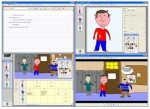
Animation is a proven vehicle for biting comedy, a la "The Simpsons" and "South Park." But some of the same qualities that make it work for comedy make it valuable, too, as an outlet for victimized children and for a new research method that tests the empathy of teachers who may deal with them, says Sharon Tettegah, a professor of curriculum and instruction at the University of Illinois at Urbana-Champaign.
Tettegah believes so strongly in the value of animation – specifically “animated narrative vignette simulations” – that she sought out a computer science professor at Illinois, Brian Bailey, to help develop her concept for a child-friendly program for producing them.
The program that resulted, called Clover, gives children, as well as adults, a tool for making and sharing their own vignettes about their personal and sometimes painful stories.
According to Tettegah, the program is the only one she is aware of that allows the user to write the narrative, script the dialogue, storyboard the graphics and add voice and animation, all within one application. Those four major aspects of producing a vignette gave rise to the name “Clover,” the plant considered to bring good luck in its four-leaf form.
A paper about Clover, written by Bailey, Tettegah and graduate student Terry Bradley, has been published in the July issue of the journal Interacting With Computers.
In other research, Tettegah has used animations as a tool for gauging the empathy of teachers and others who might deal with children and their stories of victimization. One study with college education majors, or teachers-in-training, showed only one in 10 expressing a high degree of empathy for the victim, she said.
A paper about that study has been accepted by the journal Contemporary Educational Psychology (CEP), with publication slated for later this year. The co-author of the study is Carolyn Anderson, a professor of educational psychology at Illinois.
11:30 Posted in Cybertherapy, Serious games | Permalink | Comments (0) | Tags: serious gaming