




Sep 17, 2005
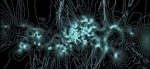
View of cell-phone activity in Graz
via Future Feeder
Digital Derive is a platform developed senseable city lab that allows to visualize the volume & geographic source of cell phone usage in Graz, showing a visual conceptual layer in the use & experience of the city.
 From the lab web site:
Digital Derive harnesses the potential of mobile phones as an affordable, ready-made and ubiquitous medium that allows the city to be sensed and displayed in real-time as a complex, pulsating entity. Because it is possible to simultaneously 'ping' the cell phones of thousands of users - thereby establishing their precise location in space at a given moment in time - these devices can be used as a highly dynamic tracking tool that describes how the city is used and transformed by its citizens. The polis is thus interpreted as a shifting entity formed by webs of human interactions in space-time, rather than simply as a fixed, physical environment. Digital Derive provides a platform upon which the contemporary city can register the flux and traces its self-constructing and open-ended nature. Previous initiatives, notably Laura Kurgan's 'You Are Here: Museu' (1996) and the Waag Society's 'Amsterdam Real-Time' (2002) initiated this process by exploring the qualities and potential of GPS technology. Digital Derive builds on an expands these efforts by using cell phone technology, for the first time, to radically increase the interactive capacity and number of users involved in the mapping of the city. Digital Derive (re)presents the city displayed simultaneously in the Kunsthaus Graz and in a publicly accessible website.
19:55 Posted in Information visualization | Permalink | Comments (0) | Tags: Positive Technology, complex networks
Sep 16, 2005
Non-invasive neural interface technology
Via Engadget (thanks to Giuseppe Riva)
NeuroSky Inc. claims to have developed a non-invasive neural sensor and signal processing technology that converts brainwaves and eye movements into electronic signals to control a range of electronic devices.
According to Neurosky, neural interface technology promises to simplify cell phone-based applications that today require error-prone human input, as well as revolutionize applications from gaming to medical diagnostics and therapy.
 EETimes reports that five companies, including a Bluetooth headset provider, game console maker and trucking company, have signed up to market end-user products containing NeuroSky's chips.
From the company website:
NeuroSky, a fabless semiconductor/module company, has developed a non-invasive neural sensor and signal processing technology that converts brainwaves and eye movements into useful electronic signals to communicate with a wide range of electronic devices, consoles, and computers. While brainwaves have been used as a form of diagnostics and therapy in neurosciences for years, the related technology has never reached a large audience due to price/size constraints, inconvenient physical limitations, and/or invasive surgical procedures. NeuroSky draws from this research and adapts it to commercialize neural interface technologies for various attractive global markets.
More to explore
13:00 Posted in Brain-computer interface | Permalink | Comments (0) | Tags: Positive Technology, brain-computer interface
Sep 15, 2005
ICare Haptic Interface for the blind
Via the Presence-L Listserv
(from the iCare project web site)
iCare Haptic Interface will allow individuals who are blind to explore objects using their hands. Their hand movements will be captured through the Datagloves and spatial features of the object will be captured through the video cameras.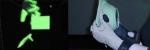 The system will find correlations between spatial features, hand movements and haptic sensations for a given object. In the test phase, when the object is detected by the camera, the system will inform the user of the presence of the object by generating characteristic haptic feedback. I Care Haptic Interface will be an interactive display where users can seek information from the system, manipulate virtual objects to actively explore them and recognize the objects.
More to explore
15:35 Posted in Future interfaces | Permalink | Comments (0) | Tags: Positive Technology, Future interfaces
Mind & Life XIII
The Mind & Life Institute presents: MIND & LIFE XIII Co-hosted by Georgetown University Medical Center and The Johns Hopkins University School of Medicine. The Dalai Lama will participate fully in all sessions.

The Science and Clinical Applications of Meditation DAR Constitution Hall, Washington DC November 8 - 10, 2005 Jointly sponsored by The Mind & Life Institute and CME-accredited by Georgetown University Hospital. The conference builds on the growing interest in meditation within modern medicine and biomedical science that has arisen over the past thirty years and further explores the emerging clinical opportunities.
Conference Sessions
1. Meditation-Based Clinical Interventions: Science, Practice, and Implementation
2. Possible Biological Substrates of Meditation
3. Clinical Research I: Meditation and Mental Health
4. Clinical Research II: Meditation and Physical Health
5. Integration & Final Reflections
Speakers
Ajahn Amaro, B.Sc. — Abhayagiri Monastery
Richard J. Davidson, Ph.D. — University of Wisconsin-Madison
Jon Kabat-Zinn, Ph.D. — U. of Mass. Medical School, Emeritus
Daniel Kahneman, Ph.D. — Princeton University
Helen S. Mayberg, M.D. — Emory University
Robert M. Sapolsky, Ph.D. — Stanford University
Zindel V. Segal, Ph.D. — University of Toronto
David S. Sheps, M.D. — University of Florida
John F. Sheridan, Ph.D. — Ohio State University
Wolf Singer, M.D., Ph.D. — Max-Planck-Institut für Hirnforschung
Ralph Snyderman, M.D. — Duke University Medical Center
Panelists
Jan Chozen Bays, M.D. — Great Vow Zen Monastery
Joan Halifax, Ph.D. — Upaya Zen Center
Father Thomas Keating, OCSO — St. Benedict's Monastery
Margaret E. Kemeny, Ph.D. — University of California-SF
Jack Kornfield, Ph.D. — Spirit Rock Meditation Center
Matthieu Ricard, Ph.D. — Shechen Monastery
Sharon Salzberg, R.N. — Insight Meditation Society
Bennett M. Shapiro, M.D. — Merck Research Laboratories, Emeritus
Esther M. Sternberg, M.D. — National Institute of Mental Health
John D. Teasdale, Ph.D. — MRC Cog. & Brain Sci. Unit, Emeritus
B. Alan Wallace, Ph.D. — Santa Barbara Institute
Mind and Life Dialogues
Mind and Life Institute XIII is the latest in a series of dialogues between scientists, the Dalai Lama, and other Buddhist contemplatives on areas of mutual interest at the intersection of western empirical science and the contemplative traditions and their associated methodologies, psychologies, and philosophies. Prior to 2003, all of these meetings have been held in private; however books describing them have been published and are widely available. Investigating the Mind 2005: The Science and Clinical Applications of Meditation is the second Mind and Life Dialogue that will be open to a large audience, consisting primarily of people working in the fields of medicine, clinical psychology, psychiatry, and neuroscience, as well as students in these fields.
14:57 Posted in Positive Technology events | Permalink | Comments (0) | Tags: Positive Technology
Sep 14, 2005
The Stress Eraser
Via Medgadget
The Stress Eraser from Helicor claims to reduce cronic stress. Designed by Frog design, Stress Eraser is a standalone device that induces relaxation through breathing exercises programmed in. 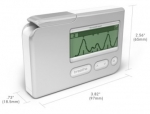
I prefer a glass of wine, but the design is nice-looking
13:25 Posted in Emotional computing | Permalink | Comments (0) | Tags: Positive Technology, Emotional technology
Sep 12, 2005
Social Networks as Health Feedback Displays
In this paper published on September/October issue of IEEE Pervasive Computing Journal Margaret E. Morris describes how social-networking and pervasive computing technologies can be used to help reduce feelings of social isolation and depression in elderly individuals. 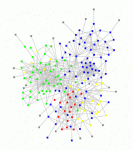 In this approach, sensor data measuring phone calls and visits are used to derive public displays of social interactions with relatives and friends, which they introduced into select elders’ homes. According to Morris and colleagues, as people see their social interactions illustrated in these feedback displays, their feeling of social isolation is reduced.
Margaret E. Morris. "Social Networks as Health Feedback Displays," IEEE Pervasive Computing Journal, vol. 9, no. 5, pp. 29-37, September/October 2005.
Abstract
Social networks have thus far served primarily as analytic tools for social scientists. Leveraging pervasive computing, this new research transforms social-network models into behavioral feedback displays. These ambient displays, which reflect data on remote and face-to-face interaction gathered by wireless sensor networks, were intended to raise awareness of social connectedness as a dynamic and controllable aspect of well-being. An interdisciplinary health technology research group at Intel recently developed and tested prototypes in the homes of older adults and their caregivers. This article reviews the psychological rationale for the project and highlights some reactions of participants to the displays.
15:20 Posted in Information visualization | Permalink | Comments (0) | Tags: Positive Technology, complex networks
Virtual goggles can help alleviate patients' anxiety during dental procedures
Via Wired
Dentists are starting to use eyeglass systems for easing patients' anxiety and pain during dental procedures. Introducing a distraction has long been known to help reduce pain for some people during surgical operations. 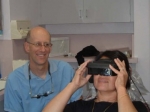 Because virtual reality is a uniquely effective new form of distraction, it makes an ideal candidate for pain control.
More to explore
Virtual reality in pain therapy
15:15 Posted in Cybertherapy | Permalink | Comments (0) | Tags: Positive Technology, virtual reality