




Sep 09, 2005
International Journal of Human-Computer Studies - Special issue on computer support for creativity
October issues (4-5, Pages 363-536) of the International Journal of Human-Computer Studies focus on the different ways that computers can be involved in creative work.
The journal covers research in computing, artificial intelligence, psychology, linguistics, communication, design, engineering, and social organization, which is relevant to the design, analysis, evaluation and application of innovative interactive systems.
11:15 Posted in Creativity and computers | Permalink | Comments (0) | Tags: Positive Technology, research tools
Sep 08, 2005
Imagery-induced Cortical Excitability Changes in Stroke
Results of this focal transcranial magnetic stimulation study recently published on Cerebral Cortex by a team of Italian neuroscientists suggest that motor imagery could induce a pronounced motor output enhancement in the hemisphere affected by stroke. These findings strongly support the use of motor imagery as a therapeutic mean in post-stroke motor rehabilitation.
Cicinelli P, Marconi B, Zaccagnini M, Pasqualetti P, Filippi MM, Rossini PM.
Cerebral Cortex, 2005 May 4 (Epub ahead of print)
Focal transcranial magnetic stimulation (TMS) was employed in a population of hemiparetic stroke patients in a post-acute stage to map out the abductor digiti minimi (ADM) muscle cortical representation of the affected (AH) and unaffected (UH) hemisphere at rest, during motor imagery and during voluntary contraction. Imagery induced an enhancement of the ADM map area and volume in both hemispheres in a way which partly corrected the abnormal asymmetry between AH and UH motor output seen in rest condition. The voluntary contraction was the task provoking maximal facilitation in the UH, whereas a similar degree of facilitation was obtained during voluntary contraction and motor imagery in the AH. We argued that motor imagery could induce a pronounced motor output enhancement in the hemisphere affected by stroke. Further, we demonstrated that imagery-induced excitability changes were specific for the muscle 'prime mover' for the imagined movement, while no differences were observed with respect to the stroke lesion locations. Present findings demonstrated that motor imagery significantly enhanced the cortical excitability of the hemisphere affected by stroke in a post-acute stage. Further studies are needed to correlate these cortical excitability changes with short-term plasticity therefore prompting motor imagery as a 'cortical reservoir' in post-stroke motor rehabilitation.
12:45 Posted in Mental practice & mental simulation | Permalink | Comments (0) | Tags: Positive Technology, mental practice, motor imagery
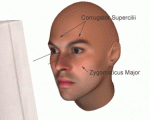
5th International Conference on Affective Computing and Intelligent Interfaces
12:15 Posted in Positive Technology events | Permalink | Comments (0) | Tags: Positive Technology
Sep 07, 2005
International Conference on Smart homes and health Telematics
The 2006 edition of ICOST - International Conference on Smart homes and health Telematics - will take place June/July 2006 in Belfast, Northern Ireland. ICOST aims at creating an active research community dedicated to explore how smart homes in particular and health telematics in general can foster independent living and an enhanced life style for elderly and disabled people.
Conference Programme:
- Conference dates: June / July 2006
- Submission of Abstracts (2-4 pages): February 15th 2006
- Notification to authors: March 15th 2006
- Camera Ready Papers: April 15th 2006
11:15 Posted in Positive Technology events | Permalink | Comments (0) | Tags: Positive Technology
The Blue Brain Project
The “Blue Brain” project, a collaboration between IBM and the Ecole Polytechnique Fédérale de Lausanne (EPFL), aims to create the first computer simulation of the circuitry in the neocortex, which is the largest and most complex part of the human brain, down to the molecular level. 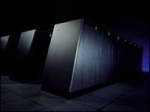
For the project, IBM will use the latest installation of IBM's BlueGene/L system running on Linux. EPFL's supercomputer uses 8.000 CPUs and has a peak speed of 22.8 teraflops (22.8 trillion calculations every second) putting it among the the world's top 15 supercomputers. The simulation code will be based on NeoCortical Simulator, an open source software running on Linux developed by Dr. Philip Goodman's.
Using the digital model generated by Blue Brain, scientists hope to shed light on complex cognitive processes such as thought, perception and memory, and to understand more about mechanisms responsible of brain malfunction.
More to explore
IBM Research Blue Gene Project Page
10:55 Posted in Research tools | Permalink | Comments (0) | Tags: Positive Technology, research tools
Sep 06, 2005
Intel Proactive Health Research
Can proactive systems that anticipate a patient's needs improve the quality of life for both the patients and their caregivers? Intel's Proactive Health Research group looks at how ubiquitous computing can be used in the health care industry and specifically how current technologies can be applied to help take care of the quickly growing population of senior citizens.
The project, launched in April 2002, consists of three phases:
- Phase One: Focus on physical and cognitive decline, especially on technologies that will help tomorrow's elderly population to age in place from wherever they and their families choose
- Phase Two: Address the needs of those with common chronic conditions like cancer and cardiovascular disease.
- Phase Three: Focus on wellness, including nutrition, physical fitness, and mental health.
More to explore
Intel's Proactive Health Research Initiative website
12:45 Posted in Brain training & cognitive enhancement | Permalink | Comments (0) | Tags: Positive Technology, Cognitive prosthetics
Sep 05, 2005
Meditation alters perceptual rivalry in Tibetan Buddhist monks
reported in the June 7 issue of Current Biology their results from a series of experiments with 76 monks in Ladakh. The goal of their research was to investigate how certain type of meditation can Researchers found that the skills developed by Tibetan Buddhist monks in their meditation practice strongly influence their experience of binocular rivalry, a perceptual phenomenon that occurs when the brain alternates between viewing different images presented to each eye. The neural processes underlying perceptual rivalry are still unclear but they are thought to be linked with brain mechanisms that regulate attention and conscious awareness.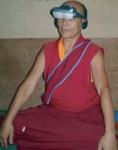
76 Tibetan Buddhist monks participated in the study. The researchers tested the experience using binocular goggles that prompt visual rivalry. The researchers found that the use of a specific meditation technique, called “one-point meditation” determined a high rate of perceptual dominance. In other words, when they used that technique the normal switching processes of binocular rivalry slowed considerably. This observation suggests that individuals who have trained themselves in meditation techniques can alter the normal fluctuations in the states of their consciousness.
More to explore
Carter, O.L., Presti, D.E., Callistemon, C., Ungerer, Y., Liu, G.B., and Pettigrew, J.D. (2005). Meditation alters perceptual rivalry in Tibetan Buddhist monks. Current Biology, Vol. 15, June 7, 2005, pp. 412-413.
16:20 Posted in Meditation & brain | Permalink | Comments (0) | Tags: Positive Technology, meditation
Laser-based tracking for HCI
Via FutureFeeder
Smart Laser Scanner is a high resolution human interfaces that tracks one’s bare fingers as it moves through space in 3Ds. Developed by Alvaro Cassinelli, Stephane Perrin & Masatoshi Ishikawa, the system uses a laser, an array of moveable micro-mirrors, a photodector (an instrument that detects light), and special software written by the team to collect finger-motion data. 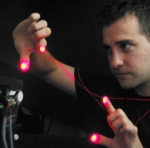 The laser sends a beam of light to the array of micro-mirrors, which redirect the laser beam to shine on the finger tip. A photodector senses light reflected off the finger and works with the software to minutely and quickly adjust the micro-mirrors so that they constantly beam the laser light onto the fingertip. According to Cassinelli and his co-workers, the system's components could be eventually integrated into portable devices.
More to explore
The Smart Laser Scanner website (demo videos available for download)
15:25 Posted in Future interfaces | Permalink | Comments (0) | Tags: Positive Technology, Future interfaces