




This special issue contains research which navigates the territory between the real and virtual world through metaphor, cognitive model, data stream and a designer’s synergy. (…) In this volume of IJDC we attempted to solicit and select papers that explore that overlapping boundary between the physical and the virtual. In particular, we looked for research that contemplated the role of the subject user versus the machine automaton. The first paper from Maher, Gero, Smith, and Gu’s utilizes agents that sense their environment and react accordingly. What is of particular interest is in how those artificial agents responded to users who inhabit their world. The Heylighen and Segers’ DYNAMO articleBermudez cyberPRINT, a dancer interacts with the virtual manifestation of his physiological data. The performance aims to closely couple the human physical condition and the virtual condition such that, eventually, the boundaries between them are blurred. The article from Fischer and Fischer appropriates a morphogenetic biologic model to digital form finding. The human, in this case acts as a director shaping and nudging largely independent virtual actors. It is in the lack of complete control that we find such systems intriguing...
Sep 24, 2005
Open-Source Context-Aware Experience Sampling Tool
Ambient Intelligence (AmI) systems can be viewed as environments in which people will increasingly live their lives. Ubiquitous AmI technologies and systems like personal digital assistants, wearable sensors, mobile phones challenge traditional usability evaluation methods, because use context can be difficult to recreate in a laboratory setting. This view suggests that the evaluation of user’s experience with AmI systems should take place in realistic contexts, such the workplace, the home, etc. Another issue has to do with the content of the evaluation. Performance-based approaches are not suitable for AmI systems, because it is difficult to specify tasks that capture the complexity of real world activities. Moreover, experience is idiosyncratic, in that it is related to the specific bio-cultural configuration of each individual, and it can undergo changes throughout individual life and daily situations.
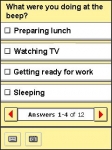 The Experience Sampling Method (ESM) offers a new perspective in the analysis of these issues. ESM is based on the online repeated assessment of individual behavior and experience in the daily context. Participants describe themselves and their environment while interacting with it. They carry with them for one week an electronic beeper and a booklet of self-report forms. Whenever they receive an acoustic signal, they are expected to fill out a form. The form contains open-ended questions about situational variables such as place, activities carried out, social context, and subjective variables such as the content of thought, perceived goals, and physical conditions. The form also contains 0-12 Likert-type scales investigating the quality of experience in its various components: affect, motivation, activation, and cognitive efficiency.
Intille and colleagues at MIT have recently developed a Personal Digital Assistant-based version of the ESM which can be used for user-interface development and assessment of ubiquitous computing applications. This approach, called Context-Aware Experience Sampling, includes the possibility to assess user’s experience not only through the standard time-based protocol, but also according to the participant’s location, by means of information provided by a GPS plug-in. Thus, researchers can design experiments collecting self-reports only when the participant is near a location of interest. Moreover, users can answers via audio recording or by taking a picture with a camera.
More to explore
S. S. Intille, J. Rondoni, C. Kukla, I. Ancona, L. Bao, A context-aware experience sampling tool, CHI Extended Abstracts 2003, 972-973.
Gaggioli, A., Optimal Experience in Ambient Intelligence (2005), in Ambient Intelligence, Riva, G., Vatalaro, F., Davide, F., Alcañiz, M. (Eds.), Amsterdam: IOS Press. PDF
10:00 Posted in Research tools | Permalink | Comments (0) | Tags: Positive Technology, research tools
Sep 23, 2005
Scientific American Mind
The new edition of Scientific American Mind

Smarter on Drugs
By Michael S. Gazzaniga
We recoil at the idea of people taking drugs to enhance their intelligence. But why?
The Movie in Your Head
By Christof Koch
Is consciousness a seamless experience or a string of fleeting images, like frames of a movie? The emerging answer will determine whether the "real world" is merely an illusion
Big Answers from Little People
By David Dobbs
In infants, Elizabeth Spelke finds fundamental insights into how men and women think
Custody Disputed
By Robert E. Emery, Randy K. Otto and William O'Donohue
The guidelines judges and psychologists use to decide child custody cases have little basis in science. The system must be rebuilt on better data
Judging Amy and Andy
By Katja Gaschler
Contrary to warnings, we can size up people pretty well based on first impressions
Hearing Colors, Tasting Shapes
By Vilayanur S. Ramachandran and Edward M. Hubbard
People with synesthesia--whose senses blend together--are providing valuable clues to understanding the organization and functions of the human brain
The Psychology of Tyranny
By S. Alexander Haslam and Stephen D. Reicher
Power corrupts, and absolute power corrupts absolutely--or does it?
Mending the Spinal Cord
By Ulrich Kraft
Researchers are finding ways to help nerves regenerate, and hope for therapies is growin
Just a Bit Different
By Ingelore Moeller
With special training early in life, children born with Down syndrome have a higher chance of becoming independent
22:39 Posted in Positive Technology events | Permalink | Comments (0) | Tags: Positive Technology
Media Fabrics
Interactive Cinema - Media Fabrics is a research initiative at MIT that focuses on a new paradigm: the "media fabric" - a semi-intelligent organism where lines of communication,  threads of meaning, chains of causality, and streams of consciousness converge and intertwine to form a rich tapestry of creative story potentials, meaningful real-time dialogues, social interactions, and personal or communal art- and story-making.
More to explore
The Media Fabrics website
13:35 Posted in Cyberart | Permalink | Comments (0) | Tags: Positive Technology, cyberart
The Virtusphere
Via Engadget
VirtuSphere is a 360-degree VR environment that allows for moving in any direction. The device consists of a large hollow sphere, placed on a special platform that allows the sphere to rotate in any direction as the user moves within it. Sensors under the sphere provide subject speed and direction to the computer running the simulation and users can interact with virtual objects using a special manipulator.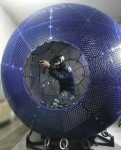
According to Virtusphere staff, the device has several potential applications in the field of training/simulations, health/rehabilitation, gaming and more. The device cost should range between $50K and $100K.
 Tags: virtual reality
 More to explore
13:30 Posted in Cybertherapy | Permalink | Comments (0) | Tags: Positive Technology, virtual reality
Sep 22, 2005
Neuroprotection in Neurological Diseases Conference
Neuroprotection in Neurological Diseases - A Promising Therapeutic Strategy or Chimera?
24-26 November 2005
Giardini Naxos (Taormina), Sicily
 Achieving proven Neuroprotection remains an unattained goal; however strategies exist which may delay disease progression in chronic conditions and which show promise of damage limitation in the acute setting. The conference will discuss best treatment practice, present new research and debate issues surrounding Neuronal Plasticity and Neuroprotection.
The draft programme is available at www.sinspn.org
13:15 Posted in Positive Technology events | Permalink | Comments (0) | Tags: Positive Technology
Sep 21, 2005
Brainmirror
Via dataisnature
BrainMirror is an interactive experience where the image of the visitors brain appears mixed with his/her mirror image, using natural head movement as an interface to explore volumetric visuals of the human brain. 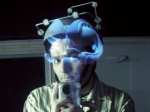 How it works? a motion tracker computer watches the audience through four fire-wire cameras equipped with infra-red filters. The helmets are mounted with super-bright infra-red LED's, each modulating it's brightness with it's own unique finger-print id-code.
Download video (32Mb Quicktime)
15:41 Posted in Cyberart | Permalink | Comments (0) | Tags: Positive Technology
Sep 19, 2005
Between the physical and the virtual
via Pasta & Vinegar
The International Journal of Design Computing has a special Issue on the Space Between the Physical and the Virtual:
18:05 Posted in Positive Technology events | Permalink | Comments (0) | Tags: Positive Technology
The added value of eHealth
The International EHTEL conference titled Improving Care for Chronic Conditions - the added value of eHealth will take place in Rome, 10-11 October 2005, jointly organised by EHTEL, the National Research Council of Italy, Institute for Biomedical Technology in co-operation with ESQH and NIZW.
Keynotes of internationally recognised experts and contributions selected by an international Program Committee will be complemented by stakeholder views and open round table panels.
15:16 Posted in Positive Technology events | Permalink | Comments (0) | Tags: Positive Technology
Collective intelligence - The Transitioner
Down through the media, overhead machineries will make us hear the voice of the multiple. Still indiscernible, soften by the hazes of the future, flooding another humanity with its murmur, we have an appointment with the surlanguage
Pierre Lévy – "Collective Intelligence"
 The Transitioner.org is wiki which brings together those who want to marry the economy and Collective Intelligence in order to build a fair world.
Discover here if you are a transitioner (I discovered I am)
More to explore
Blog of Collective Intelligence
Improving the efficiency of social ecosystems
13:05 Posted in Social Media | Permalink | Comments (0) | Tags: Positive Technology, complex networks
Video games promoted as effective health-care training
Games for Health is a project produced by Serious Games Initiative to promote best practices, community building, and research into how cutting-edge game design and development methodologies can aid in the creation of health tools that range from direct patient application, to personal health education, and workforce initiatives.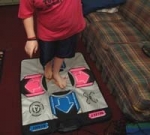
Examples of these applications include the following:
- Dance Dance Revolution: The popular dance game from Konami features an exercise mode. You set goals and play while it reports calorie burn from game sessions.
- In The Netherlands, VSTEP (Virtual Safety Training and Education Platform) has enjoyed success developing 3-D simulations for low-cost PC hardware. The "virtual experiences" are used for training oil-rig workers, emergency services, port authorities, hospital staff and military.
- Cardiac Arrest: A computer adventure game that simulates the diagnosis and treatment procedures for people suffering from various forms of cardiac arrest.
- VR Phobia: The Virtual Reality Medical Center has modified commercial games to create effective treatments for patients suffering from common phobias, including fear of flying, spiders, heights, and driving.
More to explore:
The “Serious Games Summit” is being held October 31st - November 1st, 2005, in Washington D.C. Areas of discussion range from the military and government, to health and education.
http://www.seriousgamessummit.com/home.html
“Games For Health 2005″, September 22-23, 2005, Baltimore, Maryland.
http://www.gamesforhealth.org/events.html
11:55 Posted in Serious games | Permalink | Comments (0) | Tags: serious gaming