




Jul 25, 2006
New interaction design institute in Europe: ciid
Copenhagen Institute of Interaction Design:
The Copenhagen Institute of Interaction Design is a new initiative happening in Denmark. The two key promoters of this initiative are Heather Martin and Simona Maschi.
The aim is to create a high profile design institute, which is small but dynamic and which interfaces with academia and industry. The institute will become an international setting for new thinking in design and technology in Copenhagen. The institute will encourage multi-cultural and multi-disciplinary learning, teaching and consulting in Interaction Design. We imagine that people both from the academic and the industrial world will come to Copenhagen to work with us on innovative products, services and technology for the future. The institute aims to become an international centre of excellence in interaction design and innovation by 201
22:23 Posted in Positive Technology events | Permalink | Comments (0)
The Berlin brain-computer interface: EEG-based communication without subject training
22:20 Posted in Brain-computer interface | Permalink | Comments (0)
Interactive Dance Technology
Within the field of interactive dance technology, a number of projects have experimented with dancers producing music in real time from their body movements, as opposed to following the music. In MusicViaMotion (2000) for example, dance movements are captured with a video camera and mapped to sound synthesis in real time. In MIT Medialab's Expressive Footwear project (1998) and Katherine Moriwaki's Music Shoes (2000), the dancers wear sport shoes respectively chinese slippers, equipped with a range of sensors. In Alfred Desio's Zapped Taps, sensors are also used, this time on tap shoes. In all these projects, the sensed movements actuate and modulate artificial sounds.
22:16 Posted in Cyberart | Permalink | Comments (0) | Tags: cyberart
Images that represent complexity
From KurzweilAI.net
Parsons School of Design teacher Manuel Lima has constructed striking images that represent complexity.

Read Original Article
22:13 Posted in Information visualization | Permalink | Comments (0)
Jul 24, 2006
Design for Our Future Selves awards 2006
Re-blogged from World of Psychology (original post by Sandra Kiume)
The Design for Our Future Selves awards 2006 from the Royal College of Art offered seven awards for ‘An architecture, design or communication project which addresses a social issue or engages with a particular social group in order to improve independence, mobility, health or working life.’
Christopher Peacock won the Snowdon Award for Disability Projects and the Help the Aged Award for Independent Living with his invention handSteady. It’s an innovative device enabling people experiencing tremor (involuntary shaking caused by Parkinson’s disease, side effects from some medications and other conditions) to stabilize objects as they hold them.
Sohui Won, a finalist in Interaction Design, created psychological tools for treatment of loneliness in a project titled Weird Objects - Objects for autophobics and for all of us who experience loneliness and autophobia (fear of being alone).
Among the creations:
‘Communication with Myself – Talk to Myself’. Objects were designed to help autophobics better understand their problem. ‘Talk to Myself’ Mask allows users to literally, talk to themselves. ‘Not’ Removal Machine is a device that removes the word ‘not’ from speech allowing people to hear the positive version.
‘Communication with Environment – Talk to Trees’. Two animated objects were designed to help connect people to the environment, so they wouldn’t feel alone: ‘Eyeballs’ is a device that follows people all the time, wherever they go. ‘Whispering Machine’ transfers the sound of movement into whispering and laughter
22:04 Posted in Brain training & cognitive enhancement, Creativity and computers | Permalink | Comments (0)
Surfing the Web with nothing but brainwaves
Re-blogged from Smart Mobs
Someday, keyboards and computer mice will be remembered only as medieval-style torture devices for the wrists. All work - emails, spreadsheets, and Google searches - will be performed by mind control. CNN reports via digg.
If you think that's mind-blowing, try to wrap your head around the sensational research that's been done on the brain of one Matthew Nagle by scientists at Brown University and three other institutions, in collaboration with Foxborough, Mass.-based company Cyberkinetics Neurotechnology Systems. The research was published for the first time last week in the British science journal Nature.--- Controlling devices with the mind is just the beginning. Next, Wolf believes, is what he calls "network-enabled telepathy" - instant thought transfer. In other words, your thoughts will flow from your brain over the network right into someone else's brain. If you think instant messaging is addictive, just wait for instant thinking.
21:54 Posted in Brain-computer interface | Permalink | Comments (0)
Mobile Persuasion 06
BJ Fogg's Persuasive Technology Lab (Stanford University) is sponsoring Mobile Persuasion 06, a one-day conference on how mobile technology can change people's beliefs and behaviors.

From the conference website:
Mobile Persuasion is for innovators, researchers, and companies creating mobile technologies that change people’s beliefs and behaviors. Applications include health, commerce, activism, social networking, addiction, advertising, gaming, and environmental conservation. This full-day event will feature expert presentations and panels on how mobile technology can change attitudes and behaviors.
The event will take place November 10th at Stanford University. Free registration is available for a limited time.
21:45 Posted in Persuasive technology, Wearable & mobile | Permalink | Comments (0) | Tags: persuasive technology
Wilder Penfield's brain stimulation game
Via Mind Hacks
PBS has a fun flash game where you can recreate Wilder Penfield's brain stimulation experiments from the safety of your own desktop on a virtual human.
Link to brain probe game.
21:12 Posted in Research tools | Permalink | Comments (0)
Robot Doppelgänger
Hiroshi Ishiguro, director of the Intelligent Robotics Lab at Osaka University in Japan, has created a robot clone of himself. The robot, dubbed “Geminoid HI-1”, looks and moves exactly like him, and sometimes takes his place in meetings and classes.

Link to Wired article on Ishiguro's android double.
See also the Geminoid videos
21:05 Posted in AI & robotics | Permalink | Comments (0) | Tags: artificial intelligence
New remote monitoring system by FitSense Technology
Via Medical Connectivity Consulting
FitSense Technology's ActiHealth Intelligent Network provides an end to end system that collects, transports and presents physiological data automatically. Data that can be viewed instantly by the user as they go through their day. In the ActiHealth network, the body sensors monitor several health indexes, including physical activity, calorie burn, weight, body fat, blood pressure, blood glucose, heart rate.
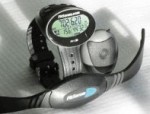
According to the company, the system can be used in a range of health care applications, such as programs for weight management, health & wellness, and disease management.
18:34 Posted in Wearable & mobile | Permalink | Comments (0)
Biosensor watch: Exmocare
Via Medgadget
The Exmocare system is comprised of a wireless connectivity-enabled wristwatch which monitors the wearer's heartrate, galvanic skin response, and motion - 24 hours a day. The watch transmits this data via Bluetooth wireless up to 300 feet to the wearer's computer, or Exmocare-enabled mobile device. This device, in turn, uploads the data to the Exmocare data center by way of the ExmoReporter software.
In addition to the PC-based ExmoReporter software, the complete Exmocare system also provides ExmoReporter Mobile Edition, which reports from your Bluetooth-enabled Windows Mobile Smart Phone, and the Exmocare Car Kit, which reports physiological and emotional data correlated with GPS location and vehicle speed data from the wristwatch-wearer's automobile, allowing for a mobile Personal Area Network that moves with the wristwatch-wearer wherever she or he goes.

Once the wristwatch reports, the Exmocare system interprets the sensor data and assesses the emotional and physical activity of the wristwatch wearer. The system can detect up to 10 different emotional states, in addition to the level of physical activity of the wearer.The Exmocare system stores this data, along with the correlated raw data from the sensor. If something is out of the ordinary with the wristwatch wearer, Exmocare will send you an alert immediately by email, on your cell phone, or by instant message.
At any time you can also log into the website to see the data and correlated emotional state. Additionally, you can install the Exmonitor program on your Windows computer, which allows you to effortlessly monitor your loved one from your Windows taskbar, at home or at work.
18:10 Posted in Wearable & mobile | Permalink | Comments (0)