




Jul 21, 2006
My beating heart
My Beating Heart is an haptic relaxation pillow that gently beats out a slow, steady heart-like rhythm. The $120 heart-shaped pillow uses a rumble pack-style haptic system so that you can feel the heart beat as you hold it.

From the product's website:
 | My Beating Heart is a soft huggable heart with a soothing heartbeat you can really feel. When hugging the heart, the tactile heartbeat reminds you of holding a pet or a loved-one. Hold the heart a moment and you'll begin to sense your own heartbeat slowly syncing with My Beating Heart's carefully designed rhythm. My Beating Heart is designed to help you relax, daydream, meditate, and nap. |
14:34 Posted in Emotional computing | Permalink | Comments (0) | Tags: emotional computing
Tangible query interfaces

A new method for querying relational databases & live data streams through the manipulation of physical objects. Parameterized query fragments are embodied as physical tokens ("parameter wheels"). These tokens are manipulated, interpreted, & graphically augmented on a series of sliding racks, to which data visualizations adapt in real time.
see also bumptop desktop metaphor.
14:04 Posted in Future interfaces | Permalink | Comments (0) | Tags: tangible interfaces
Jul 20, 2006
Using thought power to control artificial limbs
Nature 442, 164-171(13 July 2006)
Leigh R. Hochberg, Mijail D. Serruya, Gerhard M. Friehs, Jon A. Mukand, Maryam Saleh, Abraham H. Caplan, Almut Branner, David Chen, Richard D. Penn and John P. Donoghue
Neuromotor prostheses (NMPs) aim to replace or restore lost motor functions in paralysed humans by routeing movement-related signals from the brain, around damaged parts of the nervous system, to external effectors. To translate preclinical results from intact animals to a clinically useful NMP, movement signals must persist in cortex after spinal cord injury and be engaged by movement intent when sensory inputs and limb movement are long absent. Furthermore, NMPs would require that intention-driven neuronal activity be converted into a control signal that enables useful tasks. Here we show initial results for a tetraplegic human (MN) using a pilot NMP. Neuronal ensemble activity recorded through a 96-microelectrode array implanted in primary motor cortex demonstrated that intended hand motion modulates cortical spiking patterns three years after spinal cord injury. Decoders were created, providing a 'neural cursor' with which MN opened simulated e-mail and operated devices such as a television, even while conversing. Furthermore, MN used neural control to open and close a prosthetic hand, and perform rudimentary actions with a multi-jointed robotic arm. These early results suggest that NMPs based upon intracortical neuronal ensemble spiking activity could provide a valuable new neurotechnology to restore independence for humans with paralysis.
23:59 Posted in Brain-computer interface, Neurotechnology & neuroinformatics, Virtual worlds | Permalink | Comments (0) | Tags: brain-computer interface
CatchBob
From the project's website
CatchBob is an experimental platform to elicit collaborative behavior of people working together on a mobile activity. Running on a mobile device (iPAQ, TabletPc), it's a collaborative hunt in which groups of three persons have to find and circle a virtual object on our campus.
Videos of CatchBob!:
- The long video (3:30, .mov, 15.8Mb) can be downloaded here.
- The short version (1:20, .mov, 8.3Mb) can be downloaded there.


19:30 Posted in Augmented/mixed reality, Creativity and computers, Wearable & mobile | Permalink | Comments (0) | Tags: computer supported collaborative work
New Google3D concept
Re-blogged from Smart Mobs

19:05 Posted in Virtual worlds, Wearable & mobile | Permalink | Comments (0) | Tags: virtual reality
Jul 19, 2006
CSCW 2006 - November 4-8, Banff, Alberta, Canada
From the conference's website


CSCW 2006 is the premier venue for Computer Supported Cooperative Work.
Please join us for the 20th Anniversary of the first CSCW meeting! We have a number of special events planned as part of our Anniversary celebration.
CSCW has consistently been at the leading edge of thinking about the role of coordination and communication technologies in our lives. With your help, CSCW 2006 will play an important role in continuing this tradition. Come and help us make our 20th Anniversary of CSCW a stimulating and exciting event.
New this year, CSCW will be running SIGCHI Best Awards programs for the Papers and Notes submission categories. These awards will recognize the most outstanding submissions in these categories.
20:40 Posted in Call for papers, Creativity and computers, Positive Technology events | Permalink | Comments (0) | Tags: creativity and computer
BACS project
Contemporary robots and other cognitive artifacts are not yet ready to autonomously operate in complex real world environments. One of the major reasons for this failure in creating cognitive situated systems is the difficulty in the handling of incomplete knowledge and uncertainty.
By taking up inspiration from the brains of mammals, including humans, the BACS project will investigate and apply Bayesian models and approaches in order to develop artificial cognitive systems that can carry out complex tasks in real world environments. The Bayesian approach will be used to model different levels of brain function within a coherent framework, from neural functions up to complex behaviors. The Bayesian models will be validated and adapted as necessary according to neuro-physiological data from rats and humans and through psychophysical experiments on humans. The Bayesian approach will also be used to develop four artificial cognitive systems concerned with (i) autonomous navigation, (ii) multi-modal perception and reconstruction of the environment, (iii) semantic facial motion tracking, and (iv) human body motion recognition and behavior analysis. The conducted research shall result in a consistent Bayesian framework offering enhanced tools for probabilistic reasoning in complex real world situations. The performance will be demonstrated through its applications to driver assistant systems and 3D mapping, both very complex real world tasks.
20:14 Posted in AI & robotics | Permalink | Comments (0) | Tags: artificial intelligence
Brain box
BBC News, july 17, 2006
BBC reports that researchers from University of Manchester are developing a new biologically-inspired computer, which mimics the complex interactions between brain neurons.
The computer will be designed with the aim of modelling large numbers of neurons in real time and to track patterns of neural spikes as they occur in the brain. It will be built using large numbers of simple microprocessors designed to interact like the networks of neurons found in the brain. The aim will be to place dozens of microprocessors on single silicon chip reducing the cost and power consumption of the computer.
Read the original article
20:08 Posted in Information visualization, Neurotechnology & neuroinformatics, Research tools | Permalink | Comments (0)
Jul 18, 2006
The Significance of Sigma Neurofeedback Training on Sleep Spindles and Aspects of Declarative Memory
The Significance of Sigma Neurofeedback Training on Sleep Spindles and Aspects of Declarative Memory.
Appl Psychophysiol Biofeedback. 2006 Jul 15;
Authors: Berner I, Schabus M, Wienerroither T, Klimesch W
The functional significance of sleep spindles for overnight memory consolidation and general learning aptitude as well as the effect of four 10-minute sessions of spindle frequency (11.6-16 Hz, sigma) neurofeedback-training on subsequent sleep spindle activity and overnight performance change was investigated. Before sleep, subjects were trained on a paired-associate word list task after having received either neurofeedback training (NFT) or pseudofeedback training (PFT).Although NFT had no significant impact on subsequent spindle activity and behavioral outcomes, there was a trend for enhanced sigma band-power during NREM (stage 2 to 4) sleep after NFT as compared to PFT. Furthermore, a significant positive correlation between spindle activity during slow wave sleep (in the first night half) and overall memory performance was revealed. The results support the view that the considerable inter-individual variance in sleep spindle activity can at least be partly explained by differences in the ability to acquire new declarative information.We conclude that the short NFT before sleep was not sufficient to efficiently enhance phasic spindle activity and/or to influence memory processing. NFT was, however, successful in increasing sigma power, presumably because sigma NFT effects become more easily evident in actually trained frequency bands than in associated phasic spindle activity.
22:40 Posted in Biofeedback & neurofeedback | Permalink | Comments (0) | Tags: neurofeedback
Workshop on Emotion in HCI - London, UK
From Usability News
The topic of emotion in Human-Computer Interaction is of increasing interest to the HCI community. Since Rosalind Picard's fundamental publications on affective computing, research in this field has gained significant momentum.
Emotion research is largely grounded in psychology yet spans across numerous other disciplines. The challenge of such an interdisciplinary research area is developing a common vocabulary and research framework that a mature discipline requires. What is increasingly needed for advanced and serious work in this field is to place it on a rigorous footing, including developing theoretical fundamentals of HCI-related emotion research, understanding emotions' function in HCI, ethical and legal issues, and the practical implications and consequences for the HCI community.
The first workshop on emotion in HCI held in Edinburgh last year brought an interdisciplinary group of practitioners and researchers together for a lively exchange of ideas, discussion of common problems, and identification of domains to explore.
This year's workshop will build on the success of last year. Focus will be on discussion and joint work on selected topics. Participants will engage in developing further the themes from the first workshop in as wide an application spectrum as possible, such as internet applications, ambient intelligence, office work, control rooms, mobile computing, virtual reality, presence, and home applications.
You are cordially invited to become part of this interdisciplinary forum. This will be a very practical workshop with the participants working together to find new insights, views, ideas and solutions. We therefore invite contributions which will enrich the discussions by their innovative content, fundamental nature, or new perspective. We also encourage demos of products or prototypes related to the topic.
Topics addressed by the workshop are:
- How do applications currently make use of emotions and how could it be improved?
- What makes applications that support affective interactions successful?
- How do we know if affective interactions are successful, and how can we measure this success?
- What value might affective applications, affective systems, and affective interaction have?
- What requirements on sensing technologies are there in HCI?
- What technology is currently available for sensing affective states?
- How reliable is sensing technology?
- Are there reliable and replicable processes to include emotion in HCI design projects?
- What opportunities and risks are there in designing affective applications?
- What are the relationships between emotion, affect, personality, and engagement, and what do they mean for interactive systems design?
To become part of this discussion please submit an extended abstract of your ideas or demo description. Case studies describing current applications or prototypes are strongly encouraged, as well as presentations of products or prototypes that you have developed.
The abstract should be limited to about 800 words. Accepted contributions will be published on the workshop's homepage with the possibility to extend them to short papers of 4 pages. It is also planned to produce a special issue of a journal on the results of the workshop.
Please note that registration to the HCI conference is required in order to take part in the workshop (at least for the day of the workshop). Early bird registration deadline is 21st July.
Dates:
27 June - position paper deadline
11 July - notification of acceptance
21 July - early registration deadline
12 September - workshop
01:14 Posted in Emotional computing | Permalink | Comments (0) | Tags: emotional computing
MODIE: Modelling and Designing User Assistance in Intelligent Environments
Themes & Topics
We are interested in models, principles and methodologies, which guide the designer of an intelligent environment in the early stages of the development process, such as task and requirements analysis and conceptual design. We are looking for contributions, which will help the designer of user assistance systems to address the following questions:
- Which user activities and tasks require assistance?
- How to map an activity model into interactions with artifacts?
- How should the designer choose the best sensing and interaction technologies for a scenario?
- Which mobile or wearable personal devices can be employed?
- How should multiple users with concurrent activities be supported?
- How should the current state of the user assistance system be represented, especially when dealing with multiple tasks?
The intention of the workshop is to share experiences and perspectives on user assistance in intelligent environments from the different view-points of developers, designers, ethnographers and cognitive scientists. Each participant will give a short presentation about their contribution. The second half of the workshop will be focused on the discussion of key topics:
- How to unify the complementary concepts of public and personal devices
- How to model user activity (terminology, structure, notation)
- Suggest a terminology for intelligent Environments
- How tools can support the modelling and designing of user assistance
- What the problems of applying traditional software engineering methodologies are
- Are there principles that can be generalized for the design of IEs?
Intended Participants
We encourage researchers from the following disciplines to contribute position papers (2-6 pages) and knowledge to the discussion:
- Computer Scientists (in the fields of Mobile HCI and Intelligent Environments): contribute experiences with working prototypes, discuss technical issues.
- Designers: contribute new paradigms and concepts, discuss existing environments and current solutions to present information to the user, how might the future look like?
- Ethnographers: contribute an analysis of user activities and problems in current environments, discuss application areas for Intelligent Environments.
- Cognitive Scientists: contribute design principles for Intelligent Environments based on their knowledge about the limited resources of the human processor, discussion of pros and cons of interaction paradigms, concepts and technologies.
Workshop Format
MODIE will be a full day workshop. Each participant will give a short presentation on their position and experience in dealing with one or several of the workshop topics. It is assumed that the participants are already familiar with the position papers, which will be available as online proceedings prior to the workshop. In the afternoon, the participants will split into small groups and discuss interesting research topics. Afterwards we will present and discuss their results.
Important Dates
---------------
Submission Deadline July 10, 2006
Acceptance Notification July 13, 2006
Workshop Date September 12, 2006
01:12 Posted in Call for papers | Permalink | Comments (0) | Tags: ambient intelligence
PhD studentship on pervasive tech - Open University, Milton Keynes, UK
Applicants are welcome for a University-funded PhD studentship at the Open University in the Computing Department to work with Prof. Yvonne Rogers's new research group (who will be joining this summer) at the cutting edge of HCI and pervasive technologies. Topics for research include exploring the benefits of tangibles, physical computing, and shared displays on collaborative activities, such as learning and problem-solving. Candidate must have a background in HCI, cognitive science/psychology or computing.
Starting Date: October 2006.
01:10 Posted in Research institutions & funding opportunities | Permalink | Comments (0) | Tags: pervasive computing
A high-performance brain-computer interface
A high-performance brain-computer interface.
Nature. 2006 Jul 13;442(7099):195-8
Authors: Santhanam G, Ryu SI, Yu BM, Afshar A, Shenoy KV
Recent studies have demonstrated that monkeys and humans can use signals from the brain to guide computer cursors. Brain-computer interfaces (BCIs) may one day assist patients suffering from neurological injury or disease, but relatively low system performance remains a major obstacle. In fact, the speed and accuracy with which keys can be selected using BCIs is still far lower than for systems relying on eye movements. This is true whether BCIs use recordings from populations of individual neurons using invasive electrode techniques or electroencephalogram recordings using less- or non-invasive techniques. Here we present the design and demonstration, using electrode arrays implanted in monkey dorsal premotor cortex, of a manyfold higher performance BCI than previously reported. These results indicate that a fast and accurate key selection system, capable of operating with a range of keyboard sizes, is possible (up to 6.5 bits per second, or approximately 15 words per minute, with 96 electrodes). The highest information throughput is achieved with unprecedentedly brief neural recordings, even as recording quality degrades over time. These performance results and their implications for system design should substantially increase the clinical viability of BCIs in humans.
01:02 Posted in Brain-computer interface | Permalink | Comments (0) | Tags: brain-computer interface
TMS can improve subitizing ability
Re-blogged from Omnibrain
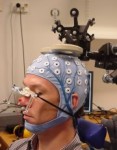
A joint venture of the Australian National University and the University of Sydney investigated whether repetitive transcranial magnetic stimulation, TMS, can improve a healthy person's ability to guess accurately the number of elements in a scene, the London Telegraph reported.
00:31 Posted in Brain training & cognitive enhancement | Permalink | Comments (0) | Tags: cognitive prosthetics
"TV for the brain" patented by Sony
00:21 Posted in Future interfaces | Permalink | Comments (0) | Tags: future interfaces
Definition of neuroinformatics
The website Pharmabiz provides a good definition of Neuroinformatics:
In this discipline work is focused on the integration of neuroscientific information from the level of the genome to the level of human behavior. A major goal of this new discipline is to produce digital capabilities for a web-based information management system in the form of databases and associated data management tools. The databases and software tools are being designed for the benefit of neuroscientists, behavioral scientists, clinicians and educators in an effort to better understand brain structure, function, and development. Some of the databases developed in Neuroinformatics are Surface Management System (SuMS), The fMRIDC, BrainMap, BrainInfo, X-Anat, The Brain Architecture Management System (BAMS), The Ligand Gated Ion Channel database (LGICdb), ModelDB and Probabilistic atlas and reference system for the human brain. Most of these databases are freely available and can be accessed through internet. They provide the particular information in detail at one place and help in the neuroscience research. Some of the generally used neuroinformatic software tools include GENESIS, NEURON, Catacomb, Channelab, HHsim, NEOSIM, NANS, SNNAP, etc. The data sharing in neuroscience is not the only application of neuroinformatics, it is much more. The computational modeling of ion channels, various parts of neurons, full neurons and even neural networks helps to understand the complex neural system and its working. This type of modeling greatly overlaps with system biology and also gets benefit from bioinformatics databases. In India neuroinformatics research is mainly being carrying out presently at National Brain Research Centre, Gurgaon under the department of biotechnology, government of India. The computational modeling of various processes related to neurosciences helps in understanding of brain functions in normal and various disorder states. Several efforts in this direction are also in progress.
00:14 Posted in Neurotechnology & neuroinformatics | Permalink | Comments (0)
BrainMap
BrainMap is an online database of published functional neuroimaging experiments with coordinate-based (Talairach) activation locations. The goal of BrainMap is to provide a vehicle to share methods and results of brain functional imaging studies. It is a tool to rapidly retrieve and understand studies in specific research domains, such as language, memory, attention, reasoning, emotion, and perception, and to perform meta-analyses of like studies.
BrainMap was created and developed by Peter T. Fox and Jack L. Lancaster of the Research Imaging Center of the University of Texas Health Science Center San Antonio.
00:11 Posted in Neurotechnology & neuroinformatics, Research tools | Permalink | Comments (0) | Tags: neuroinformatics
Second Geoethical Nanotechnology workshop
Re-blogged from KurzweilAI.net
The Terasem Movement announced today that its Second Geoethical Nanotechnology workshop will be held July 20, 2006 in Lincoln, Vermont. The public is invited to participate via conference call.The workshop will explore the ethics of neuronanotechnology and future mind-machine interfaces, including preservation of consciousness, implications for a future in which human and digital species merge, and dispersion of consciousness to the cosmos, featuring leading scientists and other experts in these areas.
The workshop proceedings are open to the public via real-time conference call and will be archived online for free public access. The public is invited to call a toll-free conference-call dial-in line from 9:00 a.m. - 6:00 p.m. ET. Callers from the continental US and Canada can dial 1-800-967-7135; other countries: (00+1) 719-457-2626.
Each workshop presentation is designed for a 15-20 minute delivery, followed by a 20 minute formal question and answer period, during which time questions from the worldwide audience will be invited. Presentations will also be available on the workshop's website
00:05 Posted in Brain training & cognitive enhancement, Brain-computer interface, Neurotechnology & neuroinformatics | Permalink | Comments (0) | Tags: neurotechnology
Novel BCI device will allow people to search through images faster
Via KurzweilAI.net
Researchers at Columbia University are combining the processing power of the human brain with computer vision to develop a novel device that will allow people to search through images ten times faster than they can on their own.
The "cortically coupled computer vision system," known as C3 Vision, is the brainchild of professor Paul Sajda, director of the Laboratory for Intelligent Imaging and Neural Computing at Columbia University. He received a one-year, $758,000 grant from Darpa for the project in late 2005.
The brain emits a signal as soon as it sees something interesting, and that "aha" signal can be detected by an electroencephalogram, or EEG cap. While users sift through streaming images or video footage, the technology tags the images that elicit a signal, and ranks them in order of the strength of the neural signatures. Afterwards, the user can examine only the information that their brains identified as important, instead of wading through thousands of images.
Read the full story on Wired
00:00 Posted in Brain training & cognitive enhancement, Brain-computer interface | Permalink | Comments (0) | Tags: brain-computer interface
Jul 17, 2006
Cellphones could soon have a tactile display
Via New Scientist
According to New Scientist, haptic devices (i.e. devices that stimulate our sense of touch) will add a new dimension to communications, entertainment and computer control for everybody, and for people with visual impairment they promise to transform everyday life. One proposed device consists of a headband that imprints the shape of objects in front of it onto the wearer's forehead, something that visually impaired people could find a great help when navigating though a cluttered environment. Moreover, cellphones could soon have a tactile "display", for example, and portable gadgets containing a GPSdevice will be able to nudge you towards your desired destination.
Read the full article
23:55 Posted in Wearable & mobile | Permalink | Comments (0) | Tags: virtual reality