




Jul 24, 2005
Siggraph 2005
The 32th Conference on Computer Graphics and Interactive Techniques Siggraph 2005 will be held in Los Angeles, 21 July - 4 August. This year advanced program can be downloaded here.
Unfortunately this year I am not going to attend the conference, but if I would, I could not miss Emerging Technologies. The event, hosted by the Siggraph Conference, presents work from many sub-disciplines of interactive techniques, with a special emphasis on projects that explore science, high-resolution digital-cinema technologies, and interactive art-science narrative.
An ET application I would love to see is Haptic Video, presented by Satoshi Saga and colleagues from Tachi Laboratory, The University of Tokyo. Haptic Video allows to transmit physical operations with the same precision, they say, as language. 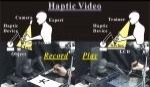 "In the recording phase", explain Saga, "position and applied force are recorded as the expert works. This information is transformed into position and impedance information, and archived in a database that can be dynamically interpolated. In the presentation phase, the impedance information is presented to the trainee along the trajectory direction, and virtual fixtures, which are like walls with elasticity, are presented orthogonal to the trajectory direction at the same time. As a result, the trainee tries to cancel the force that the expert exerted, and duplicate the desired force proactively"
According to the researchers, Haptic Video demonstrates how humans can use technology to improve their skills in a wide variety of professional and aesthetic fields, from medicine to calligraphy to etiquette.
I also believe that Haptic Video meets all the requirements of a Positive Technology. I foresee applications of this new technology in the field of healthcare, i.e. in distance rehabilitation and telemedicine.
So good luck to Haptic Video
20:20 Posted in Positive Technology events | Permalink | Comments (0) | Tags: Positive Technology
Jul 22, 2005
Mixed and Augmented Reality Conference
The 4th IEEE and ACM International Symposium on Mixed and Augmented Reality (ISMAR 05) will be held from October 5-8, 2005, in Vienna, Austria. Sponsored by IEEE Computer Society and the Österreichische Akademie der Wissenschaften, the conference covers latest developments in the fields of augmented and virtual reality. Over the last decade, these technologies have evolved from experimental technologies to mainstream research activities that are starting to show impact on industry and society. By their very nature, Mixed Reality and Augmented Reality are highly interdisciplinary fields involving signal processing, computer vision, computer graphics, user interfaces, human factors, wearable computing, mobile computing, computer networks, distributed computing, information access, information visualization, and hardware design for new displays and sensors.
16:38 Posted in Positive Technology events | Permalink | Comments (0) | Tags: Positive Technology
Smart brace to prevent falls in the elderly
Via Medgadget and Near Near Future
Stanford entrepreneurs are testing a "smart" brace to prevent falls in the elderly. The tool is fitted with a tiny chip, which continuously monitors the position of the ankle. If the chip detects a roll that is greater than normal, it begins to vibrate. 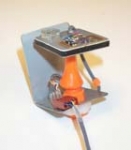
The vibrations send a signal to the brain that the person needs to change the position of their foot or shift their balance in order to avoid a fall.
More to explore:
12:25 Posted in Brain training & cognitive enhancement | Permalink | Comments (0) | Tags: Positive Technology, Cognitive prosthetics
Jul 21, 2005
Ubiquitous computing for cognitive decline
Cognitive decline is one of the most taxing health problems in terms of both its relation to elders' overall functioning and the cost of care. The loss of their abilities to use everything from a coffee maker to a computer may lead to social isolation, a decreased motivation, and increasing dependence on skilled support for assistance in routine activities. Prevention, early detection, and assistance for cognitive decline may be a useful application for ubiquitous computing technologies.
Ubicomp solutions typically involve multiple invisible devices embedded in the physical environment, all connected together to respond in transparent ways to the users in the context of everyday events. Ubicomp may match the challenge of providing elders pervasive support throughout the home, and adaptable levels of support.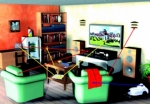
For example, Intel's Proactive Health Research initiative is exploring location and activity tracking technologies to support elders' indipendence and safety monitoring by caregivers. The programme also aims at investigating technologies that facilitate social connectedness and continuation of meaningful activities.
More to explore
Free full-text publications on pervasive computing
16:05 Posted in Pervasive computing | Permalink | Comments (0) | Tags: Positive Technology, Ambient intelligence
VR is going to be cheap
Virtual Reality Therapy (VRT) offers treatment using simulated real life experience provided in a confidential setting. VRT has shown its effectiveness in several common phobias, including claustrophobia, fear of heights, fear of spiders, fear of driving, fear of flying, and fear of public speaking. As a person goes through the VR program, the therapist teaches the client relaxation techniques to deal with the symptoms provoked by exposure to the virtual environment.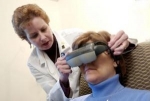
However, until recently, the use of VRT was severely limited by the lack of inexpensive immersive equipment. This opportunity could come along in the fourth quarter of this year, when 3001AD, a company that builds high-end VR machines for large-scale entertainment centers, will introduce a headset that can be used in combination with the Xbox and the Playstation game consoles and several blockbuster game titles. 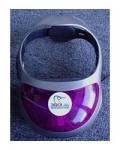 The system, called "Trimersion" and recently demonstrated at the E3 trade show, promises 360-degree head tracking, uses a binocular video subsystem and delivers a QVGA resolution (320 x 240). Mark Rifkin, senior vice president of 3001 AD suggested retail pricing to come in just under $500.
More to explore:
Cybertherapy.info the reference site for VR therapy
Virtual reality in behavioral neuroscience and beyond, Nature Neuroscience, 1089-1092, Oct. 2002
Virtual Reality Therapy, Harvard Mental Health Letter, on-line, April 2003
Fake worlds offer real medicine, Journal of the American Medical Association, 290 (10), 2107-2109, 22/29 Oct 2003
15:15 Posted in Cybertherapy | Permalink | Comments (0) | Tags: Positive Technology, virtual reality
Jul 19, 2005
The Fifth International Conference on Gerontechnology
The fifth international conference on Gerontechnology took place in Nagoya May 24-27 2005. The slogan of the conference was "Technology for smart aging - For a long and happy life with health and self-esteem". The conference program included sessions like Universal Design, Mobility, Home care and Living, Health care and Robotics for Human Support. Topics like Work and Leisure were also treated.
Use of new information technology (IT) solutions was taken up in most of the presentations. The goal could be to provide elderly people with information about preventive care, help them get useful information when moving around outdoors or handling activities of daily living. It was shown that IT and Assistive Technology (AT) could be used to counteract the triggering factors that normally result in hospitalisation and long time care.
The Design for All and Inclusive design approaches were constantly referred to because it was shown that the elderly people had to be able to use new technology and services themselves. Use of Design for All or Inclusive design strategies and methods ensure that mainstream products, services and environments are accessible to the largest number of people.
Organiser of the conference was the International Society for Gerontechnology ISG.
More to explore:
Links to the conference abstracts:sts.bwk.tue.nl/gerontech/Full_text/Volume_3/nr_4/Contents...
12:32 Posted in Positive Technology events | Permalink | Comments (0) | Tags: Positive Technology
Vagus Nerve Stimulation System for Severe Depression
Via Medgadget
The Food and Drug Administration has recently approved a new treatment for severe depression based on a nerve stimulation system that delivers tiny electric shocks through vagus nerve and into a region of the brain thought to play a role in mood.
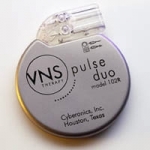 Cyberonics Inc.'s stimulation system is an adjunctive long-term treatment of chronic or recurrent depression for adults who are experiencing a major depressive episode that has not had an adequate response to two or more adequate antidepressant treatments.
Despite controversy over whether it's really been proven to work, the potential treatment targets an estimated 4 million Americans with hard-to-treat depression.
12:00 Posted in Brain-computer interface | Permalink | Comments (0) | Tags: Positive Technology, brain-computer interface
Wearable technology promotes the well-being of the elderly
A Finnish IST International Security Technology has developed a well-being wristband called Vivago™, which analyses and transmits information on the user's level of activity and notifies if any deviations from normal occur. The wristband is intended to allow elderly or chronically ill person to continue independent living securely at home. 
When using the wristband for the first time, it measures the user's normal level of activity. Later on, if the wristband observes anything that deviates from the normal level of activity, it automatically sends a notification to the recipient of alarms, which may be a community nursing centre.
10:40 Posted in Wearable & mobile | Permalink | Comments (0) | Tags: Positive Technology, wearable
Jul 18, 2005
Philips' iCat for studying human-robot interaction topics
Via Medgadget
Philips new invention iCat promises to advance the field of human-robot interaction. The robot can express a wide range of expressions, and elaborate the user's reactions to these expressions. The robot is about fourty cm tall and is equipped with a number of servos that control different components of the face, including mouth and head position. Moving these parts of the face, the robot can make many different facial expressions. Reseachers can observe the user's reaction to these expressions and investigate i.e. the perceived personality of the iCat during a game or task setting.

Philips researchers predict that the iCat could have applications in psychology research (social cognition) and in medicine, for example to help autistic children or stroke survivors.
More to explore
- the Philips Research Technologies web page
19:40 Posted in AI & robotics | Permalink | Comments (0) | Tags: Positive Technology, robotics