




Jul 28, 2005
IPod induces allucinations?
Via Mind Hacks
Psychiatrist Victor Aziz has suggested that some iPod users are experiencing musical hallucinations owing to the constant repetition of favourite songs.
Dr Aziz was recently featured in a New York Times article discussing musical hallucinations. This story was touted as 'brain becomes an iPod' because musical hallucinations can take the form of complete songs or melodies.
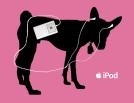 In an interesting twist, however, Aziz suggests the use of personal music players may lead to musical hallucinations in some people.
This is not as far fetched as it sounds. A recent brain scanning study used a technique where songs were silenced for short intervals when played, and showed that the auditory cortex remained active when people continued 'hearing' the silenced tune.
The constant repetition of the same music may produce a similar effect, perhaps leading to the hallucinations.
In July's issue of the International Journal of Geriatric Psychiatry Aziz and colleague Nick Warner reviewed 30 cases of musical hallucinations in older people and found the hallucinations could be very specific and distinct:
The hymn 'Abide with me' was clearly the most frequent music heard. In 2/3 of cases religious music predominated, with Christmas music also common. In most cases the music took the form of solo voice (male or female) with instrumental backing. Two people could identify the singer (George Formby and Luciano Pavarotti).
16:45 | Permalink | Comments (0) | Tags: Positive Technology
Jul 27, 2005
Workshop on Personalisation for e-Health
Via Psychnology
Workshop on Personalisation for e-Health to be held in conjunction with UM 2005 Edinburgh, UK, July 2005
The past years have witnessed unprecedented levels of investment in the e-Health sector, both in terms of research effort, and in terms of funding, as well as a great public interest. e-Health can be broadly defined as the application of IT (especially Internet technologies) to improve the access, efficiency, effectiveness and quality of any processes (clinical and business alike) related to health care. In the e-Health vision, intelligent systems would, for example, enable:
 - citizens to take more control of their well-being, by accessing personalised and qualified health information, both medical and pedagogical, and accessing appropriate medical care from their homes;
- health professionals to manage their activity more efficiently, by receiving relevant and timely updates; and
- teams of health professionals to work together more effectively, coordinating their activities, sharing their knowledge about the patients they are collectively taking care of, and ensuring the best coordinated care is provided.
17:35 Posted in Positive Technology events | Permalink | Comments (0) | Tags: Positive Technology
CHI 2005 - Student Design Competition Results
Via CHI 2005 web site
Computer Human Interaction 2005 Student Design Competition challenged students to design a tool, application or service for elder companionship. The winning team was mPath (Shweta Aneja, Kevin Makice, Apurva Pangam, Matt Weldon, Indiana University, USA). mPath works with administrators of assisted-living facilities to oversee an ad-hoc volunteer network. Interacting with residents, these volunteers assess social relationships and emotional reactions, quantifying for the computer their qualitative observations. In turn, the system examines data over time to isolate anomalies, highlight trends and anticipate future responses. Administrators act upon that information. The overall effect is to increase the social well being of seniors in an unobtrusive manner.
17:15 Posted in Positive Technology events | Permalink | Comments (0) | Tags: Positive Technology
Ambient Experience for children undergoing MRI scan
Via Near Near Future
Ambient Experience for Healthcare is a program designed to lessen patient anxiety and claustrophobic effects of an MRI scan through the use of a multimedia environment. As soon as patients enter the MRI department, they are automatically identified by the system and the environment changes to match their personal features. Lighting and ambience of the room, as well as music and projections, can be adapted to match the specific needs of patients.

Patients can choose from four themes, each geared for different tastes and age groups; aquatic, space, fly-through and a default lava lamp type ambience. RFID-encoded cards corresponding to the theme chosen by patients cause the lighting and wall/ceiling projection to change in the exam room as they enter.
Ambient Experience was recently awarded a gold medal in the annual Industrial Design Excellence Award
10:45 Posted in Pervasive computing | Permalink | Comments (0) | Tags: Positive Technology, Ambient intelligence
Jul 26, 2005
Faculty psychologist job position at Emory using VR
Via VRPsych list
Faculty Psychologist - Emory University School of Medicine, Department of Psychiatry and Behavioral Sciences announces a full time assistant professor position. Job duties include working on an NIMH-funded study exploring medication and virtual reality exposure therapy, administering CBT, program development, and supervision. Requirements: doctoral degree, APA approved internship, CBT experience, supervised postdoctoral year, and Georgia licensed or license eligible.
Application deadline 9/1/05 or until filled.
Send CV, letter of interest, publications, and 4 letters of recommendation to Barbara O. Rothbaum, Ph.D., ABPP, Psychiatry, The Emory Clinic, 1365 Clifton Rd, Atlanta, GA 30322.
17:10 Posted in Research institutions & funding opportunities | Permalink | Comments (0) | Tags: Positive Technology, research tools
Jul 25, 2005
Affective computing in healthcare: the project Myself
The EU-funded project Myself focuses on the enrichment of the simulations and the affective computing methodologies traditionally carried out in didactic classroom.
The project's idea is to integrate affective computing into virtual tutors to enhance distance learning and training applications. Affective computing is aimed at giving computers skills of emotional intelligence, including the ability to recognize and express emotions, and to respond to them effectively.
Started in Semptember 2004 and running 24 months, the project gathers industries and research performers from seven European countries (Italy, Spain, United Kingdom, Estonia, Switzerland, Poland, Holland). The project's coordinator is ACSE, an Italian company that supplies information technology services.
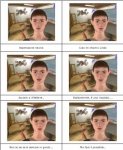 We have interviewed Dr. Fabrizia Mantovani, psychologist, who is working on the research workpackage on Affective Computing for the Center for Studies in Communication Sciences of University Milano-Bicocca, headed by Prof. Luigi Anolli.
PTJ - Dr. Mantovani, what are the potential applications of Myself project?
The target application of the project was the development of an e-learning platform endowed with affective computing capabilities (recognition of, and adaptation to, the emotional and motivational states of the users during the learning path). The second objective is development of interactive simulations for the training of communication and emotional skills in professional relationships. In this project, two main target-end users are finance and banking and healthcare professionals.
PTJ - Interesting. But how this approach can be used in healthcare?
The idea is to use 3D-agents based simulations to train physicians and caregivers on how to improve the relationships with patients and their families. Traditionally, soft-skill training is mainly carried out in classroom and face-to-face settings. In Myself, the goal is to use experiential e-learning training to support the acquisition of complex communication and procedural skills (i.e. how to deliver bad health news to the patient, enhance compliance, to be in trust in the relationship etc.), which are useful to improve the relationship between doctors and patients.
More to explore
Affective Computing Portal - a web site devoted to affective computing research
Affective Computing Lab at MIT Medialab - web site of the lab headed by Rosalind Picard
Virtual Reality Lab (VRlab) at the Swiss Federal Institute of Technology - the leading lab for virtual humans research
12:00 Posted in Emotional computing | Permalink | Comments (0) | Tags: Positive Technology, experience computing