




Nov 11, 2006
Computer- and robot-aided head surgery
Computer- and robot-aided head surgery.
Acta Neurochir Suppl. 2006;98:51-61
Authors: Wörn H
In this paper new methods and devices for computer and robot based head surgery are presented. A computer based planning system for CMF-surgery allows the surgeon to plan complex trajectories on the head of the patient for operations where bone segments were cut out and shifted. Different registration methods have been developed and tested. A surgical robot system for bone cutting on the head has been developed and evaluated at the patient in the operating theatre. In future, laser cutting of bones with a robot will be seen as a new powerful method for robot based surgery. A 3D augmented reality system will assist the surgeon in the future by augmenting virtual anatomical structure into the situs.
16:18 Posted in AI & robotics | Permalink | Comments (0) | Tags: robotics, cybertherapy
BCI as a tool to induce neuroplasticity
Brain-computer interface technology as a tool to augment plasticity and outcomes for neurological rehabilitation.
J Physiol. 2006 Nov 9
Authors: Dobkin BH
Brain-computer interfaces are a rehabilitation tool for tetraplegic patients that aim to improve quality of life by augmenting communication, control of the environment, and self-care. The neurobiology of both rehabilitation and BCI control depends upon learning to modify the efficacy of spared neural ensembles that represent movement, sensation, and cognition through progressive practice with feedback and reward. To serve patients, BCI systems must become safe, reliable, cosmetically acceptable, quickly mastered with minimal ongoing technical support, and highly accurate even in the face of mental distractions and the uncontrolled environment beyond a laboratory. BCI technologies may raise ethical concerns if their availability affects the decisions of patients who become locked-in with brain stem stroke or amyotrophic lateral sclerosis to be sustained with ventilator support. If BCI technology becomes flexible and affordable, volitional control of cortical signals could be employed for the rehabilitation of motor and cognitive impairments in hemiplegic or paraplegic patients by offering on-line feedback about cortical activity associated with mental practice, motor intention, and other neural recruitment strategies during progressive task-oriented practice. Clinical trials with measures of quality of life will be necessary to demonstrate the value of near-term and future BCI applications.
16:03 Posted in Brain-computer interface, Mental practice & mental simulation | Permalink | Comments (0) | Tags: brain-computer interface
Artificial gut
Via Frontal Cortex

The New York Times reports that British scientists have built an apparatus that simulates human digestion.
From the article:
Constructed from sophisticated plastics and metals able to withstand the corrosive acids and enzymes found in the human gut, the device may ultimately help in the development of super-nutrients, such as obesity-fighting foods that could fool the stomach into thinking it is full.
''There have been lots of jam-jar models of digestion before,'' said Dr. Martin Wickham of Norwich's Institute of Food Research, the artificial gut's chief designer, referring to the beakers of enzymes typically used to approximate the chemical reactions in the stomach.
Wickham's patented artificial gut is a two-part model that is slightly larger than a desktop computer. The top half consists of a funnel in which food, stomach acids and digestive enzymes are mixed. Once this hydration process is finished, the food gets ground down in a silver metal tube encased in a dark, transparent box.
Software sets the parameters of the artificial gut - how long food remains in a particular part of the stomach, predicted hormone responses at various stages, and whether it is an infant or adult gut.
(...)
With a capacity about half the size of an actual stomach, the artificial gut can ''eat'' roughly 24 ounces of food. To date, the most substantial meal it's enjoyed is vegetable soup.
''It's so realistic that it can even vomit,'' adds Wickham.
Read the full story here
14:15 Posted in Research tools | Permalink | Comments (0) | Tags: research tools
Nov 10, 2006
State of the Blogosphere
Re-blogged from Smart Mobs
Technnorati has posted the State of the Blogosphere, October, 2006. [via Joi Ito]
As of October 2006, about 100,000 new weblogs were created each day, which means that on average, there was a slight decrease quarter-over-quarter in the number of new blogs created each day.
...The total posting volume of the blogosphere has leveled off somewhat, showing about 1.3 million postings per day, which is a little lower than what we were seeing last quarter but still about double the volume of this time last year. ...
20:16 Posted in Research tools | Permalink | Comments (0) | Tags: research tools
Get paid to blog with ReviewME!
The following is a paid review

ReviewMe is a service that pays bloggers to write about advertisers’ products. It's similar to PayPerPost (an automated system that allows users to promote their web site, product, service, or company through the PayPerPost network of bloggers) but with better payouts and a focus on reviews. Actually, bloggers must disclose that the review is a paid advertisement (as I have done at the beginning of this post).
To determine the importance of a blog, ReviewMe uses an algorithm based on Alexa, Technorati and charges a different fee for each blog based on the calculation. Blogger payments range from $30 - $1,000 per post. The factors considered include the theme, estimated traffic, link popularity, and estimated RSS subscribers.
Also, advertisers can purchase posts, but they cannot require that a post is positive. The blogger can choose to write their honest opinion without fear of not being paid. The only requirement is that the review must be a minimum of 200 words.
Reviewme is giving away $25,000 today to pay bloggers to write about the service.
Here are the four simple steps you have to follow in order to get paid to review products and services on your site:
- Submit your site for inclusion into our ReviewMe publisher network.
- If approved, your site will enter our ReviewMe marketplace and clients will purchase reviews from you.
- You decide to accept the review or not.
- You will be paid $20.00 to $200.00 for each completed review that you post on your site.
The company is backed by TechCrunch-sponsor
18:15 | Permalink | Comments (0)
BrainWaves
A great catch by the always-interesting NeuroFuture:
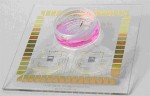
BrainWaves is a musical performance by cultured cortical cells interfacing with multielectrode arrays. Eight electrodes recorded neural patterns that were filtered to eight speakers after being sonified by robotic and human interpretation. Sound patterns followed neural spikes and waveforms, and also extended to video, with live visualizations of the music and neural patterns in front of a mesmerized audience. See a two minute video here (still image below). Teams from two research labs designed and engineered the project; read more from collaborator Gil Weinberg.
17:05 Posted in Cyberart, Neurotechnology & neuroinformatics | Permalink | Comments (0) | Tags: neuroinformatics, cyberart
Neuroscientist uses his understanding of the human brain to advance on a popular quiz show
Via Mind Hacks

Ogi Ogas, a doctoral student in cognitive neuroscience at Cognitive and Neural Systems at Boston University, has applied techniques from cognitive psychology to win $500,000 on the show 'Who wants to be a Millionaire?'.
These techniques take advantage of well-studied psychological processes such as such as priming and the structure of associations in memory.
Read how he describes his method in an article appeared on Seed Magazine:
The first technique I drew upon was priming. The priming of a memory occurs because of the peculiar "connectionist" neural dynamics of our cortex, where memories are distributed across many regions and neurons. If we can recall any fragment of a pattern, our brains tend to automatically fill in the rest....
I used priming on my $16,000 question: "This past spring, which country first published inflammatory cartoons of the prophet Mohammed?" I did not know the answer. But I did know I had a long conversation with my friend Gena about the cartoons. So I chatted with [quiz show host] Meredith about Gena. I tried to remember where we discussed the cartoons and the way Gena flutters his hands. As I pictured how he rolls his eyes to express disdain, Gena's remark popped into my mind: "What else would you expect from Denmark?"
16:56 Posted in Research tools | Permalink | Comments (0) | Tags: research tool
Nov 09, 2006
DNART
via LiveScience (thanks to Johnatan Loroni, bioinformatics researcher)
Paul Rothemund, researcher at Caltech, has developed a new tecnique that allows to weave DNA strands into any desired two-dimensional shape or figure, which he calls "DNA origami." According to Rothemund, the technology could one day be used to construct tiny chemical factories or molecular electronics by attaching proteins and inorganic components to DNA circuit boards.
From the press release:
"The construction of custom DNA origami is so simple that the method should make it much easier for scientists from diverse fields to create and study the complex nanostructures they might want," Rothemund explains.
"A physicist, for example, might attach nano-sized semiconductor 'quantum dots' in a pattern that creates a quantum computer. A biologist might use DNA origami to take proteins which normally occur separately in nature, and organize them into a multi-enzyme factory that hands a chemical product from one enzyme machine to the next in the manner of an assembly line."
Reporting in the March 16th issue of Nature, Rothemund describes how long single strands of DNA can be folded back and forth, tracing a mazelike path, to form a scaffold that fills up the outline of any desired shape. To hold the scaffold in place, 200 or more DNA strands are designed to bind the scaffold and staple it together.
Each of the short DNA strands can act something like a pixel in a computer image, resulting in a shape that can bear a complex pattern, such as words or images. The resulting shapes and patterns are each about 100 nanometers in diameter-or about a thousand times smaller than the diameter of a human hair. The dots themselves are six nanometers in diameter. While the folding of DNA into shapes that have nothing to do with the molecule's genetic information is not a new idea, Rothemund's efforts provide a general way to quickly and easily create any shape. In the last year, Rothemund has created half a dozen shapes, including a square, a triangle, a five-pointed star, and a smiley face-each one several times more complex than any previously constructed DNA objects. "At this point, high-school students could use the design program to create whatever shape they desired,'' he says.
Once a shape has been created, adding a pattern to it is particularly easy, taking just a couple of hours for any desired pattern. As a demonstration, Rothemund has spelled out the letters "DNA," and has drawn a rough picture of a double helix, as well as a map of the western hemisphere in which one nanometer represents 200 kilometers.
Link to Live Science report on DNA art
16:34 Posted in Cyberart | Permalink | Comments (0) | Tags: cyberart
Nov 08, 2006
fMRI lie detection test raises ethical issues
Via Mind Hacks
A recent article published in The Washington Post focuses on the socio-ethical implications of the emerging neuroscience of lying. The article reports about a company called No Lie MRI Ltd that claims to use "the first and only direct measure of truth verification and lie detection in human history".
From the article:
No Lie MRI's Web site has proclaimed that the company hopes to revolutionize truth telling in America, offering "objective, scientific, mental evidence, similar to the role in which DNA biological identification is used," to everyone from the FBI, CIA and NSA to the Department of Homeland Security.No Lie is not alone. Its Massachusetts competitor, Cephos Corp., has licensed competing fMRI lie detection technology from the Medical University of South Carolina.
The boundless desire for a way to dig through deception is why political consultant John Zogby, president of Zogby International, expects the new brain scanning devices to be in widespread use in the 2008 presidential election. He can clearly see a demand to discover what voters really think of candidates - and their commercials.
Brain-scan lie detection is now reliable enough that it is starting to be admissible in court.
23:35 Posted in Research tools | Permalink | Comments (0) | Tags: research tools
Ars Virtua Artist-in-Residence (AVAIR)
Re-blogged from Networked performance
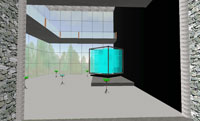
Ars Virtua Artist-in-Residence (AVAIR): Call for Proposals: Deadline November 21, 2006: Ars Virtua Gallery and New Media Center in Second Life is soliciting proposals for its artist-in-residence program. The deadline for submissions is November 21, 2006. Established and emerging artists will work within the 3d rendered environment of Second Life. Each 11-week residency will culminate in an exhibition and a community-based event. Residents will also receive a $400 stipend, training and mentorship.
Ars Virtua Artist-in-Residence (AVAIR) is an extended performance that examines what it means to reside in a place that has no physical location.
Ars Virtua presents artists with a radical alternative to "real life" galleries: 1) Since it does not physically exist artists are not limited by physics, material budgets, building codes or landlords. Their only constraints are social conventions and (malleable-extensible) software. 2) The gallery is accessible 24 hours a day to a potentially infinite number of people in every part of the world simultaneously. 3) Because of the ever evolving, flexible nature of Second Life the "audience" is a far less predictable variable than one might find a Real Life gallery. Residents will be encouraged to explore, experiment with and challenge traditional conventions of art making and distribution, value and the art market, artist and audience, space and place.
Application Process: Artists are encouraged to log in to Second Life and create an avatar BEFORE applying. Download the application requirements here: http://arsvirtua.com/residence. Finalists will be contacted for an interview. Interviews will take place from November 28-30.
23:13 Posted in Cyberart, Virtual worlds | Permalink | Comments (0) | Tags: cyberart, virtual worlds
Body as musical instrument

Dance and music go together. Intuitively, we know they have common elements, and while we cannot even begin to understand what they are or how they so perfectly complement one another, it is clear that they are both are an expression of something deep and fundamental within all human beings. Both express things that words cannot - beyond intellect, they are perhaps two of the fundamental building blocks of human expression, common to the souls of all people. Which is why when we saw this machine which links the two, we knew there was something special brewing.
The GypsyMIDI is a unique instrument for motion-capture midi control - a machine that enables a human being to become a musical instrument - well, a musical instrument controller to be exact, or a bunch of other things depending on your imagination.
Read the full post on NP
23:05 Posted in Cyberart | Permalink | Comments (0) | Tags: creativity and computers
Alert driver fatigue wrist device
Via Medgadget
A future concept designed for the AA, this flexible rubber device uses motion combined with reaction time to determine whether or not you are suffering from driver fatigue. The device comunicates with an RFID tag positioned in your car and only starts to detect whether you are tired when you are in your car. The device can be bent to fit your wrist, and has memory to stay in position, to ensure it will not fall off.
Designer: Daniel Ruffle

22:55 Posted in Wearable & mobile | Permalink | Comments (0) | Tags: wereable, mobile
Nov 07, 2006
SHOJI: Symbiotic Hosting Online Jog Instrument
From Pink Tentacle
Symbiotic Hosting Online Jog Instrument (SHOJI) is a system that monitors the feelings and behavior of the people in the room and relays the mood data to remote terminals where it is displayed as full-colored LED light.
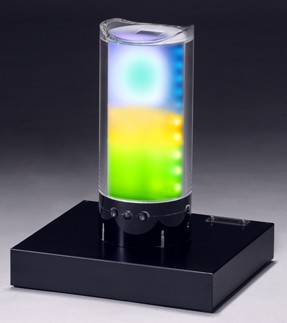
In addition to constantly measuring the room’s environmental conditions, SHOJI terminals can detect the presence and movement of people, body temperature, and the nature of the activity in the room.
Read the full post on Pink Tentacle
23:21 Posted in Emotional computing | Permalink | Comments (0) | Tags: emotional computing
[meme.garden]
re-blogged from Networked Performance

[meme.garden] by Mary Flanagan, Daniel Howe, Chris Egert, Junming Mei, and Kay Chang [meme.garden] is an Internet service that blends software art and search tool to visualize participants' interests in prevalent streams of information, encouraging browsing and interaction between users in real time, through time. Utilizing the WordNet lexical reference system from Princeton University, [meme.garden] introduces concepts of temporality, space, and empathy into a network-oriented search tool. Participants search for words which expand contextually through the use of a lexical database. English nouns, verbs, adjectives and adverbs are organized into floating synonym "seeds," each representing one underlying lexical concept. When participants "plant" their interests, each becomes a tree that "grows" over time. Each organism's leaves are linked to related streaming RSS feeds, and by interacting with their own and other participants' trees, participants create a contextual timescape in which interests can be seen growing and changing within an environment that endures.
The [meme.garden] software was created by an eclectic team of artists and scientists: Mary Flanagan, Daniel Howe, Chris Egert, Junming Mei, and Kay Chang.
23:10 Posted in Cyberart | Permalink | Comments (0) | Tags: cyberart
The future of music experience
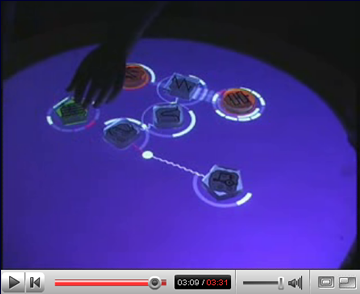
check out this youtube video showing "reactable", an amazing music instrument with a tangible interface

23:00 Posted in Future interfaces | Permalink | Comments (0) | Tags: future interfaces
Efficacy of biofeedback for migraine
Efficacy of biofeedback for migraine: A meta-analysis.
Pain. 2006 Nov 1;
Authors: Nestoriuc Y, Martin A
In this article, we meta-analytically examined the efficacy of biofeedback (BFB) in treating migraine. A computerized literature search of the databases Medline, PsycInfo, Psyndex and the Cochrane library, enhanced by a hand search, identified 86 outcome studies. A total of 55 studies, including randomized controlled trials as well as pre-post trials, met our inclusion criteria and were integrated. A medium effect size (d =0.58, 95% CI=0.52, 0.64) resulted for all BFB interventions and proved stable over an average follow-up phase of 17 months. Also, BFB was more effective than control conditions. Frequency of migraine attacks and perceived self-efficacy demonstrated the strongest improvements. Blood-volume-pulse feedback yielded higher effect sizes than peripheral skin temperature feedback and electromyography feedback. Moderator analyses revealed BFB in combination with home training to be more effective than therapies without home training. The influence of the meta-analytical methods on the effect sizes was systematically explored and the results proved to be robust across different methods of effect size calculation. Furthermore, there was no substantial relation between the validity of the integrated studies and the direct treatment effects. Finally, an intention-to-treat analysis showed that the treatment effects remained stable, even when drop-outs were considered as nonresponders.
22:49 Posted in Biofeedback & neurofeedback | Permalink | Comments (0) | Tags: biofeedback
TagCrowd
From the TagCrowd blog
TagCrowd is a web application for visualizing word frequencies in any user-supplied text by creating what is popularly known as a tag cloud.
Today, tag clouds are primarily used for navigation and visualization on websites that employ user-generated metadata (tags) as a categorization scheme. (Flickr is a good example.)
TagCrowd is trying to do something different.
When we look at a tag cloud, we see not only a richly informative, beautiful image that communicates much in a single glance. We see a whole new approach to text.
Potential uses for tag clouds extend far outside the online realm: as topic summaries for written works, as name tags for conferences, as resumes in a single glance, as analyses for survey data, as visual poetry; the list goes on.
In the future, TagCrowd will develop into a suite of experimental tools and tutorials that empower social and collaborative uses for tag clouds and related visualizations.
00:28 Posted in Information visualization | Permalink | Comments (0) | Tags: information visualization
Talking space
From Textually.org (via Designboom)
Yang Shi Wei and Shawn Wein Shin from Taiwan have designed "Talking Space", a lampshade that creates a space to close off voice during phone conversations

In the designers' own words:
People enjoy the feeling at party. We always hear much sound about laugh, games, music or play... It's good!! Let we relax and excite. Everything is fine. Playing with your friend. But now, your phone is ringing. It maybe tells an important message to you. Can you talk with the other side on noisy place? You need to leave, and try to find another place to close off voice. Going to outside ?! It's just one of way to solve problems. Have another way?
00:17 Posted in Wearable & mobile | Permalink | Comments (0) | Tags: mobile phones
SLAM - Mobile social networking from Microsoft Research
Via LADS
SLAM is a mobile based social networking application deveoped by Microsoft Research’s Community Technologies Group, which enables lightweight, group-centric real-time communication, photo-sharing and location awareness.

From LADS:
From the user perspective, “Slam” means a group of people with whom you can share you exchange messages and share photos easily through your mobile phone. Slam works on group level, which means that any messages sent to a Slam gets delivered to all the members in the group. To use Slam you need to install the Slam application on your Windows Mobile based devices and need a unlimited data plan. So any messages sent from your smart phone will be over HTTP instead of using SMS. If you don’t have Windows based device, you can still communicate with your Slams through SMS, since each Slam has a different phone number to enable SMS delivery.
Slam delivers a pretty impressive feature set on the smart phones. Besides exchanging messages, users can view private and public Slams, create Slam, invite people to an existing Slam, join Slams, view Slam members, view and upload photos, manage their Slams, and view unread messages. While viewing a member profile Slam also indicates if you the user has any an intersecting Slam group with you.
One of the best features Slam team is working on is to provide location information of people in your Slam group. Once group members set their privacy level to allow appropriate Slam groups to view their location information, Slam maps the location information onto a Windows Live map on your mobile. This feature is more of a proof of concept and works only on few phone including Audiovox 5600, I-Mate Sp3 and i-Mate SP5 for some of the Seattle users of Cingular/AT&T and T-Mobile.
Visit also the Microsoft Slam Team Blog
00:00 Posted in Locative media, Social Media | Permalink | Comments (0) | Tags: social networks, locative media
Nov 06, 2006
Iris recognition technology for mobile phones
Re-blogged from Pink Tentacle
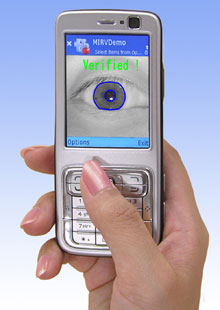
Oki Electric announced the development of iris recognition technology for camera-equipped mobile phones. Unlike Oki’s previous iris recognition technology that relies on infrared cameras for the iris scan, the new technology uses ordinary cellphone cameras. With plans to make the technology commercially available in March 2007, Oki hopes to boost the security of cellphone payment systems. According to Oki, any camera-equipped cellphone or PDA can perform iris recognition once the special software is installed. Identification accuracy is said to be high, with only 1 in 100,000 scans resulting in error, and the system can tell the difference between flesh-and-blood eyes and photographs.
23:23 Posted in AI & robotics, Wearable & mobile | Permalink | Comments (0) | Tags: artificial intelligence, mobile phones