




Feb 26, 2006
Training benefits brains in older people, counters aging factors
From the news release
New research at the University of Illinois at Urbana-Champaign shows that training re-ignites key areas of the brain, offsetting some age-related declines and boosting performance. The findings, involving functional magnetic resonance imaging (fMRI), provide the first visible evidence for a relationship between behavioral performance and cortical processors involved in dual-task processing, said Arthur F. Kramer, a professor of psychology and researcher at the Beckman Institute for Advanced Science and Technology.
The study, published online this month in advance of regular publication by the journal Neurobiology of Aginng, also adds to other emerging data that refute the idea that opposite brain areas become activated to help aging people compensate for a loss of cognition. Older studies, Kramer said, did not look at the impacts of training. For the new study, researchers in Kramer's lab looked at areas of the brain known to be associated with executive control - scheduling, planning, juggling multiple tasks and working memory. These areas, the ventral and dorsal prefrontal cortexes, are tied to cognitive declines in aging.
Read full article here
21:49 Posted in Mental practice & mental simulation | Permalink | Comments (0) | Tags: Positive Technology
Neural correlate of spatial presence
Cyberpsychol Behav. 2006 Feb;9(1):30-45
Authors: Baumgartner T, Valko L, Esslen M, Jäncke L
Using electroencephalography (EEG), psychophysiology, and psychometric measures, this is the first study which investigated the neurophysiological underpinnings of spatial presence. Spatial presence is considered a sense of being physically situated within a spatial environment portrayed by a medium (e.g., television, virtual reality). Twelve healthy children and 11 healthy adolescents were watching different virtual roller coaster scenarios. During a control session, the roller coaster cab drove through a horizontal roundabout track. The following realistic roller coaster rides consisted of spectacular ups, downs, and loops. Low-resolution brain electromagnetic tomography (LORETA) and event-related desynchronization (ERD) were used to analyze the EEG data. As expected, we found that, compared to the control condition, experiencing a virtual roller coaster ride evoked in both groups strong SP experiences, increased electrodermal reactions, and activations in parietal brain areas known to be involved in spatial navigation. In addition, brain areas that receive homeostatic afferents from somatic and visceral sensations of the body were strongly activated. Most interesting, children (as compared to adolescents) reported higher spatial presence experiences and demonstrated a different frontal activation pattern. While adolescents showed increased activation in prefrontal areas known to be involved in the control of executive functions, children demonstrated a decreased activity in these brain regions. Interestingly, recent neuroanatomical and neurophysiological studies have shown that the frontal brain continues to develop to adult status well into adolescence. Thus, the result of our study implies that the increased spatial presence experience in children may result from the not fully developed control functions of the frontal cortex.
21:29 Posted in Telepresence & virtual presence | Permalink | Comments (0) | Tags: Positive Technology
Mind-operated devices: mental control of a computer using biofeedback
Mind-operated devices: mental control of a computer using biofeedback.
Cyberpsychol Behav. 2006 Feb;9(1):1-4
Authors: Parente A, Parente R
21:25 Posted in Biofeedback & neurofeedback | Permalink | Comments (0) | Tags: Positive Technology
Feb 24, 2006
The Game Brain
Via BrainBlog
Nintendo has developed a brain-training game, "Brain Age", which presents quick mental tasks that should help keeping the brain in shape.

From the Nintendo website:
Activities include quickly solving simple math problems, counting people going in and out of a house simultaneously, drawing pictures on the Touch Screen, reading classic literature out loud, and more. You can also play Sudoku, the number puzzle game which has become an extremely popular feature in U.S. newspapers Brain Age is inspired by the research of Professor Ryuta Kawashima, a prominent Japanese neuroscientist. His studies evaluated the impact of performing certain reading and mathematic exercises to help stimulate the brain.
13:31 Posted in Brain training & cognitive enhancement | Permalink | Comments (0) | Tags: Positive Technology
Feb 23, 2006
1st International Summer School on Advanced Technologies for Neuro-Motor Assessment and Rehabilitation
(Deadline for application: 15th April 2006)
From the website:
The school intends to offer a large spectrum of advanced state-of-the-art on emerging technologies for the assessment and conditioning of human movement, with a particular emphasis on portable/wearable sensors and wireless technology. This Summer School is primarily addressed to researchers and professionals interested in the most recent advances of assistive and rehabilitation technologies for the neuro-motor function.
The program will include topics as:
- Portable sensors and systems
- Wireless communications
- Biofeedback devices
- Virtual Reality-based systems
- Virtual prototyping
The school is open to technical professionals, advanced undergraduates, graduate students and post docs with an interest in biomedical engineering, human movement science, physical and rehabilitation medicine, and related disciplines.
Application procedure on the website (deadline 15th April 2006)
Registration fee is 700 Euro and includes board, accommodation in double room, coffee breaks and study material.
11:32 Posted in Neurotechnology & neuroinformatics | Permalink | Comments (0) | Tags: Positive Technology
Fourth Workshop on Agents Applied in Health Care
A workshop held in conjunction with the ">17th European Conference on Artificial Intelligence, ECAI-2006
Riva del Garda, Italy, August 28th - September 1st, 2006
April 1st, 2006: Deadline for paper and demos submission
From the workshop website:
Multi-agent systems are one of the most exciting research areas in Artificial Intelligence. In the last eight years there has been a growing interest in the application of agent-based systems in health care. The first specialised workshop on this area was held at Autonomous Agents '2000 in Barcelona, Spain; several other workshops and special issues of journals have followed since then (ECAI-2002, Agentcities ID3-2003, ECAI-2004 and IJCAI-05). Moreover, a growing European community of researchers interested in the application of intelligent agents in health care emerged as a result of the activities within the AgentCities.NET European network and the AgentLink III Technical Forum Group on Healthcare Applications of Intelligent Agents. Thus, it may now be a good time for the specialists in the field to meet and report on the results achieved in this area, to discuss the benefits (and drawbacks) that agent-based systems may bring to medical domains, and also to provide a list of the research topics that should be tackled in the near future to make the deployment of health-care agent-based systems a reality.
Current topics of research include communication and co-operation between distributed intelligent agents to manage patient care, information agents that retrieve medical information from the Internet, and multi-agent systems that assist the doctors in the tasks of monitoring and diagnosis. A lot of methodological and technical problems are beginning to be discovered by the researchers that attempt to deploy agent-based systems in the medical area; just to name a few, there does not exist a universally accepted standard medical ontology, it is difficult to integrate new agent systems with legacy software, and these new agent-based systems should take into account rapidly changing national and international laws and regulations concerning the privacy of medical data and the security of the transaction of patient information between agents.
This one-day workshop will feature some of the following activities:
- Presentation of state-of-the-art papers with the latest developments in the field.
- Presentation of review-style papers.
- Demos of practical applications of MAS in health care.
- Panel discussion of the main problems that have to be faced to deploy real agent-based health-care applications.
- Time for meeting colleagues in the field and discussing possible future collaborations.
11:13 Posted in AI & robotics | Permalink | Comments (0) | Tags: Positive Technology
Feb 22, 2006
Virtual reality cues for improvement of gait in patients with multiple sclerosis
Baram, Yoram PhD; Miller, Ariel MD, PhD
Neurology. 66(2):178-181, January 24, 2006.
11:58 Posted in Cybertherapy | Permalink | Comments (0) | Tags: Positive Technology
Social puppet to train soldiers
Via Smart Mobs

The software has been designed by Hannes Högni Vilhjálmsson of the University of Southern California (USC) Information Sciences Institute.
read full article here
11:25 Posted in Telepresence & virtual presence | Permalink | Comments (0) | Tags: Positive Technology, Presence, social presence
Humans Ignore Motion and Stereo Cues in Favor of a Fictional Stable World
Humans Ignore Motion and Stereo Cues in Favor of a Fictional Stable World.
Curr Biol. 2006 Feb 21;16(4):428-432
Authors: Glennerster A, Tcheang L, Gilson SJ, Fitzgibbon AW, Parker AJ
As we move through the world, our eyes acquire a sequence of images. The information from this sequence is sufficient to determine the structure of a three-dimensional scene, up to a scale factor determined by the distance that the eyes have moved . Previous evidence shows that the human visual system accounts for the distance the observer has walked and the separation of the eyes when judging the scale, shape, and distance of objects. However, in an immersive virtual-reality environment, observers failed to notice when a scene expanded or contracted, despite having consistent information about scale from both distance walked and binocular vision. This failure led to large errors in judging the size of objects. The pattern of errors cannot be explained by assuming a visual reconstruction of the scene with an incorrect estimate of interocular separation or distance walked. Instead, it is consistent with a Bayesian model of cue integration in which the efficacy of motion and disparity cues is greater at near viewing distances. Our results imply that observers are more willing to adjust their estimate of interocular separation or distance walked than to accept that the scene has changed in size.
11:07 Posted in Virtual worlds | Permalink | Comments (0) | Tags: Positive Technology
Cognitive and Emotional Health Project
Via Brain Blog
The US National Institute on Aging (NIA), the National Institute of Mental Health (NIMH) and the National Institute of Neurological Disorders and Stroke (NINDS) have launched a new initiative, called Cognitive and Emotional Health Project. The goal of the initiative is to evaluate the state of the art in research on demographic, social and biologic determinants of cognitive and emotional health in aging adults.
From the website
10:55 Posted in Research institutions & funding opportunities | Permalink | Comments (0) | Tags: Positive Technology, funding opportunities
Feb 21, 2006
Assistive technology helps disabled kids find their voice
Via Science Daily
18:45 Posted in Brain training & cognitive enhancement | Permalink | Comments (0) | Tags: Positive Technology
PsycBITE
 PsycBITE is available online free of charge
15:34 Posted in Research tools | Permalink | Comments (0) | Tags: Positive Technology
MSc in Human-Centred Systems, City University, London
The City University, London, offers a part-time, full-time, and flexible learning MSc in Human-Centred Systems, delivered by the world-renowned Centre for Human Computer Interaction Design.
Postgraduate internships in industry can also be undertaken as part of the degree.
Book online to attend the Open Evening:
then drop in any time between 5 and 7 pm to meet the Course Director and find out more.
14:58 Posted in Research institutions & funding opportunities | Permalink | Comments (0) | Tags: Positive Technology
Meditation may increase the thickness of the cortex
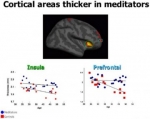
Science and Consciousness Review has interviewed brain researcher Sara Lazar on how meditation affects the brain. Lazar is the author of a recent study, in which magnetic resonance imaging was used to assess cortical thickness in 20 participants with extensive Insight meditation, a technique that involves focusing attention on internal experiences. Findings showed that brain regions associated with attention, interoception and sensory processing were thicker in meditation participants than matched controls, including the prefrontal cortex and right anterior insula. According to Lazar and her colleagues, these results provide preliminary evidence for experience-dependent cortical plasticity associated with meditation practice.
14:35 Posted in Meditation & brain | Permalink | Comments (0) | Tags: Positive Technology, meditation
Feb 20, 2006
Innovation between society and technoscience: Research perspectives and experience
Via STS Italia
First National Conference of STS Italia – Italian Society for Science and Technology Studies
9th-10th June 2006
Tiscali Auditorium, Cagliari (Sardinia)
Organizing Committee: Davide Bennato (Università di Roma “La Sapienza”), Alessandro Mongili (Università di Cagliari), Federico Neresini e Giuseppe Pellegrini (Università di Padova), Giuseppina Pellegrino (Università della Calabria).
Scientific Advisory Board: Davide Bennato (Università di Roma “La Sapienza”), Massimiamo Bucchi (Università di Trento), Luca Guzzetti (Università di Genova), Alessandro Mongili (Università di Cagliari), Federico Neresini (Università di Padova), Giuseppe Pellegrini (Università di Padova), Paolo Volontè (Università di Bolzano).
Sponsored by: Regione Autonoma della Sardegna – Assessorato per gli Affari generali, Dipartimento di Ricerche Economiche e Sociali dell’Università degli Studi di Cagliari, Banco di Sardegna, Tiscali SpA.
STS Italia is a research network which connects Italian scholars and academics interested in studying science and technology at both theoretical and empirical level.
The approaches and research perspectives pursued in the network consider relationships among science technology and society as a thick texture involving heterogenous actors, and reject any deterministic prejudice about the role of technoscience in society.
Research interests characterizing STS Italia concern theoretical and empirical analysis of science and technology in different contexts (from ‘laboratory studies’ to socio-technical networks; ftrom public perception of biotechnologies to domestication of technologies in everyday life).
STS Italia is inspired by the STS approach (Science and Technology Studies), which constitutes an inter- and trans-disciplinary field well known and institutionalized in Europe and the U.S.
The aim of STS Italia is to promote exchange, discussion and to strengthen the debate on science technology and society inside and outside Italian Universities.
The conference aims to attract a wide audience and broad participation, bringing together researchers engaged in investigating science and technology issues and willing to share their experience during plenary sessions and parallel workshops of the event. Younger researchers and Ph.D. students from University and other research centres are particularly welcome.
Provisional conference program
Plenary session 1
“STS: an international perspective. The state of the art in Science and Technology Studies”
Plenary session 2
“Technoscientific innovation and society: the Italian context”
Parallel workshops
“Research fieldwork and beyond: STS in Italy”
Suggested topics for abstracts:
- Theory, practices and normativity: the coordinates of the theoretical debate (social construction, actor-network, socio-technical networks and so on);
- Technosciences and democracy (governance, risk, public communication of science, ethics and development of technologies);
- “Ongoing processes” (biotechnologies, nanotechnologies, information infrastructures, internet/intranet, e-learning);
- Science, technology and gender;
- Communities of Practice, tacit knowledge and academic science;
- Practices of scientific knowledge, research policies and science crisis;
- Science, technology and social change.
The conference will be held at the Tiscali Campus Auditorium, “Sa Illetta”, SS 195 km 2,300, 09122 Cagliari, 2 kms. far from Cagliari city centre.
The abstract deadline is 9th April 2006
The acceptance of abstracts selected by the scientific advisory board will be communicated to authors by 10th May.
Participation to the conference is free (no registration fees). Partial coverage of travel and accommodation expenses for undergraduate, graduate and Ph.D. students will be provided. Requests for support will be selected by the Organizing Committee.
To send an abstract, download the form from www.stsitalia.org and send it via e-mail to alessandro.mongili@tiscali.it or by Snail mail to the following address:
Federico Neresini c/o Dipartimento di Sociologia – Università di Padova, Via Cesarotti 10/12, 35123 Padova
19:50 Posted in Positive Technology events | Permalink | Comments (0) | Tags: Positive Technology
Exploring spike transfer through the thalamus using hybrid artificial-biological neuronal networks
Exploring spike transfer through the thalamus using hybrid artificial-biological neuronal networks.
J Physiol Paris. 2004 Jul-Nov;98(4-6):540-58
Authors: Debay D, Wolfart J, Le Franc Y, Le Masson G, Bal T
We use dynamic clamp to construct "hybrid" thalamic circuits by connecting a biological neuron in situ to silicon- or software-generated "neurons" through artificial synapses. The purpose is to explore cellular sensory gating mechanisms that regulate the transfer efficiency of signals during different sleep-wake states. Hybrid technology is applied in vitro to different paradigms such as: (1) simulating interactions between biological thalamocortical neurons, artificial reticular thalamic inhibitory interneurons and a simulated sensory input, (2) grafting an artificial sensory input to a wholly biological thalamic network that generates spontaneous sleep-like oscillations, (3) injecting in thalamocortical neurons a background synaptic bombardment mimicking the activity of corticothalamic inputs. We show that the graded control of the strength of intrathalamic inhibition, combined with the membrane polarization and the fluctuating synaptic noise in thalamocortical neurons, is able to govern functional shifts between different input/output transmission states of the thalamic gate.
19:25 Posted in Biofeedback & neurofeedback | Permalink | Comments (0) | Tags: Positive Technology, Biofeedback, neurofeedback
SKeeper

Tadiran LifeCare, an Israeli company, has presented a compact wearable mobile communication and safety device (SKeeper™) for the elderly. The device
enables users to carry on with their daily routines without compromising safety and well being, by enabling them to stay in touch with relatives and caregivers in case of need. With SKeeper™ elderly people get immediate assistance by simply pressing a single button on the device, and parents can rest assured that their children can easily contact them should they be lost or need assistance
...
Using its embedded Siemens MC55 wireless module and built-in speakerphone, SKeeper™ can activate cellular voice calls to pre-defined numbers (e.g. a relative or a health professional) or receive calls from anyone. When a call is made to a monitoring center, a pre-defined SMS message can be sent automatically to a relative. Incoming calls can be screened and/or answered automatically. Most of the product features, such as speed dialing numbers, auto-answering, predefined text messages, etc. are remotely programmable by the monitoring center, or by the users or their authorized relatives via a Web based interface.
13:40 Posted in Brain training & cognitive enhancement | Permalink | Comments (0) | Tags: Positive Technology