




Feb 19, 2006
Ambient Intelligence: algorithms, methods and applications
9, 10 and 11 October 2006, at the 10th International Conference on Knowledge-Based & Intelligent Information & Engineering Systems:
This special session will focus on Artificial Intelligence techniques, essential for implementing AmI systems, complementing past workshops, which are generally oriented towards computer vision for the AmI paradigm.
Areas of interest include, but are not limited to:
- multi-agent methods,
- multi-sensor fusion,
- intelligent human-environment interaction,
- advanced human-computer interaction,
- conventional and embedded robotics solutions,
- ambient representation and innovative sensors
Notification of acceptance: 1 April 2006 Final papers to be received by: 1 May 2006
22:55 Posted in Pervasive computing | Permalink | Comments (0) | Tags: Positive Technology, ambient intelligence
IST Mobile Summit 2006
IST Mobile Summit 2006 is taking place 4-8 June 2006, in Myconos, Greece
The Summit will distribute the latest information covering all aspects of wireless telecommunications for systems of present and future generation to managers, researchers, hardware/software designers and other professionals in the field. The conference will also cover policy, regulation and standardisation issues, which have a key role in the introduction of operative systems and services. The conference will include invited presentations from leading experts. Several demonstrations from European and International projects will also take place, as well as exhibitions.
Visit the event's web site for more information
14:30 Posted in Wearable & mobile | Permalink | Comments (0) | Tags: Positive Technology, wearable, mobile
Cybertherapy new investigator 2006 award announced
The aim of this prize is to reward the presentation of strong methodological studies at the Cybertherapy conference. The recipient has to be a researcher who is new to the field of cyberpsychology. It is open to both oral / symposium or poster presentations and to researchers from all countries and disciplines.
The award is delivered by Stéphane Bouchard, chairholder of the Canada Research Chair in Clinical Cyberpsychology. It includes a certificate and a check of 1 000 $ US.
Details of the award and its rules are described in the attached document and on the Conference web site
14:21 Posted in Research institutions & funding opportunities | Permalink | Comments (0) | Tags: Positive Technology
Feb 18, 2006
Effect of age and timing of augmented feedback on learning muscle relaxation
Effects of age and timing of augmented feedback on learning muscle relaxation while performing a gross motor task
Am J Phys Med Rehabil. 2006 Feb;85(2):148-55; quiz 156-8
Authors: van Dijk H, Hermens HJ
OBJECTIVE: To examine the combined effect of age and timing of augmented feedback on learning muscle relaxation. Performing a gross motor task, subjects had to lower their trapezius muscle activity using the electromyographic signal as visual myofeedback. DESIGN: Healthy subjects (16 young adults: 20-35 yrs; and 16 older adults: 55-70 yrs) were randomly assigned to one of two timing conditions of myofeedback: concurrent (feedback was provided immediately during the trial) and terminal (feedback was provided delayed after the trial) condition. RESULTS: The results indicated that young adults had a higher level of motor performance (i.e., lower muscle activity) compared with older adults when myofeedback was provided. These effects persisted during short- (after 10 mins) and long-term retention (after 1 wk) when no myofeedback was provided. In contrast to young adults, older adults did not improve their performance throughout the experiment. There were no interactions of age with the timing conditions of myofeedback during acquisition and retention. CONCLUSIONS: Either timing condition of augmented feedback was equally helpful to young adults, whereas neither was helpful for older adults in learning muscle relaxation.
13:15 Posted in Biofeedback & neurofeedback | Permalink | Comments (0) | Tags: Positive Technology, biofeedback, neurofeedback
Feb 16, 2006
Neurotech Industry Investing and Business Conference
Via Brain Waves
May 18, 2006, Millbrae, California
Westin San Francisco Airport
The Neurotech Industry Investing and Business Conference is a business and investment conference for the neurotechnology industry including pharmaceuticals, medical devices and diagnostics.
 Keynotes presentations will focus on state of the neurotech industry, cutting edge company presentations, and panel discussions on a comprehensive selection of neurotech topics.
10:36 Posted in Neurotechnology & neuroinformatics | Permalink | Comments (0) | Tags: Positive Technology
Feb 15, 2006
Capsules for relaxation

11:25 Posted in Meditation & brain | Permalink | Comments (0) | Tags: Positive Technology
Feb 14, 2006
Therapy in IVR-Cave 'holodeck'
Via the Presence-Listserv
(the following excerpt is from the original article published in the Observer)
Inspired by Star Trek's holodeck, a virtual reality theatre will be built for treatment and therapy purposes at the Cleveland Hearing and Speech Center. The theatre is titled, "Immersive Virtual Reality Cave Simulator" (IVR-Cave).
Under the guidance of Stacy Willams, an assistant professor in communication services at Case, the construction on the theater will be complete by April 2006. Williams formulated the concept of the room with inspiration from Star Trek while she was working on her master's degree."I was intrigued by the whole holodeck concept, and at the time [when working on a masters degree], I was learning the importance of carry-over techniques, or generalizing what you learn in therapy to a natural environment," Williams said.
With this new simulator, therapists will get a chance to show patients real-life scenarios in a controlled environment, before they are out on their own in the real world...
Read full article
14:49 Posted in Cybertherapy | Permalink | Comments (0) | Tags: Positive Technology
LLuna2
Via the LLuna2 website
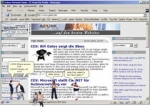
LLuna2 is designed to enable virtual presence on Web sites with animated avatars, video, bubble chat, private chat, and personal profiles through the Jabber[tm] protocol, integrated with Jabber based Instant Messaging and operable without additional server components.
11:50 Posted in Telepresence & virtual presence | Permalink | Comments (0) | Tags: Positive Technology
Bio-inspired intelligent machines
Via Smart Mobs
The goal of the EU-funded SenseMaker project is to develop electronic architectures that embody the features of living perceptual systems and are able to merge sensory information obtained through different sensory modalities, into a unified perceptual representation of the environment. The architectural design of the SenseMaker machine will be based on biological principles of sensory receptor and nervous system function, inspired by experimental studies of several different sensory modalities.
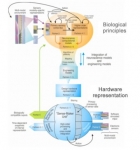
The system will include higher cognitive levels modelled on psychophysical research paradigms, whose function will be to implement dynamic rules of cross-modal integration, activity and time-dependent algorithms for internal prediction, goal directed attention, and transitions between dominant or convergent sensory modalities according to changing environmental parameters.
11:40 Posted in Pervasive computing | Permalink | Comments (0) | Tags: Ambient intelligence
Two postdoc positions available at CRAFT
Nicholas (Pasta and Vinegar) has announced that two postdoc positions are available at CRAFT (EPFL, the Swiss Federal Institute of Technology, Lausanne):
1) Three year position on the development of interactive furniture that augments learning in small groups. One of the projects will be about tables that reflect group interactions .
2) Three year position on the development of learning technologies aimed at students who rarely sit on a chair: apprentices working most of the week in a company and going one day at school. These technologies have to be more integrate in their physical environment (context aware devices, ambient displays, …)
Contact: pierre dot dillenbourg at epfl dot ch
11:35 Posted in Research institutions & funding opportunities | Permalink | Comments (0) | Tags: Positive Technology, funding opportunities
Forearm implanted chip to create an human-Ipod network
Researchers at the Korea Advanced Institute of Science and Technology (KAIST) presented a chip that is implanted in a user’s forearm to function as an audio signal transmission wire that links to an iPod. Many of the presentations featured devices that conserved power, though this chip goes a step further, harnessing the human body’s natural conductive properties to create personal-area networks. It is not practical to wire together the numerous devices that people carry with them, and Bluetooth connections fall prey to interference, leading scientists to explore the application of the human body as a networking cable. The Korean scientists augmented an iPod nano with their wideband signaling chip. When a user kept his finger pressed to the device, it transmitted data at 2 Mbps, at a consumption rate lower than 10 microwatts. Researchers from the University of Utah also presented a chip that scans brainwave activity by wirelessly streaming data through monitors in the hopes of creating prosthetics that quadriplegics could operate with their brain waves, though both projects are still in the preliminary research stages.
(…)
These chips are not something that will be included in one of Apple Computer CEO Steve Jobs’ Macworld keynotes anytime soon.
11:34 Posted in Future interfaces | Permalink | Comments (0) | Tags: Positive Technology
Perfectly normal

PerfectlyNormal is an interactive web-based video project that offers fourteen short video-based therapies. Depending on the "patients'" auto-description of their mental state, the web site automatically delivers one therapeutic video. According to the website disclaimer, the video-therapies were developed following principles of actual healing techniques derived from several different practices.
PerfectlyNormal is a web-based project commissioned by Soil Digital Media Suite, Neutral Ground Gallery, Regina, Saskatchewan, Canada. The project's author is composer and new media artist Michael Stecky (read short bio).From the project's website:
Bringing a unique healing experience, PerfectlyNormal, provides you and your family with the best integrated mental health care model the internet has to offer. Receive a personalized video therapy from our collection, a virtual one-stop shop of the best conventional and alternative practices from a diverse and interesting range of modalities.
PerfectlyNormal is an easy to use healing site made to work with you in mind. Visit when you like, PerfectlyNormal is available to you 24 hours a day, everyday. Now, feeling normal is only a mouse click away. PerfectlyNormal, have a perfect day everyday. PerfectlyNormal comes to you courtesy of the PerfectlyNormal Therapeutic Cooperative Alliance (PNTCA), a prestigious international group of like-minded therapists who share an inclusive spiritual philosophy.
11:25 Posted in Cyberart | Permalink | Comments (0) | Tags: Positive Technology, cyberart
MIXER 2006
Thanks Regine
MIXER 2006: International Workshop on the Design and Engineering of Mixed Reality Systems
5 June 2006, Bucharest, Romania
MIXER is an international workshop dedicated to the design and engineering of Mixed Reality Systems. Following on from the first work-shop, MIXER´2004, jointly organized with ACM-IUI´2004 and CADUI´2004, the primary goal of MIXER´2006 is to bring together researchers in the area of Mixed Reality (MR) systems (including augmented reality, augmented virtuality, augmented video, and tangible systems) to identify and articulate key research challenges for the design and engineering of MR systems. Also, in order to develop reliable theoretical foundations for MR systems, there is a need to gather the results of MR research and development to create a body of reusable knowledge for the design and construction of future systems. This body of knowledge may include: - MR design and engineering issues; - Research challenges for design methods and tools; - A corpus of applicable usability knowledge (e.g., guidelines, design heuristics).
MIXER´2006 solicits contributions that discuss: theoretical, methodological, technical or application-oriented considerations, relevant for: MR system design, MR system engineering / implementation, MR systems evaluation - and application-oriented issues, especially arising from new devices, techniques or environments.
10:38 Posted in Augmented/mixed reality | Permalink | Comments (0) | Tags: Positive Technology
Feb 13, 2006
Multisensory Interactive Installation
This article by Daniela Voto published on NOEMA describes a musical interactive system called "Multisensory Interactive Installation," (MII), which allows a user to paint and compose at the same time. But the most interesting feature of this installation is the implementation of artificial synesthesia (synesthesia is a neuropsychological phenomenon occurring when the stimulation of one sensory modality evokes a perception in one or more different senses).
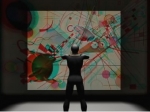
Through MII, users can explore and manipulate visual elements, generating different musical outputs, constructing and deconstructing the art piece and/or creating a new work, and musical composition. The selection and organization of given visual-acoustic elements, determines the different musical atmosphere created by each user.
16:55 Posted in Cyberart | Permalink | Comments (0) | Tags: Positive Technology