




Mar 05, 2006
Improving the accuracy of the diagnosis of schizophrenia by means of virtual reality
Improving the accuracy of the diagnosis of schizophrenia by means of virtual reality.
Am J Psychiatry. 2006 Mar;163(3):512-20
Authors: Sorkin A, Weinshall D, Modai I, Peled A
21:43 Posted in Cybertherapy | Permalink | Comments (0) | Tags: Positive Technology
Mar 02, 2006
Alpha activity induced by transcendental meditation
Medial profrontal cortex and anterior cingulate cortex in the generation of alpha activity induced by transcendental meditation: a magnetoencephalographic study.
Acta Med Okayama. 2006 Feb;60(1):51-8
Authors: Yamamoto S, Kitamura Y, Yamada N, Nakashima Y, Kuroda S
Previous EEG studies have shown that transcendental meditation (TM) increases frontal and central alpha activity. The present study was aimed at identifying the source of this alpha activity using magnetoencephalography (MEG) and electroencephalography (EEG) simultaneously on eight TM practitioners before, during, and after TM. The magnetic field potentials corresponding to TM-induced alpha activities on EEG recordings were extracted, and we attempted to localize the dipole sources using the multiple signal classification (MUSIC) algorithm, equivalent current dipole source analysis, and the multiple spatio-temporal dipole model. Since the dipoles were mapped to both the medial prefrontal cortex (mPFC) and anterior cingulate cortex (ACC), it is suggested that the mPFC and ACC play an important role in brain activity induced by TM.
18:18 Posted in Meditation & brain | Permalink | Comments (0) | Tags: Positive Technology
Scientist Brings Life to Cell Phones
Via Networked performance (from the original posting by Jim Downing on Smart Mobs]
Samsung Electronics "is now cooperating with a local research team to develop cell phone software that can feel, think, evolve and reproduce", the Korea Times reports. "The team, led by Prof. Kim Jong-hwan at the Korea Advanced Institute of Science and Technology, is hooking up with Samsung to create the attention-grabbing software outfitted with "artificial chromosomes". "This software can feel, think and interact with phone owners.It will breathe power into cell phones, bringing the gadgets to life,'' Kim said. 'We have almost completed the first-stage task with Samsung to install the software in cell phones and plan to start the second job soon,'' the 48-year-old said. Oh's former top lieutenant Lee Kang-hee said a three-dimensional avatar will lurk inside the cell phone and adjust itself to characteristics of the cell phone carriers. 'It's just like a sophisticated creature living inside a cell phone.An owner will be allowed to set its first personality by defining the underlying DNA,'' said Lee, who will join Samsung Electronics tomorrow."
However, it is up to the avatar how its personality develops with the owner. Its personality can get better or worse depending on how people treat it,'' he said. Lee added folks will be able to deal with loneliness felt by the avatar, which will pop up on the phone when they feel alone, by touching a button. Should the owner refuse to respond to the signal, the avatars will change their personalities either to express such feelings more often or just to become depressed,according to Lee. This year,the team is poised to start enabling the cell phone-embedded artificial creature to mate with another to have offspring".
13:35 Posted in Wearable & mobile | Permalink | Comments (0) | Tags: Positive Technology, mobile
Mar 01, 2006
Brain activity before an event predicts later recollection
Brain activity before an event predicts later recollection
Nature Neuroscience, Published online: 26 February 2006
22:34 Posted in Meditation & brain | Permalink | Comments (0) | Tags: Positive Technology
Mobile guitar-phone
Via Textually.org
Motorola is patenting a mobile phone that allows users to play a "virtual guitar neck" displayed on the screen by using its keypad; the produced sound can be played through the device's speaker or communicated at distance

22:28 Posted in Wearable & mobile | Permalink | Comments (0) | Tags: Positive Technology
Feb 28, 2006
Can neurofeedback training enhance performance?
Can neurofeedback training enhance performance? An evaluation of the evidence with implications for future research.
Appl Psychophysiol Biofeedback. 2005 Dec;30(4):347-64
Authors: Vernon DJ
There have been many claims regarding the possibilities of performance enhancement training. The aim of such training is for an individual to complete a specific function or task with fewer errors and greater efficiency, resulting in a more positive outcome. The present review examined evidence from neurofeedback training studies to enhance performance in a particular area. Previous research has documented associations between specific cortical states and optimum levels of performance in a range of tasks. This information provides a plausible rationale for the use of neurofeedback to train individuals to enhance their performance. An examination of the literature revealed that neurofeedback training has been utilised to enhance performance from three main areas; sport, cognitive and artistic performance. The review examined evidence from neurofeedback training studies within each of these three areas. Some suggestive findings have been reported with regard to the use of neurofeedback training to enhance performance. However, due to a range of methodological limitations and a general failure to elicit unambiguous changes in baseline EEG activity, a clear association between neurofeedback training and enhanced performance has yet to be established. Throughout, the review highlights a number of recommendations to aid and stimulate future research.
18:06 Posted in Biofeedback & neurofeedback | Permalink | Comments (0) | Tags: Positive Technology
Attention rehabilitation following stroke and traumatic brain injury
Attention rehabilitation following stroke and traumatic brain injury. A review.
Eura Medicophys. 2006 Feb 1;
Authors: Michel JA, Mateer CA
Attentional capacities, which are frequently impaired following brain injury, have also been found to be amenable to rehabilitation. This review discusses various approaches to attention rehabilitation in adult clients following stroke and traumatic brain injury. Attention process training has been accepted by many as a practice standard in postacute clients, however, its ability to generalize to new situations and to functional capacities is unclear. There is evidence for the use of psychostimulant medication, which may be most helpful when prescribed in combination with attention training. Biofeedback is a new avenue for intervention and is beginning to show some promising RESULTS: Rather than train underlying processes, another approach which shows promising results in a few small studies is training clients on specific functional skills, such as driving or vocational duties. Finally, modifications to the environment, implementation of strategies, provision of emotional support, and introduction of external supports/aids are important parts of a rehabilitation program, especially as the client returns to their home environment.
18:05 Posted in Biofeedback & neurofeedback | Permalink | Comments (0) | Tags: Positive Technology
Science News: Fitness is good for the brain
From the latest article in Science News Online:
New research suggests that physical exercise encourages healthy brains to function at their optimum levels. Fitness prompts nerve cells to multiply, strengthens their connections, and protects them from harm. Benefits seem to extend to brains and nerves that are diseased or damaged. These findings could suggest new treatments for people with Alzheimer's disease, Parkinson's disease, and spinal cord injuries.
[...]
Preliminary studies indicated that when lab animals exercise, their nerve cells release chemicals called neurotrophic factors. These proteins buffer nerve cells against illness or injury, prompt them to grow and multiply, and strengthen each neuron's connection with other nerve cells.
[...]
Furthermore, memory tests given to 1,740 people over 65 during a 6-year project have linked moderate exercise to reduced risk of dementia. These results were published in the Jan. 17 Annals of Internal Medicine by a Seattle research team.
18:05 Posted in Mental practice & mental simulation | Permalink | Comments (0) | Tags: Positive Technology, mental practice, motor imagery
Interactive Computer Based Learning 2006
Interactive Computer Based Learning
27 - 29 September 2006 Villach, Austria
This interdisciplinary conference aims to focus on the exchange of relevant trends and research results as well as the presentation of practical experiences gained while developing and testing elements of interactive computer aided learning. Therefore pilot projects, applications and products will also be welcome.
The conference will be organized by the Carinthia Tech Institute (School of Electronics), Villach/Austria
Topics of interest
* Web based learning (WBL)
* Computer based learning (CBL)
* Computer aided language learning (CALL)
* Telelearning / Teleteaching / Teletutoring
* Life long learning
* Education and Internet / Intranet
* Mobile learning environments/applications
* Platforms and authoring tools
* Adaptive learning environments
* Networks/Grids for Learning
* Educational Virtual Environments
* Collaborative Learning
* Knowledge management and learning
* Applications of the Semantic Web
* Methods of content adaptation
* Standards and style-guides
* Remote and virtual laboratories
* Multimedia and virtual reality
* Pedagogical and psychological issues
* Evaluation and outcomes assessment
* New learning models and applications
* Cost-effectiveness
* Real world experiences
* Pilot projects / Products / Applications
17:42 Posted in Positive Technology events | Permalink | Comments (0) | Tags: Positive Technology
Mind & Brain portal on Wikipedia
Via Mind Hacks
A mind and brain portal and a psychology portal have been recently included in Wikipedia. The aim of these online tools is to provide the psychology and neuroscience community with latest encyclopaedic contents, and to deliver news/messages related to these disciplines.
17:35 Posted in Research tools | Permalink | Comments (0) | Tags: Positive Technology
Feb 27, 2006
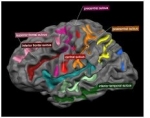
BrainTutor
Via Mind Hacks
BrainTutor is a software package which allows users to visualize, rotate and even "slice through" a brain scan in 2D and 3D. It is also possible to get the label of particular brain areas by clicking on them. The package is free and runs onLinux, Mac OSX and Windows
14:05 Posted in Research tools | Permalink | Comments (0) | Tags: Positive Technology
Improvement and generalization of arm motor performance through motor imagery practice
10:17 Posted in Mental practice & mental simulation | Permalink | Comments (0) | Tags: Positive Technology