




Mar 16, 2007
The Amygdaloids
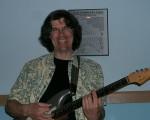
rom the Amygdaloids website
What do you get when you mix the son of a Louisiana butcher, a dome builder, a philosophy major, and an ex-Israeli solider? NYU scientists who play rock n' roll, of course. Joseph LeDoux, Daniela Schiller, and Nina Galbraith Curely are neuroscientists who study emotion and memory functions of the brain, and Tyler Volk is an environmental scientist who has also written about mind and brain. Their original songs are about mental life and mental disorders (Mind-Body Problem, An Emotional Brain, If You Want Your Brain to Last). They also cover other "heavy mental" tunes like Manic Depression, 8 Miles High, and 19th Nervous Breakdown. When all else fails, they slip into the blues for. Newsday, not surprisingly, describes The Amygdaloids as "Heavy Mental."
22:50 | Permalink | Comments (0)
Egocentric depth judgments in optical, see-through augmented reality
Egocentric depth judgments in optical, see-through augmented reality.
IEEE Trans Vis Comput Graph. 2007 May-Jun;13(3):429-42
Authors: Swan Ii JE, Jones A, Kolstad E, Livingston MA, Smallman HS
Abstract-A fundamental problem in optical, see-through augmented reality (AR) is characterizing how it affects the perception of spatial layout and depth. This problem is important because AR system developers need to both place graphics in arbitrary spatial relationships with real-world objects, and to know that users will perceive them in the same relationships. Furthermore, AR makes possible enhanced perceptual techniques that have no real-world equivalent, such as x-ray vision, where AR users are supposed to perceive graphics as being located behind opaque surfaces. This paper reviews and discusses protocols for measuring egocentric depth judgments in both virtual and augmented environments, and discusses the well-known problem of depth underestimation in virtual environments. It then describes two experiments that measured egocentric depth judgments in AR. Experiment I used a perceptual matching protocol to measure AR depth judgments at medium and far-field distances of 5 to 45 meters. The experiment studied the effects of upper versus lower visual field location, the x-ray vision condition, and practice on the task. The experimental findings include evidence for a switch in bias, from underestimating to overestimating the distance of AR-presented graphics, at sim23 meters, as well as a quantification of how much more difficult the x-ray vision condition makes the task. Experiment II used blind walking and verbal report protocols to measure AR depth judgments at distances of 3 to 7 meters. The experiment examined real-world objects, real-world objects seen through the AR display, virtual objects, and combined real and virtual objects. The results give evidence that the egocentric depth of AR objects is underestimated at these distances, but to a lesser degree than has previously been found for most virtual reality environments. The results are consistent with previous studies that have implicated a restricted field-of-view, combined with an inability for observers to scan the ground plane in a near-to-far direction, as explanations for the observed depth underestimation.
22:24 Posted in Virtual worlds | Permalink | Comments (0) | Tags: virtual reality, augmented reality, mixed reality
Snout Performance & Public Forum
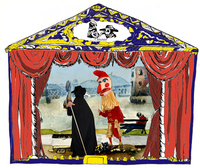
From Urban Tapestries
__________________________________________________
Venue: Cargo, 83 Rivington St, Kingsland Viaduct, London, EC2A 3AY
The performance will start at Cargo and the route will include Hoxton
Square and Hoxton Market
Dates/Times: Tuesday 10 April, Performance 10am, Conference 1.30-5pm.
Tube: Old St, Liverpool St
Admission: Free
Access: Limited, please call in advance for details
Information: +44 (0)20 7729 9616, www.iniva.org, institute@iniva.org
Supported by Arts Council England & Esmée Fairbairn
Download the eFlyer
__________________________________________________
With increasing concerns about climate change, individuals and communities are looking for new ways to take action and make a real and lasting impact.
In the Snout 'carnival' performance and public forum, artists, producers, performers and computer programmers demonstrate how to create wearable technologies from scavenged media, in order to map the invisible gases that affect our everyday environment. The project by inIVA, Proboscis and researchers from Birkbeck College also explores how communities can use this visual evidence to participate in or initiate local action.
The performance will show in action two prototype Snout sensor 'wearables' based on traditional carnival costumes. Carnival is a time of suspension of the normal activities of everyday life - a time when the fool becomes king for a day, when social hierarchies are inverted, a time when everyone is equal. Snout proposes 'participatory sensing' as a lively addition to the popular artform of carnival costume design, engaging the community in an investigation of its own environment, something usually done by local authorities and state agencies.
A public forum on 'participatory sensing and media scavenging' will be held after the performance. This will demonstrate the Snout wearables, discuss evidence collecting for environmental action and how communities can reflect on the personal impact of pollution and the environment. The forum, led by Giles Lane (Proboscis) and Dr George Roussos (Birkbeck) will look at 'participatory sensing' as a form of social engagement. The forum will share tactics on how to 'scavenge' free online services and resources, as well as exploring the relationship between information, aesthetics and design and how to make these ideas and issues accessible to more people.
Snout is a new collaboration between inIVA, Proboscis and researchers from Birkbeck College exploring relationships between the body, community and the environment. It builds on a previous collaboration Feral Robots (with Natalie Jeremijenko) to investigate how data can be collected from environmental sensors as part of popular social and cultural activities.
22:22 Posted in Wearable & mobile | Permalink | Comments (0) | Tags: wearable
Methods of Understanding and Designing For Mobile Communities


 have a look at this PhD thesis by Jeff Axup - lot of interesting stuff about mobile research methods...
Download the entire thesis here:
Methods of Understanding and Designing For Mobile Communities
Major research outcomes presented in this thesis lie in three areas: 1) methods, 2) technology designs, and 3) backpacker culture. Five studies of backpacker behaviour and requirements form the core of the research. The methods used are in-situ and exploratory, and apply both novel and existing techniques to the domain of backpackers and mobile groups.
Methods demonstrated in this research include: field trips for exploring mobile group behaviour and device usage, a social pairing exercise to explore social networks, contextual postcards to gain distributed feedback, and blog analysis which provides post-hoc diary data. Theoretical contributions include: observations on method triangulation, a taxonomy of mobility research, method templates to assist method usage, and identification of key categories leading to mobile group requirements. Design related outcomes include: 57 mobile tourism product ideas, a format for conveying product concepts, and a design for a wearable device to assist mobile researchers.
Our understanding of backpacker culture has also improved as a consequence of the research. It has also generated user requirements to aid mobile development, methods of visualising mobile groups and communities, and a listing of relevant design tensions. Additionally, the research has added to our understanding of how new technologies such as blogs, SMS and iPods are being used by backpackers and how mobile groups naturally communicate.
22:15 Posted in Wearable & mobile | Permalink | Comments (0) | Tags: mobile, wearable
Neurofeedback for Children with ADHD
Neurofeedback for Children with ADHD: A Comparison of SCP and Theta/Beta Protocols.
Appl Psychophysiol Biofeedback. 2007 Mar 14;
Authors: Leins U, Goth G, Hinterberger T, Klinger C, Rumpf N, Strehl U
Behavioral and cognitive improvements in children with ADHD have been consistently reported after neurofeedback-treatment. However, neurofeedback has not been commonly accepted as a treatment for ADHD. This study addresses previous methodological shortcomings while comparing a neurofeedback-training of Theta-Beta frequencies and training of slow cortical potentials (SCPs). The study aimed at answering (a) whether patients were able to demonstrate learning of cortical self-regulation, (b) if treatment leads to an improvement in cognition and behavior and (c) if the two experimental groups differ in cognitive and behavioral outcome variables. SCP participants were trained to produce positive and negative SCP-shifts while the Theta/Beta participants were trained to suppress Theta (4-8 Hz) while increasing Beta (12-20 Hz). Participants were blind to group assignment. Assessment included potentially confounding variables. Each group was comprised of 19 children with ADHD (aged 8-13 years). The treatment procedure consisted of three phases of 10 sessions each. Both groups were able to intentionally regulate cortical activity and improved in attention and IQ. Parents and teachers reported significant behavioral and cognitive improvements. Clinical effects for both groups remained stable six months after treatment. Groups did not differ in behavioural or cognitive outcome.
21:48 Posted in Biofeedback & neurofeedback | Permalink | Comments (0) | Tags: biofeedback, neurofeedback
Socially assistive robotics for post-stroke rehabilitation
Journal of NeuroEngineering and Rehabilitation
Maja J Matari
Background: Although there is a great deal of success in rehabilitative robotics applied to patient recovery post stroke, most of the research to date has dealt with providing physical assistance. However, new rehabilitation studies support the theory that not all therapy need be hands-on. We describe a new area, called socially assistive robotics, that focuses on non-contact patient/user assistance. We demonstrate the approach with an implemented and tested post-stroke recovery robot and discuss its potential for effectiveness. Results: We describe a pilot study involving an autonomous assistive mobile robot that aids stroke patient rehabilitation by providing monitoring, encouragement, and reminders. The robot navigates autonomously, monitors the patient's arm activity, and helps the patient remember to follow a rehabilitation program. We also show preliminary results from a follow-up study that focused on the role of robot physical embodiment in a rehabilitation context. Conclusion: We outline and discuss future experimental designs and factors toward the development of effective socially assistive post-stroke rehabilitation robots.
21:46 Posted in AI & robotics | Permalink | Comments (0) | Tags: robotics, artificial intelligence
Robot/computer-assisted motivating systems for personalized, home-based, stroke rehabilitation
21:45 Posted in AI & robotics | Permalink | Comments (0) | Tags: robotics, artificial intelligence
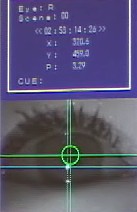
New eye-tracking system analyzes the interest level of TV viewers
21:41 Posted in Research tools | Permalink | Comments (0) | Tags: eye-tracking
VR and museums: call for papers
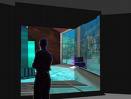
Deadline: Friday April 27, 2007 :: Contributions are welcomed for a new book addressing the construction and interpretation of virtual artefacts within virtual world museums and within physical museum spaces. Particular emphasis is placed on theories of spatiality and strategies of interpretation.
The editors seek papers that intervene in critical discourses surrounding virtual reality and virtual artefacts, to explore the rapidly changing temporal, spatial and theoretical boundaries of contemporary museum display practice. We are especially interested in spatiality as it is employed in the construction of virtual artefacts, as well as the roles these spaces enact as signifiers of historical narrative and sites of social interaction.
We are also interested in the relationship between real-world museums and virtual world museums, with a view to interrogating the construction of meaning within, across and between both. We welcome original scholarly contributions on the topic of new cultural practices and communities related to virtual reality in the context of museum display practice. Papers might address, but are in no way limited to, the following:
* Authenticity and artificiality
* Exploration and discovery
* Physical vs virtual
* Representation/interpretation of virtual reality artefacts - as 3D spaces on screen or in a physical gallery
* Museum visiting in virtual space
* Representation of physical museum spaces in virtual worlds and their relationship to cultural definitions of museum spaces.
Please send a proposal of 500-750 words and a contributor's bio by Friday
April 27, 2007. Authors will be notified by Thursday May 31, 2007. Final drafts of papers are due by Monday October 1, 2007.
Please send your proposal to:
Tara Chittenden
Room 201
Strategic Research Unit
113 Chancery Lane
London WC2A 1PL
Or via email: tara.chittenden[at]lawsociety.org.uk
21:36 Posted in Virtual worlds | Permalink | Comments (0) | Tags: virtual reality, augmented reality, mixed reality
Mediamatic workshop


Mediamatic organizes a new workshop--Hybrid World Lab--in which the participants develop prototypes for hybrid world media applications. Where the virtual world and the physical world used to be quite separated realms of reality, they are quickly becoming two faces of the same hybrid coin. This workshop investigates the increasingly intimate fusion of digital and physical space from the perspective of a media maker.
The workshop is an intense process in which the participants explore the possibilities of the physical world as interface to online media: location based media, everyday objects as media interfaces, urban screens, and cultural application of RFID technology. Every morning lectures and lessons bring in new perspectives, project presentations and introductions to the hands-on workshop tools. Every afternoon the participants work on their own workshop projects. In 5 workshop days every participant will develop a prototype of a hybrid world media project, assisted by outstanding international trainers and lectures and technical assistants. The workshop closes with a public presentation in which the issues are discussed and the results are shown.Topics: Some of the topics that will be investigated in this workshop are: Cultural application and impact of RFID technology, internet-of-things. Using RFID in combination with other kinds of sensors. Ubiquitous computing (ubicomp) and ambient intelligence: services and applications that use chips embedded in household appliances and in public space. Locative media tools, car navigation systems, GPS tools, location sensitive mobile phones. The web as interface to the physical world: geotagging and mashupswith Google Maps & Google Earth. Games in hybrid space.
21:33 Posted in Augmented/mixed reality | Permalink | Comments (0) | Tags: virtual reality, augmented reality, mixed reality