




May 24, 2006
Motor imagery
Motor imagery.
J Physiol Paris. 2006 May 19.
Authors: Lotze M, Halsband U
We describe general concepts about motor imagery and differences to motor execution. The problem of controlling what the subject actually does during imagery is emphasized. A major part of the chapter is dealing with mental training by imagery and the usage of motor imagination in athletes, musicians and during rehabilitation. Data of altered representations of the body after loss of afferent information and motor representation due to limb amputation or complete spinal cord injury are demonstrated and discussed. Finally we provide an outlook on additional work about motor imagery important for further understanding of the topic.
22:00 Posted in Mental practice & mental simulation | Permalink | Comments (0) | Tags: Positive Technology
May 23, 2006
Lateralization of unimanual and bimanual motor imagery
Lateralization of unimanual and bimanual motor imagery.
Brain Res. 2006 May 18;
Authors: Stinear CM, Fleming MK, Byblow WD
Most studies of motor imagery have examined motor cortex function during imagery of dominant hand movement. The aim of this study was to examine the modulation of excitability in the dominant and non-dominant corticomotor pathways during kinesthetic motor imagery of unimanual and bimanual movement. Transcranial magnetic stimulation (TMS) was applied over the contralateral motor cortex (M1) to elicit motor-evoked potentials (MEPs) in the abductor pollicis brevis (APB) and abductor digiti minimi (ADM) muscles of each hand, in two separate sessions. Transcutaneous electrical stimuli were also delivered to the median nerve at each wrist, to elicit F-waves from APB. Fifteen right-handed volunteers imagined unimanual and bimanual phasic thumb movements, paced with a 1-Hz auditory metronome. Stimuli were delivered at rest, and either 50 ms before (ON phase), or 450 ms after (OFF phase), the metronome beeps. Significant MEP amplitude facilitation occurred only in right APB, during the ON phase of motor imagery of the right hand and both hands. Significant temporal modulation of right APB MEP amplitude was observed during motor imagery of right, left and bimanual performance. F-wave persistence and amplitude were unaffected by imagery. These results demonstrate that the motor imagery is lateralized to the left (dominant) hemisphere, which is engaged by imagery of each hand separately, and bimanual imagery. This finding has implications for the use of motor imagery in rehabilitation.
22:23 Posted in Mental practice & mental simulation | Permalink | Comments (0) | Tags: Positive Technology
Limits of brain-computer interface
Limits of brain-computer interface. Case report.
Neurosurg Focus. 2006;20(5):e6
Authors: Bakay RA
22:19 Posted in Brain-computer interface | Permalink | Comments (0) | Tags: Positive Technology
Emilio Servadio
Emilio Servadio has been one of the most important Italian psychologists, along with Cesare Musatti and Roberto Assagioli.
A student of Freud, Servadio was renowned primarily for his contributions to psychoanalysis (he was among the founders of the Italian Psychoanalytic Society), but he was also well known for his work in parapsychology and altered states of consciousness.
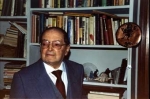
In this commemorative article (download the Servadio_SISSC.zip: 2.8 Mb), Pierangelo Garzia, a science writer who had personally known Servadio, describes the main scientific achievements and the phylosophical approach of this great thinker.
18:20 | Permalink | Comments (0) | Tags: Positive Technology
May 22, 2006
3rd International Conference on Enactive Interfaces
Via VRoot.org
The 3rd International Conference on Enactive Interfaces, promoted by the European Network of Excellence ENACTIVE INTERFACES, will be held in Montpellier (France) on November 20-21, 2006.
The aim of the conference is to encourage the emergence of a multidisciplinary research community in a new field of research and on a new generation of human-computer interfaces called Enactive Interfaces.
From the website:
Enactive Interfaces are inspired by a fundamental concept of “interaction” that has not been exploited by other approaches to the design of human-computer interface technologies. Mainly, interfaces have been designed to present information via symbols, or icons.
In the symbolic approach, information is stored as words, mathematical symbols or other symbolic systems, while in the iconic approach information is stored in the form of visual images, such as diagrams and illustrations.
ENACTIVE knowledge is information gained through perception-action interactions with the environment. Examples include information gained by grasping an object, by hefting a stone, or by walking around an obstacle that occludes our view. It is gained through intuitive movements, of which we often are not aware. Enactive knowledge is inherently multimodal, because motor actions alter the stimulation of multiple perceptual systems. Enactive knowledge is essential in tasks such as driving a car, dancing, playing a musical instrument, modelling objects from clay, performing sports, and so on.
Enactive knowledge is neither symbolic nor iconic. It is direct, in the sense that it is natural and intuitive, based on experience and the perceptual consequences of motor acts.
ENACTIVE / 06 will highlight convergences between the concept of Enaction and the sciences of complexity. Biological, cognitive, perceptual or technological systems are complex dynamical systems exhibiting (in)stability properties that are consequential for the agent-environment interaction. The conference will provide new insights, through the prism of ENACTIVE COMPLEXITY, about human interaction with multimodal interfaces.
23:15 Posted in Future interfaces | Permalink | Comments (0) | Tags: Positive Technology
Origami Cell Phone
 Via Pasta and Vinegar
 The Origami Cell Phone is a future cell phone concept, which uses flexible e-paper to create a larger-than-cell display.
The concept was developed at Inventables, a consulting company specialized in "just about possible" applications.
23:03 Posted in Wearable & mobile | Permalink | Comments (0) | Tags: Positive Technology
The top10 in cognitive science
According to the Cognitive Science Millennium Project, the top 10 most influential works in cognitive science from the 20th century are the following:
- Syntactic Structures Chomsky, N. (1957)
- Vision: a computational investigation into the human representation and processing of visual information Marr, D. (1982)
- Computing machinery and intelligence Turing, A. M. (1950) Mind, 59, 433-460.
- The organization of behavior; a neuropsychological theory Hebb, D.O. (1949)
- Parallel distributed processing: Explorations in the microstructure of cognition Rumelhart, D. E., McClelland, J. L. (1986)
- Human problem solving Newell, A., & Simon, H. A. (1972)
- he modularity of mind: An essay on faculty psychology Fodor, J. (1983)
- Remembering: A study in experimental and social psychology Bartlett, F. C. (1932)
- The magical number seven, plus or minus two: Some limits on our capacity for processing information Miller, G. A. (1956) Psychological Review, 63, 81-97
- Perception and Communication Broadbent, D. (1958)
22:51 | Permalink | Comments (0) | Tags: Positive Technology
Neurotechnology market is raising
The MIT Technology Review has interviewed Zack Lynch, managing directory of market analysis firm NeuroInsights, about the future of neurotechnology. According to a recent report produced by Lynch's firm, 450 companies participate in the neurotechnology market, producing revenues of $110 billion in 2005.
Here is an excerpt of the interview:
Technology Review: Why neurotechnology?Zack Lynch: Neuroscience is now moving from a science to an industry. What we're really looking at is an evolution: researchers are now going beyond basic science and developing more effective therapeutics for brain-related illnesses.
The need is huge. One in four people worldwide suffer from a brain-related illness, which costs a trillion dollars a year in indirect and direct economic costs. We all know someone who is affected. That burden will continue to grow with the aging population. We have more people, and more people living longer -- it's a multiplier effect.
TR: We're also starting to see a new kind of therapy for brain-related illnesses -- electrical stimulation. Various types of stimulation devices are now on the market to treat epilepsy, depression, and Parkinson's disease. What are some of the near- and far-term technologies we'll see with this kind of device?
ZL: We're seeing explosive growth in this area because scientists are overcoming many of the hurdles in this area. One example is longer battery life, so devices don't have to be surgically implanted every five years. Researchers are also developing much smaller devices. Advanced Bionics, for example, has a next-generation stimulator in trials for migraines.
In the neurodevice space, the obesity market is coming on strong. Several companies are working on this, including Medtronics and Leptos Biomedical. In obesity, even a small benefit is a breakthrough, because gastric bypass surgery [one of the most common treatments for morbid obesity] is so invasive.
In the next 10 years, I think we'll start to see a combination of technologies, like maybe a brain stimulator that releases L-dopa [a treatment for Parkinson's disease]. Whether that's viable is a whole other question, but that possibility is there because of the microelectronics revolution.
The real breakthrough will come from work on new electrodes. This will transform neurostimulator applications. With these technologies, you can create noninvasive devices and target very specific parts of the brain. It's like going from a Model T to a Ferrari. Those technologies will present the real competition for drugs.
22:42 Posted in Neurotechnology & neuroinformatics | Permalink | Comments (0) | Tags: Positive Technology