




May 21, 2006
Foundation and Practice of Neurofeedback for the Treatment of Epilepsy
Appl Psychophysiol Biofeedback. 2006 Apr 14;
Authors: Sterman MB, Egner T
This review provides an updated overview of the neurophysiological rationale, basic and clinical research literature, and current methods of practice pertaining to clinical neurofeedback. It is based on documented findings, rational theory, and the research and clinical experience of the authors. While considering general issues of physiology, learning principles, and methodology, it focuses on the treatment of epilepsy with sensorimotor rhythm (SMR) training, arguably the best established clinical application of EEG operant conditioning. The basic research literature provides ample data to support a very detailed model of the neural generation of SMR, as well as the most likely candidate mechanism underlying its efficacy in clinical treatment. Further, while more controlled clinical trials would be desirable, a respectable literature supports the clinical utility of this alternative treatment for epilepsy. However, the skilled practice of clinical neurofeedback requires a solid understanding of the neurophysiology underlying EEG oscillation, operant learning principles and mechanisms, as well as an in-depth appreciation of the ins and outs of the various hardware/software equipment options open to the practitioner. It is suggested that the best clinical practice includes the systematic mapping of quantitative multi-electrode EEG measures against a normative database before and after treatment to guide the choice of treatment strategy and document progress towards EEG normalization. We conclude that the research literature reviewed in this article justifies the assertion that neurofeedback treatment of epilepsy/seizure disorders constitutes a well-founded and viable alternative to anticonvulsant pharmacotherapy.
23:51 Posted in Biofeedback & neurofeedback | Permalink | Comments (0) | Tags: Positive Technology
Towards adaptive classification for BCI
Towards adaptive classification for BCI.
J Neural Eng. 2006 Mar;3(1):R13-23
Authors: Shenoy P, Krauledat M, Blankertz B, Rao RP, Müller KR
Non-stationarities are ubiquitous in EEG signals. They are especially apparent in the use of EEG-based brain-computer interfaces (BCIs): (a) in the differences between the initial calibration measurement and the online operation of a BCI, or (b) caused by changes in the subject's brain processes during an experiment (e.g. due to fatigue, change of task involvement, etc). In this paper, we quantify for the first time such systematic evidence of statistical differences in data recorded during offline and online sessions. Furthermore, we propose novel techniques of investigating and visualizing data distributions, which are particularly useful for the analysis of (non-)stationarities. Our study shows that the brain signals used for control can change substantially from the offline calibration sessions to online control, and also within a single session. In addition to this general characterization of the signals, we propose several adaptive classification schemes and study their performance on data recorded during online experiments. An encouraging result of our study is that surprisingly simple adaptive methods in combination with an offline feature selection scheme can significantly increase BCI performance.
23:50 Posted in Brain-computer interface | Permalink | Comments (0) | Tags: Positive Technology
Towards adaptive classification for BCI
Towards adaptive classification for BCI.
J Neural Eng. 2006 Mar;3(1):R13-23
Authors: Shenoy P, Krauledat M, Blankertz B, Rao RP, Müller KR
Non-stationarities are ubiquitous in EEG signals. They are especially apparent in the use of EEG-based brain-computer interfaces (BCIs): (a) in the differences between the initial calibration measurement and the online operation of a BCI, or (b) caused by changes in the subject's brain processes during an experiment (e.g. due to fatigue, change of task involvement, etc). In this paper, we quantify for the first time such systematic evidence of statistical differences in data recorded during offline and online sessions. Furthermore, we propose novel techniques of investigating and visualizing data distributions, which are particularly useful for the analysis of (non-)stationarities. Our study shows that the brain signals used for control can change substantially from the offline calibration sessions to online control, and also within a single session. In addition to this general characterization of the signals, we propose several adaptive classification schemes and study their performance on data recorded during online experiments. An encouraging result of our study is that surprisingly simple adaptive methods in combination with an offline feature selection scheme can significantly increase BCI performance.
23:49 Posted in Brain-computer interface | Permalink | Comments (0) | Tags: Positive Technology
May 20, 2006
The NEW TIES project
Via Cognews
With funding from the European Commission's Future and Emerging Technologies (FET) initiative of the IST programme, five European research institutes are collaborating on the NEW TIES project to create a thoroughly 21st-century brave new world - one populated by randomly generated software beings, capable of developing their own language and culture.
From the project's website
The project is concerned with emergence and complexity in socially-inspired artificial systems. We will study large systems consisting of an environment and an inhabitant population. The main goal of the project is to realize an evolving artificial society capable of exploring the environment and developing its own image of this environment and the society through cooperation and interaction. We will work with virtual grid worlds and will set up environments that are sufficiently complex and demanding that communication and cooperation are necessary to adapt to the given tasks. The population's weaponry to develop advanced skills bottom-up consists of individual learning, evolutionary learning, and social learning. One of the main innovations of this project is social learning interpreted as passing knowledge explicitly via a language to others in the same generation. This has a synergetic effect on the learning processes and enables the society to rapidly develop an "understanding" of the world collectively. If the learning process stabilises, the collective must have formed an appropriate world map. Then we will probe the collective mind to learn how the agents perceive the environment, including themselves, and what skills and procedures they have developed to adapt successfully. This could yield new knowledge and surprising perspectives about the environment and the survival task. The project represents a significant scale-up beyond the state-of-the-art in two dimensions: the inner complexity of inhabitants and the size of the population. To achieve and explore highly complex organisms and behaviours, very large populations will be studied. This will make the system at the macro level complex enough to allow significant behaviours (cultures etc) to emerge in separate parts of the system and to interact. To enable this we will set up a large distributed computing infrastructure, and a shared platform to allow very large scale experiments in a p2p fashion.
12:57 Posted in AI & robotics | Permalink | Comments (0) | Tags: Positive Technology
May 18, 2006
Special issue of CyberPsychology & Behavior on Virtual Rehabilitation

CyberPsychology & Behavior
Volume 9, Number 2, Apr 2006
------------------------------------------------------------------------
The above issue is now available online from Liebert Online at:
http://www.liebertonline.com/toc/cpb/9/2
The table of contents for this issue is listed below. Click on the links below to view the abstract for each article, or click on the link above to read the table of contents online.
------------------------------------------------------------------------
State of the Art in Virtual Rehabilitation
Albert "Skip" Rizzo
CyberPsychology & Behavior, Vol. 9, No. 2: 113-113.
http://www.liebertonline.com/doi/abs/10.1089/cpb.2006.9.113
------------------------------------------------------------------------
TIES that BIND: An Introduction to Domain Mapping as a Visualization Tool for Virtual Rehabilitation
Patrice L. (Tamar) Weiss, Rochelle Kedar, Meir Shahar CyberPsychology & Behavior, Vol. 9, No. 2: 114-122.
http://www.liebertonline.com/doi/abs/10.1089/cpb.2006.9.114
------------------------------------------------------------------------
Feasibility, Motivation, and Selective Motor Control: Virtual Reality Compared to Conventional Home Exercise in Children with Cerebral Palsy
C. Bryanton, J. Bosse, M. Brien, J. Mclean, A. McCormick, H. Sveistrup
CyberPsychology & Behavior, Vol. 9, No. 2: 123-128.
http://www.liebertonline.com/doi/abs/10.1089/cpb.2006.9.123
------------------------------------------------------------------------
Integrating Haptic-Tactile Feedback into a Video-Capture-Based Virtual Environment for Rehabilitation
Uri Feintuch, Liat Raz, Jane Hwang, Naomi Josman, Noomi Katz, Rachel Kizony, Debbie Rand, Albert "Skip" Rizzo, Meir Shahar, Jang Yongseok, Patrice L. (Tamar) Weiss
CyberPsychology & Behavior, Vol. 9, No. 2: 129-132.
http://www.liebertonline.com/doi/abs/10.1089/cpb.2006.9.129
------------------------------------------------------------------------
Reaching within Video-Capture Virtual Reality: Using Virtual Reality as a Motor Control Paradigm
Assaf Y. Dvorkin, Meir Shahar, Patrice L. (Tamar) Weiss
CyberPsychology & Behavior, Vol. 9, No. 2: 133-136.
http://www.liebertonline.com/doi/abs/10.1089/cpb.2006.9.133
------------------------------------------------------------------------
Virtual Reality in the Rehabilitation of the Upper Limb after Stroke: The User?s Perspective
J.H. Crosbie, S. Lennon, M.D.J. McNeill, S.M. McDonough
CyberPsychology & Behavior, Vol. 9, No. 2: 137-141.
http://www.liebertonline.com/doi/abs/10.1089/cpb.2006.9.137
------------------------------------------------------------------------
Usability of the Remote Console for Virtual Reality Telerehabilitation: Formative Evaluation
Jeffrey A. Lewis, Judith E. Deutsch, Grigore Burdea
CyberPsychology & Behavior, Vol. 9, No. 2: 142-147.
http://www.liebertonline.com/doi/abs/10.1089/cpb.2006.9.142
------------------------------------------------------------------------
The Rutgers Arm, a Rehabilitation System in Virtual Reality: A Pilot Study
Manjuladevi Kuttuva, Rares Boian, Alma Merians, Grigore Burdea, Mourad Bouzit, Jeffrey Lewis, Devin Fensterheim
CyberPsychology & Behavior, Vol. 9, No. 2: 148-152.
http://www.liebertonline.com/doi/abs/10.1089/cpb.2006.9.148
------------------------------------------------------------------------
Responses to a Virtual Reality Grocery Store in Persons with and without Vestibular Dysfunction
Susan L. Whitney, Patrick J. Sparto, Larry F. Hodges, Sabarish V. Babu, Joseph M. Furman, Mark S. Redfern
CyberPsychology & Behavior, Vol. 9, No. 2: 152-156.
http://www.liebertonline.com/doi/abs/10.1089/cpb.2006.9.152
------------------------------------------------------------------------
A Treadmill and Motion Coupled Virtual Reality System for Gait Training Post-Stroke
Joyce Fung, Carol L. Richards, Francine Malouin, Bradford J. McFadyen, Anouk Lamontagne
CyberPsychology & Behavior, Vol. 9, No. 2: 157-162.
http://www.liebertonline.com/doi/abs/10.1089/cpb.2006.9.157
------------------------------------------------------------------------
Influences of the Perception of Self-Motion on Postural Parameters
E.A. Keshner, K. Dokka, R.V. Kenyon
CyberPsychology & Behavior, Vol. 9, No. 2: 163-166.
http://www.liebertonline.com/doi/abs/10.1089/cpb.2006.9.163
------------------------------------------------------------------------
Immersive Virtual Reality as a Rehabilitative Technology for Phantom Limb Experience: A Protocol
Craig D. Murray, Emma Patchick, Stephen Pettifer, Fabrice Caillette, Toby Howard
CyberPsychology & Behavior, Vol. 9, No. 2: 167-170.
http://www.liebertonline.com/doi/abs/10.1089/cpb.2006.9.167
------------------------------------------------------------------------
Motor Training in the Manipulation of Flexible Objects in Haptic Environments
I. Goncharenko, M. Svinin, Y. Kanou, S. Hosoe
CyberPsychology & Behavior, Vol. 9, No. 2: 171-174.
http://www.liebertonline.com/doi/abs/10.1089/cpb.2006.9.171
------------------------------------------------------------------------
Using Virtual Environment to Improve Spatial Perception by People Who Are Blind
Orly Lahav
CyberPsychology & Behavior, Vol. 9, No. 2: 174-177.
http://www.liebertonline.com/doi/abs/10.1089/cpb.2006.9.174
------------------------------------------------------------------------
The Jerusalem TeleRehabilitation System, a New Low-Cost, Haptic Rehabilitation Approach
Heidi Sugarman, Ehud Dayan, Aviva Weisel-Eichler, Joseph Tiran
CyberPsychology & Behavior, Vol. 9, No. 2: 178-182.
http://www.liebertonline.com/doi/abs/10.1089/cpb.2006.9.178
------------------------------------------------------------------------
Human Experience Modeler: Context-Driven Cognitive Retraining to Facilitate Transfer of Learning
C.M. Fidopiastis, C.B. Stapleton, J.D. Whiteside, C.E. Hughes, S.M. Fiore, G.A. Martin, J.P. Rolland, E.M. Smith
CyberPsychology & Behavior, Vol. 9, No. 2: 183-187.
http://www.liebertonline.com/doi/abs/10.1089/cpb.2006.9.183
------------------------------------------------------------------------
Application of Virtual Reality Graphics in Assessment of Concussion
Semyon Slobounov, Elena Slobounov, Karl Newell
CyberPsychology & Behavior, Vol. 9, No. 2: 188-191.
http://www.liebertonline.com/doi/abs/10.1089/cpb.2006.9.188
------------------------------------------------------------------------
Virtual Reality Pencil and Paper Tests for Neglect: AProtocol
Kenji Baheux, Makoto Yoshizawa, Kazunori Seki, Yasunobu Handa
CyberPsychology & Behavior, Vol. 9, No. 2: 192-195.
http://www.liebertonline.com/doi/abs/10.1089/cpb.2006.9.192
------------------------------------------------------------------------
Virtual and Physical Toys: Open-Ended Features for Non-Formal Learning
Eva Petersson, Anthony Brooks
CyberPsychology & Behavior, Vol. 9, No. 2: 196-199.
http://www.liebertonline.com/doi/abs/10.1089/cpb.2006.9.196
------------------------------------------------------------------------
Three-Dimensional Virtual Environments for Blind Children
Jaime Sanchez, Mauricio Saenz
CyberPsychology & Behavior, Vol. 9, No. 2: 200-206.
http://www.liebertonline.com/doi/abs/10.1089/cpb.2006.9.200
------------------------------------------------------------------------
Effectiveness of Virtual Reality for Pediatric Pain Distraction during IV Placement
Jeffrey I. Gold, Seok Hyeon Kim, Alexis J. Kant, Michael H. Joseph, Albert "Skip" Rizzo
CyberPsychology & Behavior, Vol. 9, No. 2: 207-212.
http://www.liebertonline.com/doi/abs/10.1089/cpb.2006.9.207
------------------------------------------------------------------------
Simulating Social Interaction to Address Deficits of Autistic Spectrum Disorder in Children
Cheryl Y. Trepagnier, Marc M. Sebrechts, Andreas Finkelmeyer, Willie Stewart, Jordana Woodford, Maya Coleman
CyberPsychology & Behavior, Vol. 9, No. 2: 213-217.
http://www.liebertonline.com/doi/abs/10.1089/cpb.2006.9.213
------------------------------------------------------------------------
Starting Research in Interaction Design with Visuals for Low-Functioning Children in the Autistic Spectrum: A Protocol
Narcis Pares, Anna Carreras, Jaume Durany, Jaume Ferrer, Pere Freixa, David Gomez, Orit Kruglanski, Roc Pares, J. Ignasi Ribas, Miquel Soler, Alex Sanjurjo
CyberPsychology & Behavior, Vol. 9, No. 2: 218-223.
http://www.liebertonline.com/doi/abs/10.1089/cpb.2006.9.218
------------------------------------------------------------------------
Virtual Reality Assessment of Medication Compliance in Patients with Schizophrenia
Elizabeth K. Baker, Matthew M. Kurtz, Robert S. Astur
CyberPsychology & Behavior, Vol. 9, No. 2: 224-229.
http://www.liebertonline.com/doi/abs/10.1089/cpb.2006.9.224
------------------------------------------------------------------------
Reality Check: The Role of Realism in Stress Reduction Using Media Technology
Y.A.W. de Kort, W.A. Ijsselsteijn
CyberPsychology & Behavior, Vol. 9, No. 2: 230-233.
http://www.liebertonline.com/doi/abs/10.1089/cpb.2006.9.230
------------------------------------------------------------------------
Hippocampus Function Predicts Severity of Post-Traumatic Stress Disorder
Robert S. Astur, Sarah A. St. Germain, David Tolin, Julian Ford, David Russell, Mike Stevens
CyberPsychology & Behavior, Vol. 9, No. 2: 234-240.
http://www.liebertonline.com/doi/abs/10.1089/cpb.2006.9.234
------------------------------------------------------------------------
BusWorld: Designing a Virtual Environment for Post-Traumatic Stress Disorder in Israel: A Protocol
Naomi Josman, Eli Somer, Ayelet Reisberg, Patrice L. (Tamar) Weiss, Azucena Garcia-Palacios, Hunter Hoffman
CyberPsychology & Behavior, Vol. 9, No. 2: 241-244.
http://www.liebertonline.com/doi/abs/10.1089/cpb.2006.9.241
------------------------------------------------------------------------
Simulation and Virtual Reality in Medical Education and Therapy: A Protocol
Michael J. Roy, Deborah L. Sticha, Patricia L. Kraus, Dale E. Olsen
CyberPsychology & Behavior, Vol. 9, No. 2: 245-247.
http://www.liebertonline.com/doi/abs/10.1089/cpb.2006.9.245
------------------------------------------------------------------------
Virtual Reality Applications to Agoraphobia: A Protocol
Georgina Cardenas, Sandra Munoz, Maribel Gonzalez, Guillermo Uribarren
CyberPsychology & Behavior, Vol. 9, No. 2: 248-250.
http://www.liebertonline.com/doi/abs/10.1089/cpb.2006.9.248
------------------------------------------------------------------------
CyberSightings
Albert "Skip" Rizzo
CyberPsychology & Behavior, Vol. 9, No. 2: 251-257.
http://www.liebertonline.com/doi/abs/10.1089/cpb.2006.9.251
------------------------------------------------------------------------
CyberEurope
Giuseppe Riva, Alessandra Preziosa
CyberPsychology & Behavior, Vol. 9, No. 2: 258-260.
http://www.liebertonline.com/doi/abs/10.1089/cpb.2006.9.258
15:50 Posted in Cybertherapy | Permalink | Comments (0) | Tags: Positive Technology
Impaired allocentric spatial memory underlying topographical disorientation
Impaired allocentric spatial memory underlying topographical disorientation.
Rev Neurosci. 2006;17(1-2):239-51
Authors: Burgess N, Trinkler I, King J, Kennedy A, Cipolotti L
The cognitive processes supporting spatial navigation are considered in the context of a patient (CF) with possible very early Alzheimer's disease who presents with topographical disorientation. Her verbal memory and her recognition memory for unknown buildings, landmarks and outdoor scenes was intact, although she showed an impairment in face processing. By contrast, her navigational ability, quantitatively assessed within a small virtual reality (VR) town, was significantly impaired. Interestingly, she showed a selective impairment in a VR object-location memory test whenever her viewpoint was shifted between presentation and test, but not when tested from the same viewpoint. We suggest that a specific impairment in locating objects relative to the environment rather than relative to the perceived viewpoint (i.e. allocentric rather than egocentric spatial memory) underlies her topographical disorientation. We discuss the likely neural bases of this deficit in the light of related studies in humans and animals, focusing on the hippocampus and related areas. The specificity of our test indicates a new way of assessing topographical disorientation, with possible application to the assessment of progressive dementias such as Alzheimer's disease.
15:46 Posted in Virtual worlds | Permalink | Comments (0) | Tags: Positive Technology
May 17, 2006
Robot of the year award
Via Pink Tentacle (source: Yomiuri Shimbun)
The Ministry of Economy, Trade and Industry (METI) plans to establish an annual Robot of the Year Award to recognize outstanding robots developed and put into practical use each year. In addition to the grand prize, prizes will be awarded to robots in the following categories: (1) industrial robots, such as those used in painting and welding, (2) service robots, such as those used in cleaning and security, (3) robots for use in special environments, such as rescue robots, and (4) robots developed by small to medium sized venture firms.
19:43 Posted in AI & robotics | Permalink | Comments (0) | Tags: Positive Technology
Air display
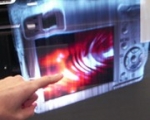
The company IO2 has developed a new display technology, the Heliodisplay, which allows to project into the air still or moving images that can be manipulated with a fingertip. The Heliodisplay works by creating a cloud of microscopic particles that make the air a display medium.
From the company's website:
Heliodisplay images are not holographic although they are free-space, employing a rear projection system in which images are captured onto a nearly invisible plane of transformed air. What the viewer sees is floating mid-air image or video. These projected images and video are two-dimensional space (i.e. planar) but appear 3D since there is no physical depth reference. While conventional displays have the benefit of being attached to a physical substrate, Heliodisplay projections are located in air, so you will notice some waviness to the quality of Heliodisplay images.
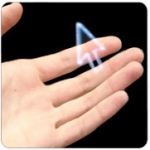
Watch the video here
19:22 Posted in Virtual worlds | Permalink | Comments (0) | Tags: Positive Technology
May 16, 2006
Building a Playground of Light
Via Wired

Innovations from NYU's technology program include a digital projector that turns the walls and floor of a therapist's office into an interactive game space. The goal: keeps kids engaged.
Read the full story
10:25 Posted in Cybertherapy | Permalink | Comments (0) | Tags: Positive Technology
May 15, 2006
Daegu to Launch 'Ubiquitous' Health Monitoring
From Smart Mobs
Daegu in South Korea "will be the first city in the country to provide a “ubiquitous” healthcare service in which so-called wearable computers will be used to monitor the health of elderly people living alone and patients with chronic diseases,"this article says."The devices,in the form of shirts,alert medical staff in real time when an emergency occurs.Daegu City said Thursday that it will launch its groundbreaking “U-Healthcare Service” in cooperation with the Ministry of Information and Communication.The city will distribute the bio-shirts to some 100 elderly people and patients with chronic diseases later this year.The shirts have embedded sensors that register vital signs and send the information to medical centers through the network. They also permit self-diagnosis, distance monitoring, emergency care and medical consultation for users in an environment of ubiquitous connectivity"
Daegu to Launch 'Ubiquitous' Health Monitoring
22:22 Posted in Wearable & mobile | Permalink | Comments (0) | Tags: Positive Technology
Powered Shoes
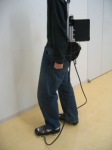
It has often been suggested that the best locomotion mechanism for virtual worlds would be walking, and it is well known that the sense of distance or orientation while walking is much better than while riding in a vehicle. However, the proprioceptive feedback of walking is not provided in most virtual environments. Powered Shoes is a revolutionary advance for entertainment and simulation applications, because it provides this proprioceptive feedback.
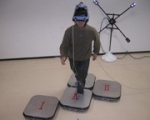
CirculaFloor is a locomotion interface using a group of movable floors. The movable floors employ a holonomic mechanism that achieves omni-directional motion. Circulation of the floors enables users to walk in arbitrary directions in a virtual environment while their positions are maintained
22:05 Posted in Virtual worlds | Permalink | Comments (0) | Tags: Positive Technology
Group Cognition

Innovative uses of global and local networks of linked computers make new ways of collaborative working, learning, and acting possible. In Group Cognition Gerry Stahl explores the technological and social reconfigurations that are needed to achieve computer-supported collaborative knowledge building--group cognition that transcends the limits of individual cognition. Computers can provide active media for social group cognition where ideas grow through the interactions within groups of people; software functionality can manage group discourse that results in shared understandings, new meanings, and collaborative learning. Stahl offers software design prototypes, analyzes empirical instances of collaboration, and elaborates a theory of collaboration that takes the group, rather than the individual, as the unit of analysis.
Stahl's design studies concentrate on mechanisms to support group formation, multiple interpretive perspectives, and the negotiation of group knowledge in applications as varied as collaborative curriculum development by teachers, writing summaries by students, and designing space voyages by NASA engineers. His empirical analysis shows how, in small-group collaborations, the group constructs intersubjective knowledge that emerges from and appears in the discourse itself. This discovery of group meaning becomes the springboard for Stahl's outline of a social theory of collaborative knowing. Stahl also discusses such related issues as the distinction between meaning making at the group level and interpretation at the individual level, appropriate research methodology, philosophical directions for group cognition theory, and suggestions for further empirical work.
21:50 Posted in Social Media | Permalink | Comments (0) | Tags: Positive Technology
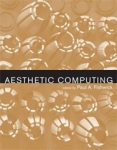
Aesthetic Computing
From Amazon
In Aesthetic Computing, key scholars and practitioners from art, design, computer science, and mathematics lay the foundations for a discipline that applies the theory and practice of art to computing. Aesthetic computing explores the way art and aesthetics can play a role in different areas of computer science. One of its goals is to modify computer science by the application of the wide range of definitions and categories normally associated with making art. For example, structures in computing might be represented using the style of Gaudi or the Bauhaus school. This goes beyond the usual definition of aesthetics in computing, which most often refers to the formal, abstract qualities of such structures--a beautiful proof, or an elegant diagram. The contributors to this book discuss the broader spectrum of aesthetics--from abstract qualities of symmetry and form to ideas of creative expression and pleasure--in the context of computer science. The assumption behind aesthetic computing is that the field of computing will be enriched if it embraces all of aesthetics. Human-computer interaction will benefit--"usability," for example, could refer to improving a user's emotional state--and new models of learning will emerge.
Aesthetic Computing approaches its subject from a variety of perspectives. After defining the field and placing it in its historical context, the book looks at art and design, mathematics and computing, and interface and interaction. Contributions range from essays on the art of visualization and "the poesy of programming" to discussions of the aesthetics of mathematics throughout history and transparency and reflectivity in interface design.
21:45 Posted in Emotional computing | Permalink | Comments (0) | Tags: Positive Technology