




Apr 02, 2006
HCI International 2007
12th international conference on Human-Computer Interaction, , 22-27 July 2007, Beijing, China
From the website
The HCI International 2007 jointly with the affiliated Conferences, which are held under one management and one Registration, invite you to Beijing, P.R. China to participate and contribute to the international forum for the dissemination and exchange of up-to-date scientific information on theoretical, generic and applied areas of HCI through the following modes of communication: Plenary / Keynote Presentation(s), Parallel Sessions, Poster Sessions and Tutorials. The Conference will start with three days of Tutorials. Parallel Sessions and Poster Sessions will be held during the last three days of the Conference.
The Conference focuses on the following major thematic areas:
- Human-Computer Interaction
- Human Interface and the Management of Information
- Universal Access in Human-Computer Interaction
- Ergonomics and Health Aspects of Work with Computers
- Engineering Psychology and Cognitive Ergonomics
- Virtual Reality
- Usability and Internationalization
- Online Communities and Social Computing
- Augmented Cognition
- Digital Human Modeling
The topics listed under each thematic area are indicative of the broad spectrum of issues to be addressed and are not intended to limit the range of submissions.
13:21 Posted in Positive Technology events | Permalink | Comments (0) | Tags: Positive Technology
Apr 01, 2006
The contribution of virtual reality to research on sensory feedback in remote control
The contribution of virtual reality to research on sensory feedback in remote control
Robert W. Lindeman, Yasuyuki Yanagida, Haruo Noma and Kenichi Hosaka
Virtual Reality, Volume 9, Number 4; Date: April 2006; Pages: 203 - 213
Here we consider research on the kinds of sensory information most effective as feedback during remote control of machines, and the role of virtual reality and telepresence in that research. We argue that full automation is a distant goal and that remote control deserves continued attention and improvement. Visual feedback to controllers has developed in various ways but autostereoscopic displays have yet to be proven. Haptic force feedback, in both real and virtual settings, has been demonstrated to offer much to the remote control environment and has led to a greater understanding of the kinesthetic and cutaneous components of haptics, and their role in multimodal processes, such as sensory capture and integration. We suggest that many displays using primarily visual feedback would benefit from the addition of haptic information but that much is yet to be learned about optimizing such displays.
22:50 Posted in Virtual worlds | Permalink | Comments (0) | Tags: Positive Technology
Emotional effects of sertraline: novel findings revealed by meditation
Emotional effects of sertraline: novel findings revealed by meditation.
Am J Orthopsychiatry. 2006 Jan;76(1):134-7
Authors: Walsh R, Victor B, Bitner R
Use of selective serotonin reuptake inhibitors continues to increase, as does concern about previously unrecognized, subtle side effects and questions about whether these drugs produce effects on healthy subjects. The authors report novel emotional effects identified by an experienced, psychologically healthy meditator who is a psychiatrist and researcher. On a meditation retreat, the subject identified a specific profile of emotional changes related to sertraline use. In particular, cognitive abilities and the emotions of fear and anger seemed unaffected. However, the emotions of sadness, happiness, rapture, and love were dramatically reduced in intensity and duration. ((c) 2006 APA, all rights reserved).
22:41 Posted in Meditation & brain | Permalink | Comments (0) | Tags: Positive Technology
Effect of neurofeedback training on the neural substrates of selective attention
Effect of neurofeedback training on the neural substrates of selective attention in children with attention-deficit/hyperactivity disorder: a functional magnetic resonance imaging study.
Neurosci Lett. 2006 Feb 20;394(3):216-21
Authors: Lévesque J, Beauregard M, Mensour B
Attention Deficit Hyperactivity Disorder (AD/HD) is a neurodevelopmental disorder mainly characterized by impairments in cognitive functions. Functional neuroimaging studies carried out in individuals with AD/HD have shown abnormal functioning of the anterior cingulate cortex (ACC) during tasks involving selective attention. In other respects, there is mounting evidence that neurofeedback training (NFT) can significantly improve cognitive functioning in AD/HD children. In this context, the present functional magnetic resonance imaging (fMRI) study was conducted to measure the effect of NFT on the neural substrates of selective attention in children with AD/HD. Twenty AD/HD children--not taking any psychostimulant and without co-morbidity-participated to the study. Fifteen children were randomly assigned to the Experimental (EXP) group (NFT), whereas the other five children were assigned to the Control (CON) group (no NFT). Subjects from both groups were scanned 1 week before the beginning of the NFT (Time 1) and 1 week after the end of this training (Time 2), while they performed a Counting Stroop task. At Time 1, for both groups, the Counting Stroop task was associated with significant loci of activation in the left superior parietal lobule. No activation was noted in the ACC. At Time 2, for both groups, the Counting Stroop task was still associated with significant activation of the left superior parietal lobule. This time, however, for the EXP group only there was a significant activation of the right ACC. These results suggest that in AD/HD children, NFT has the capacity to normalize the functioning of the ACC, the key neural substrate of selective attention.
22:35 Posted in Biofeedback & neurofeedback | Permalink | Comments (0) | Tags: Positive Technology
Mar 30, 2006
Device warns you if you're boring or irritating
The "emotional social intelligence prosthetic" device, which El Kaliouby is constructing along with MIT colleagues Rosalind Picard and Alea Teeters, consists of a camera small enough to be pinned to the side of a pair of glasses, connected to a hand-held computer running image recognition software plus software that can read the emotions these images show. If the wearer seems to be failing to engage his or her listener, the software makes the hand-held computer vibrate.
09:20 Posted in Emotional computing | Permalink | Comments (0) | Tags: Positive Technology
Mar 29, 2006
Video games tackle 'lazy eye'
from BBC NEWS
By Gareth Mitchell
Presenter, Digital Planet, BBC World Service
Playing virtual reality computer games may help treat the condition known as amblyopia, or lazy eye, say researchers. In patients with amblyopia, one eye works better than the other. Because the amblyopic eye is inferior for some reason, the brain decides to use the good eye. Over time, the neural connection to the bad eye becomes gradually weaker in favour of the good eye. The traditional way of fixing the problem is for patients to force the bad eye to work harder by wearing a patch over the good eye. The treatment usually involves patching for around 400 hours and can cause the eyes not to work together, resulting in double vision.
"Traditionally VR has been used to present realistic environments in 3D so you imagine you're there because of the depth of the world around you," said Richard Eastgate of the university's Virtual Reality Applications Research Team.
"But we're using VR to make something unrealistic. You could call it virtual unreality," he told Digital Planet...
Read the full story from BBC NEWS
16:30 Posted in Cybertherapy, Serious games | Permalink | Comments (0) | Tags: serious gaming, cybertherapy
Video Capture Virtual Reality in Burn Rehabilitation
The Use of Video Capture Virtual Reality in Burn Rehabilitation: The Possibilities.
J Burn Care Res. 2006 March/April;27(2):195-197
Authors: Haik J, Tessone A, Nota A, Mendes D, Raz L, Goldan O, Regev E, Winkler E, Mor E, Orenstein A, Hollombe I
We independently explored the use of the Sony PlayStation II EyeToy (Sony Corporation, Foster City, CA) as a tool for use in the rehabilitation of patients with severe burns. Intensive occupational and physical therapy is crucial in minimizing and preventing long-term disability for the burn patient; however, the therapist faces a difficult challenge combating the agonizing pain experienced by the patient during therapy. The Sony PlayStation II EyeToy is a projected, video-capture system that, although initially developed as a gaming environment for children, may be a useful application in a rehabilitative context. As compared with other virtual reality systems the EyeToytrade mark is an efficient rehabilitation tool that is sold commercially at a relatively low cost. This report presents the potential advantages for use of the EyeToytrade mark as an innovative rehabilitative tool with mitigating effects on pain in burn rehabilitation. This new technology represents a challenging and motivating way for the patient to immerse himself or herself in an alternate reality while undergoing treatment, thereby reducing the pain and discomfort he or she experiences. This simple, affordable technique may prove to heighten the level of patient cooperation and therefore speed the process of rehabilitation and return of functional ability.
16:28 Posted in Cybertherapy | Permalink | Comments (0) | Tags: Positive Technology
Biofeedback in hypertension
The Efficacy of Behavioral Treatments for Hypertension.
Appl Psychophysiol Biofeedback. 2006 Mar 25;
Authors: Linden W, Moseley JV
Evidence is reviewed for the efficacy of behavioral treatments for hypertension. The format chosen here is a review of reviews given that numerous consensus committee reports and quantitative reviews on the topic have been published. Extensive evidence from over 100 randomized controlled trials indicates that behavioral treatments reduce blood pressure (BP) to a modest degree, and this change is greater than what is seen in wait-list or other inactive controls. Effect sizes are quite variable. The observed BP reductions are much greater when BP levels were high at pre-test, and behavioral studies tend to underestimate possible benefits because of floor effects in their protocols. Blood pressure measured in the office may be confounded with measurement habituation. Multi-component, individualized psychological treatments lead to greater BP changes than do single-component treatments. Among biofeedback treatments, thermal feedback and electrodermal activity feedback fare better than EMG or direct BP feedback, which tend to produce null effects. There continues to be a scarcity of strong protocols that properly control for floor effects and potential measurement confounds.
16:27 Posted in Biofeedback & neurofeedback | Permalink | Comments (0) | Tags: Positive Technology
Effects of visual feedback therapy on postural control after stroke
Effects of visual feedback therapy on postural control in bilateral standing after stroke: a systematic review.
J Rehabil Med. 2006 Jan;38(1):3-9
Authors: Van Peppen RP, Kortsmit M, Lindeman E, Kwakkel G
OBJECTIVE: To establish whether bilateral standing with visual feedback therapy after stroke improves postural control compared with conventional therapy and to evaluate the generalization of the effects of visual feedback therapy on gait and gait-related activities. DESIGN: A systematic review. METHODS: A computer-aided literature search was performed. Randomized controlled trials and controlled clinical trials, comparing visual feedback therapy with conventional balance treatments were included up to April 2005. The methodological quality of each study was assessed with the the Physiotherapy Evidence Database scale. Depending on existing heterogeneity, studies with a common variable of outcome were pooled by calculating the summary effect-sizes using fixed or random effects models. RESULTS: Eight out of 78 studies, presenting 214 subjects, were included for qualitative and quantitative analysis. The methodological quality ranged from 3 to 6 points. The meta-analysis demonstrated non-significant summary effect-sizes in favour of visual feedback therapy for weight distribution and postural sway, as well as balance and gait performance, and gait speed. CONCLUSION: The additional value of visual feedback therapy in bilateral standing compared with conventional therapy shows no statistically significant effects on symmetry of weight distribution between paretic and non-paretic leg, postural sway in bilateral standing, gait and gait-related activities. Visual feedback therapy should not be favoured over conventional therapy. The question remains as to exactly how asymmetry in weight distribution while standing is related to balance control in patients with stroke.
16:25 Posted in Biofeedback & neurofeedback | Permalink | Comments (0) | Tags: Positive Technology
Mar 28, 2006
Emerging Technology Trends: Will virtual humans replace machines?
From Emerging Technology Trends
German researchers are developing the concept of virtual humans to replace these answering machines. These virtual humans could be used as ticket sellers or as teachers
These virtual humans, which will interact with you through speech and gestures could be used as ticket sellers, but also as teachers for students taking e-learning courses.
Several research institutions are working on this concept including the Fraunhofer Institute for Computer Graphics (IGD).
"The idea behind the virtual character is to design the human-computer interface as naturally as possible", explains Christian Knöpfle, head of Virtual Reality at the IGD.
As an example, below is a picture of several virtual humans on stage during a trade show (Credit: Fraunhofer IGD). This illustration was extracted from Der virtuelle Mensch (in German).

As you can guess, it will be difficult to achieve a convincing result.
The requirements placed on virtual humans are enormous: they need to interact socially, communicate verbally and non-verbally – in other words via speech, gestures and facial expressions, have a human, pleasant appearance and be credible in dialogue with the user. […] To achieve this, researchers are developing various modules to generate dialog, understand speech and for graphics output, interfacing these through a web-based approach.
Below you can see that the Fraunhofer researchers have paid great attention to realism with the hairstyles of two virtual humans (Credit: Fraunhofer IGD). Here is a link to a larger version.

The Virtual Human web page gives additional details.
With virtual humans a completely new quality of interactive systems can be achieved: instead of interacting by menus and input forms the dialogue with the computer will take place in a intuitive way using natural language and gestures. The virtual character confronts the user as a person, who is able to give intelligent and goal-oriented assistance and guidance through a work routine. Depending on the particular application one or more virtual characters take over different roles, mostly as they occur in teamwork or in natural discussion situations.
And what virtual humans will be able to do?
Potential applications for virtual humans are enormous: one area involves tutor support for students on e-learning courses, with the virtual human answering questions and giving help with problems — making the learning process on and with the computer a more enjoyable experience. Human-like characters are also ideal for dealing with issues that involve training social skills: for example a railway official can practice dealing with difficult customers with the help of the virtual human.
But when will these friendly servants replace stubborn machines? The Fraunhofer IGD doesn't give any answers, even if some prototypes have been demonstrated during trade shows.
Finally, if you want to know more about this project, you can read this paper from 2004 called "Virtual Human: Storytelling & Computer Graphics for a Virtual Human Platform" (PDF format, 10 pages, 797 KB).
Sources: Fraunhofer-Gesellschaft, March 2006; and various web sites
23:30 Posted in Telepresence & virtual presence | Permalink | Comments (0) | Tags: Positive Technology
Robust classification of EEG signal for brain-computer interface
Robust classification of EEG signal for brain-computer interface.
IEEE Trans Neural Syst Rehabil Eng. 2006 Mar;14(1):24-9
Authors: Thulasidas M, Guan C, Wu J
We report the implementation of a text input application (speller) based on the P300 event related potential. We obtain high accuracies by using an SVM classifier and a novel feature. These techniques enable us to maintain fast performance without sacrificing the accuracy, thus making the speller usable in an online mode. In order to further improve the usability, we perform various studies on the data with a view to minimizing the training time required. We present data collected from nine healthy subjects, along with the high accuracies (of the order of 95% or more) measured online. We show that the training time can be further reduced by a factor of two from its current value of about 20 min. High accuracy, fast learning, and online performance make this P300 speller a potential communication tool for severely disabled individuals, who have lost all other means of communication and are otherwise cut off from the world, provided their disability does not interfere with the performance of the speller.
23:16 Posted in Brain-computer interface | Permalink | Comments (0) | Tags: Positive Technology
Attention rehabilitation following stroke and traumatic brain injury
Attention rehabilitation following stroke and traumatic brain injury. A review.
Eura Medicophys. 2006 Mar;42(1):59-67
Authors: Michel JA, Mateer CA
Attentional capacities, which are frequently impaired following brain injury, have also been found to be amenable to rehabilitation. This review discusses various approaches to attention rehabilitation in adult clients following stroke and traumatic brain injury. Attention process training has been accepted by many as a practice standard in postacute clients, however, its ability to generalize to new situations and to functional capacities is unclear. There is evidence for the use of psychostimulant medication, which may be most helpful when prescribed in combination with attention training. Biofeedback is a new avenue for intervention and is beginning to show some promising RESULTS: Rather than train underlying processes, another approach which shows promising results in a few small studies is training clients on specific functional skills, such as driving or vocational duties. Finally, modifications to the environment, implementation of strategies, provision of emotional support, and introduction of external supports/aids are important parts of a rehabilitation program, especially as the client returns to their home environment.
23:14 Posted in Biofeedback & neurofeedback | Permalink | Comments (0) | Tags: Positive Technology
gizmag: New Computer Interface Provides a Mental Typewriter and Brain Pong

The initial project demonstrates how a paralyzed patient could communicate by using a mental typewriter alone - without touching the keyboard. In the case of serious accident or illness, a patient’s limbs can be paralyzed, severely restricting communication with the outside world.
23:05 Posted in Brain-computer interface | Permalink | Comments (0) | Tags: Positive Technology
Mar 27, 2006
Avatar-mediated personality
Via New Scientist
When people take on a virtual computer-persona, the look of their character, or avatar, has a profound effect on their behaviour, according to Nick Yee and Jeremy Bailenson of Stanford University in Palo Alto, California:
Are you a confident, square-jawed warrior or a height-conscious little goblin? If you ever take on a virtual computer persona, the look you opt for may have a profound effect on your behaviour.
Online, in virtual worlds and chat rooms where people create cartoons of themselves known as avatars, changing your image is as simple as making a few clicks of a mouse. As people alter the appearance of their avatars, does their behaviour unwittingly change too?
To answer this question, Nick Yee and Jeremy Bailenson of Stanford University in Palo Alto, California, assigned two groups of students an avatar each, using a virtual reality headset. They were given less than a minute to examine their new selves in a "mirror" before being asked to step into a virtual room with another avatar controlled by an independent helper.
Irrespective of their real-life height, some in the first group were assigned ...
Read the full article
21:12 Posted in Telepresence & virtual presence | Permalink | Comments (0) | Tags: Positive Technology
Medgadget: Neuro Semi-Conductor Interface
Via Medgadget
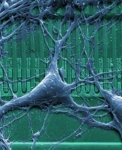
According to Information Society Technologies (IST), European investigators have created a novel interface between mammalian neurons and silicon chips. The development, achieved by the NACHIP project, funded by the EU Commission's Future and Emerging Technologies, is a "crucial first step in the development of advanced technologies that combine silicon circuits with a mammal's nervous system. "
From the press release:
The ultimate applications are potentially limitless. In the long term it will possibly enable the creation of very sophisticated neural prostheses to combat neurological disorders. What's more, it could allow the creation of organic computers that use living neurons as their CPU.Those applications are potentially decades away, but in the much nearer term the new technology could enable very advanced and sophisticated drug screening systems for the pharmaceutical industry.
"Pharmaceutical companies could use the chip to test the effect of drugs on neurons, to quickly discover promising avenues of research," says Professor Stefano Vassanelli, a molecular biologist with the University of Padua in Italy, and one of the partners in the NACHIP project, funded under the European Commission's Future and Emerging Technologies initiative of the IST programme.
NACHIP's core achievement was to develop a working interface between the living tissue of individual neurons and the inorganic compounds of silicon chips. It was a difficult task.
"We had a lot of problems to overcome," says Vassanelli. "And we attacked the problems using two major strategies, through the semiconductor technology and the biology."
21:08 Posted in Neurotechnology & neuroinformatics | Permalink | Comments (0) | Tags: Positive Technology
Mantra Mouse
From Medgadget
There is a small, hand-held and self contained GSR2 which has sold a half a million units and is already the largest selling Galvanic Skin Response monitoring device for home biofeedback. The GSR2 precisely monitors your stress levels by translating tiny tension-related changes in skin pores into a rising or falling tone. By resting two fingers on the sensing plates you learn to lower the pitch and your stress level.

21:04 Posted in Biofeedback & neurofeedback | Permalink | Comments (0) | Tags: Positive Technology
Wired: brain-training game
Can a new generation of mind-training games actually make you smarter?
Commentary by Clive Thompson (Wired)
A while ago, the science writer Steven Johnson was looking at an old IQ test known as the "Raven Progressive Matrices." Developed in the 1930s, it shows you a set of geometric shapes and challenges you to figure out the next one in the series. It's supposed to determine your ability to do abstract reasoning, but as Johnson looked at the little cubic Raven figures, he was struck by something: They looked like Tetris.
A light bulb went off. If Tetris looked precisely like an IQ test, then maybe playing Tetris would help you do better at intelligence tests. Johnson spun this conceit into his brilliant book of last year, Everything Bad Is Good For You, in which he argued that video games actually make gamers smarter. With their byzantine key commands, obtuse rule-sets and dynamic simulations of everything from water physics to social networks, Johnson argued, video games require so much cognitive activity that they turn us into Baby Einsteins -- not dull robots.
I loved the book, but it made me wonder: If games can inadvertently train your brain, why doesn't someone make a game that does so intentionally?
I should have patented the idea. Next month, Nintendo is releasing Brain Age, a DS game based on the research of the Japanese neuroscientist Ryuta Kawashima.
Read the full article
18:19 Posted in Brain training & cognitive enhancement | Permalink | Comments (0) | Tags: Positive Technology