




Mar 26, 2006
Tango!
Via Engadget
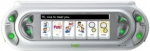 A company named AbleNet is busting out an interesting new handheld device called Tango! which does the "AAC" thing (Augmentative and Alternative Communication - new one on us) to help kids learn English, or for those that are hearing or speech impaired, allowing for the easy creation of sentences. You can use predetermined phrases by punching through a few sub-categories, or make your own with the device's intuitive interface. The Tango! also allows the creation of your own items; the built-in camera can capture a new image to serve as an icon, and then an adult can record the correct phrase for the item, even with a simulated child's voice. The device can expand its functionality via USB, CompactFlash, and SD, with the option to use a keyboard, or even work over a cellphone down the line. Sadly the unit runs for a steep $6899, but hopefully AbleNet can get some quantity orders in and cut that down a bit.
20:40 Posted in Brain training & cognitive enhancement | Permalink | Comments (0) | Tags: Positive Technology
Textually: Mobile phones in healthcare
In a lengthy and thorough article entitled Mobile phones and health, The Economist, reports on a study carried out by Rifat Atun and his colleagues at Imperial College, London, rounding up 150 examples of the use of text-messaging in the delivery of health care. "These uses fall into three categories: efficiency gains; public-health gains; and direct benefits to patients by incorporating text-messaging nto treatment regimes. The study, funded by Vodafone.
20:26 Posted in Wearable & mobile | Permalink | Comments (0) | Tags: Positive Technology
Textually: Small screens a contributing factor to visual fatigue
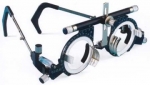 Studies have found that the majority of people who work at a computer experience some eye or vision problems, and that the level of discomfort appears to increase with the amount of computer use, reports medical news today . "But, increased use of smaller, portable work and recreational gadgets such as PDAs, laptops and cell phones may also be contributing factors to the visual fatigue and discomfort experienced by millions, according to leading expert, Dr. Jeffrey Anshel."
20:23 Posted in Wearable & mobile | Permalink | Comments (0) | Tags: Positive Technology
Smart Mobs: Bioengineering professor hopes to mimic the brain on a chip
Kwabena Boahen, an associate professor in the Department of Bioengineering, leads a research group that is trying to mimic the functions of the brain’s complex neural system using silicon chips.

Read the Stanford's report
20:19 Posted in Neurotechnology & neuroinformatics | Permalink | Comments (0) | Tags: Positive Technology
CIO: Visualization of Internet Ownership



From CIO: What is this ball of colors? It is the North American Internet, or more specifically a map of just about every router on the North American backbone, (there are 134,855 of them for those who are counting). The colors represent who each router is registered to. Red is Verizon; blue AT&T; yellow Qwest; green is major backbone players like Level 3 and Sprint Nextel; black is the entire cable industry put together; and gray is everyone else, from small telecommunications companies to large international players who only have a small presence in the U.S. If you click on the map it will take you to much bigger version complete with labels that tell you the address of many of the routers
20:13 Posted in Information visualization | Permalink | Comments (0) | Tags: Positive Technology
Mar 25, 2006
The current state of VR
Though the current state of VR technology is ahead of what has been brought to the consumer market thus far, compelling applications still need to be developed - ones that really open up new services and information sources almost as much as the Web has already done," said Jackie Fenn at Gartner.
Virtual Reality had a genuine buzz going for it about 10 years ago, when movies like The Lawnmower Man and Virtuosity were getting the green light, and Nintendo's Virtual Boy game system attempted to bring the so-called artificial world into everyday living. The possibility of complete immersion in a computer-generated environment seemed, for a time, to fire up the public's imagination...
20:05 Posted in Virtual worlds | Permalink | Comments (0) | Tags: Positive Technology
Virtual reality exposure in the treatment of arachnophobia
Effectiveness of virtual reality exposure in the treatment of arachnophobia using 3D games.
Technol Health Care. 2006;14(1):19-27
Authors: Bouchard S, Côté S, St-Jacques J, Robillard G, Renaud P
Buying or creating a virtual reality (VR) software is very costly. A less expensive alternative could be to modify already existing 3D computer games. The goal of this study is to assess the effectiveness of in virtuo exposure in the treatment of arachnophobia using modified 3D games. Participants were 10 women and 1 man. Virtual worlds were created using the game editor of a 3D computer game (Half-Lifetrade mark), modified to offer graduals hierarchies of fearful stimuli (spiders). Analyses revealed significant improvement between pre and post results on the behavioral avoidance test, the Spider Beliefs Questionnaire, and perceived self-efficacy. These promising results suggest that therapy using virtual reality exposure via a modified computer game is useful in the treatment of arachnophobia.
18:00 Posted in Cybertherapy | Permalink | Comments (0) | Tags: Positive Technology
Mar 24, 2006
Senior and Junior Researcher Positions available in the NeuroVers-IT project
In the framework of the European Union’s Marie Curie network for human resources and mobility activity, a new project “NeuroVers-IT” investigating Neuro-Cognitive Science and Information Technology has been set up. The project aims at collaborative, highly multidisciplinary research between 11 European well-known research institutions in the areas of neuro-/cognitive sciences/biophysics and robotics/information technologies/ mathematics. Topics covered are self-learning and self-configuring systems, bi-directional neuro-electronic interfaces (microelectronics devices and systems interfacing neuronal cultures to computers) and integrating methods of self-learning, task orientation and adaptation into “living” artefacts (robot systems controlled by real neural networks). For this project, all research institutions participating in the project are looking for European experienced PdD researcher or early stage researcher.
The ideal candidates should have a university degree in neuroscience, a cognitive science, computer science/mathematics and/or electrical engineering/biophysics. A good knowledge of spoken and written English is required along with a disposition to work in different European countries while being employed at one of the partner institutions. Both types of positions involve extensive personal career plans and training at the “home” institution of the researcher and at the partner labs, participation in organizing a Neuro-Engineering summer school and e-learning platform facilities.
For information about these positions you may contact
Prof. Dr. Alois Knoll, Technische
Universität München, Fakultät für Informatik, E-mail neuroversit@in.tum.de,
Tel. +49 89 289 18106.
You may also send your written application including your CV and other relevant material to vehne@in.tum.de before Apr. 20, 2006. Your application will then be forwarded to one of the research institutions of the project.
15:05 Posted in Research institutions & funding opportunities | Permalink | Comments (0) | Tags: Positive Technology
Mar 23, 2006
Virtual reality machine gives police hallucinations
From Desmoinesregister
Tom Alex
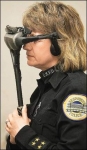 Des Moines Police Officer Paul Tieszen stepped onto a city bus and into a world he's only heard about.
"Things flash out of nowhere. Small voices saying, 'Go get your medication.' The bus driver is talking to you normally and all of a sudden he starts calling you 'Your Highness.' Then he becomes part of the hallucination," says Tieszen. "It's a whole busload of children, then it changes to a busload of adults. There's a nurse involved. You see normal things and then all of a sudden someone pulls up next to you and says, 'Get off the bus.' "
The bus wasn't real, but the officer's reactions were. And he quickly got a glimpse of what it's like to suffer from a severe mental illness.
Tieszen's window into the world of hallucinations was provided by a high-tech virtual reality mask that police use to better understand the mentally ill people they come in contact with.
"You are in the role of the individual on the bus," he said, trying to describe the experience. "You are seeing what is in the mind of someone who is like that."
The device is called a virtual hallucination machine. It was introduced to police by Teresa Bomhoff, president of the National Alliance for the Mentally Ill of Greater Des Moines....
Read the full article
20:45 Posted in Virtual worlds | Permalink | Comments (0) | Tags: Positive Technology
Functional Magnetic Resonance Imaging Investigation of the Effects of Neurofeedback Training on Children
Functional Magnetic Resonance Imaging Investigation of the Effects of Neurofeedback Training on the Neural Bases of Selective Attention and Response Inhibition in Children with Attention-Deficit/Hyperactivity Disorder.
Appl Psychophysiol Biofeedback. 2006 Mar 22;
Authors: Beauregard M, Lévesque J
Two functional magnetic resonance imaging (fMRI) experiments were undertaken to measure the effect of neurofeedback training (NFT), in AD/HD children, on the neural substrates of selective attention and response inhibition. Twenty unmedicated AD/HD children participated to these experiments. Fifteen children were randomly assigned to the Experimental (EXP) group whereas the other five children were randomly assigned to the Control (CON) group. Only subjects in the EXP group underwent NFT. EXP subjects were trained to enhance the amplitude of the SMR (12-15 Hz) and beta 1 activity (15-18 Hz), and decrease the amplitude of theta activity (4-7 Hz). Subjects from both groups were scanned one week before the beginning of NFT (Time 1) and 1 week after the end of NFT (Time 2), while they performed a "Counting Stroop" task (Experiment 1) and a Go/No-Go task (Experiment 2). At Time 1, in both groups, the Counting Stroop task was associated with significant activation in the left superior parietal lobule. For the Go/No-Go task, no significant activity was detected in the EXP and CON groups. At Time 2, in both groups, the Counting Stroop task was associated with significant activation of the left superior parietal lobule. This time, however, there were significant loci of activation, in the EXP group, in the right ACC, left caudate nucleus, and left substantia nigra. No such activation loci were seen in CON subjects. For the Go/No-Go task, significant loci of activation were noted, in the EXP group, in the right ventrolateral prefrontal cortex, right ACcd, left thalamus, left caudate nucleus, and left substantia nigra. No significant activation of these brain regions was measured in CON subjects. These results suggest that NFT has the capacity to functionally normalize the brain systems mediating selective attention and response inhibition in AD/HD children.
18:26 Posted in Biofeedback & neurofeedback | Permalink | Comments (0) | Tags: Positive Technology
Mar 22, 2006
Advanced Course in Computational Neuroscience
August 7th – September 1st 2006, ARCACHON, FRANCE
The Advanced Course in Computational Neuroscience is for advanced graduate students and postdoctoral fellows who are interested in learning the essentials of the field.
We seek students of any nationality from a variety of disciplines, including neuroscience, physics, electrical engineering, computer science, mathematics and psychology. Students are expected to have a keen interest and basic background in neurobiology as well as some computer experience.
The course has two complementary parts. Mornings are devoted to lectures given by distinguished international faculty on topics across the breadth of experimental and computational neuroscience. During the rest of the day, students are given practical training in the art and practice of neural modelling, largely through the medium of their
individual choice of model systems.
The first week of the course introduces students to essential neurobiological concepts and to the most important techniques in modelling single cells, networks and neural systems. Students learn how to solve their research problems using software packages such as MATLAB, NEST, NEURON, XPP, etc. During the following three weeks the lectures cover specific brain areas and functions. Topics range from modelling single cells and subcellular processes through the simulation of simple circuits, large neuronal networks and system level models of the brain.
Applications, including a description of the target project must be submitted electronically (see below) and should be accompanied by the names and email details of two referees who have agreed to furnish references. Applications will be assessed by a committee, with selection being based on the following criteria: the scientific quality of the candidate (CV) and of the project, the recommendation letters, and evidence that the course affords substantial benefit to the candidate's training.
More information and application forms can be obtained from:
19:56 Posted in Neurotechnology & neuroinformatics | Permalink | Comments (0) | Tags: Positive Technology
Mar 21, 2006
Time Magazine: how digital juggling is affecting kids' brains
Via Smart Mobs
Time Magazine's cover story this week is on kids' multitasking skills and what all that digital juggling is doing to their brains and family life.
 There is no doubt that the phenomenon has reached a kind of warp speed in the era of Web-enabled computers, when it has become routine to conduct six IM conversations, watch American Idol on TV and Google the names of last season's finalists all at once.
... Although multitasking kids may be better prepared in some ways for today's frenzied workplace, many cognitive scientists are positively alarmed by the trend. "Kids that are instant messaging while doing homework, playing games online and watching TV, I predict, aren't going to do well in the long run," says Jordan Grafman, chief of the cognitive neuroscience section at the National Institute of Neurological Disorders and Stroke. On the positive side, Gen M students tend to be extraordinarily good at finding and manipulating information. And presumably because modern childhood tilts toward visual rather than print media, they are especially skilled at analyzing visual data and images, observes Claudia Koonz, professor of history at Duke University.
11:02 Posted in Persuasive technology | Permalink | Comments (0) | Tags: Positive Technology
Mar 20, 2006
Synthetic character trains medical students
14:55 Posted in Telepresence & virtual presence | Permalink | Comments (0) | Tags: Positive Technology
Positive Psychology Award from John Templeton Foundation
Via the APA Monitor
The John Templeton Foundation seeks applications for the eighth annual Martin E.P. Seligman Award for Outstanding Dissertation Research in Positive Psychology. The prize awards $1,000 to a scholar who has completed a PhD dissertation in any area of positive psychology research and who plans to continue research in this area. Candidates must have completed their dissertation after March 30, 2003.
The award also includes travel to and one day’s lodging and expenses for the 2006 Positive Psychology Summit, Oct. 6–8, in Washington, D.C., where the award will be presented.
To apply, candidates should send six copies of both their curriculum vitae and a summary of their dissertation research. The summary—limited to no more than eight pages, including tables and figures, but excluding references—should contain:
• A description of the problem investigated.
• An explanation of the methods.
• A summary of the findings.
• A discussion of the significance of the findings in relation to positive psychology.
• An outline of how the work might be continued.
A selection committee, chaired by Kennon M. Sheldon, PhD, of the University of Missouri–Columbia, will determine three finalists by June 1. Finalists will then submit a copy of their completed dissertations for review.
Materials must be postmarked no later than April 15. Send them to Communications Department, John Templeton Foundation, 300 Conshohocken State Road, Suite 500, West Conshohocken, PA 19428.
11:12 Posted in Research institutions & funding opportunities | Permalink | Comments (0) | Tags: Positive Technology
WMMNA: Instant Feeling Messages
emosive is a service for mobile devices which allows capturing, storing and sharing of fleeting emotional experiences. Based on the Cognitive PrimingGo theory, as we become more immersed in digital media through our mobile devices, our personal media inventories constantly act as memory aids, "priming" us to better recollect associative, personal (episodic) memories when facing an external stimulus. Being mobile and in a dynamic environment, these recollections are moving, both emotionally and quickly away from us. emosive bundles text, sound and image animation to allow capturing these fleeting emotional experiences, then sharing and reliving them with cared others. emosive proposes a new format of instant messages, dubbed IFM – Instant Feeling Messages.
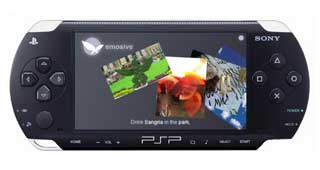
Have a look at the demo, it's a Flash application developed using FlickrFling and live data.
User scenario
While walking in the park and listening to a verse from his and his girlfriend Tina’s favorite tune – Madonna’s Little Star (“Never forget how to dream, Butterfly”), Jake sees a butterfly on a flower. Primed by the romantic musical immersion, Jake notices the colors of the butterfly and immediately loads a memory of Tina’s same-colored summer dress. Jake quickly clicks the emosive shortcut key sequence on his device. He snaps a photo of the butterfly and tags the image as "Butterfly". As Jack walks around the city, he captures other fleeting moments, making sure they are tagged to correspond with lyric words. He even adds some tagged images from his Flickr account. He then "wraps" everything as an IFM, previews it and sends it to Tina. When Tina accepts the IFM, it will stream to her phone and synchronize the tune and the images, based on the tagged lyric words. The stored IFM can also be viewed effectively as an emosive experience from any web-enabled browser.
The emosive (formerly e:sense) project was developed by the design team of the Designs Which Create Design workshop, held at the University Institute of Architecture of Venice (IUAV) 2006.
11:00 Posted in Emotional computing | Permalink | Comments (0) | Tags: Positive Technology
Branding the brain
via Sci-Con
Researchers from the University of Michigan and Harvard University have used fMRI to find out which brain areas are activated by specific qualities of brands and products. The study, forthcoming in the Journal of Consumer Research, is the first to use fMRI to assess consumer perceptions and has important implications for the use of metaphorical human-like traits in branding.
10:56 Posted in Persuasive technology | Permalink | Comments (0) | Tags: Positive Technology