




Apr 09, 2006
VRoot: OpenEyes
Via VRoot
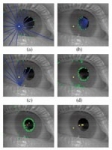 openEyes is an open-source open-hardware toolkit for low-cost real-time eye tracking.
Given the increasing demands for more intuitive computer interfaces, tracking the eye movements of users, which precisely indicates users’ attention states, provides researchers and usability experts with invaluable data. However, the high cost of eye-tracking hardware and the lack of available software that implements long-established eye-tracking methods prohibit many interface developers and researchers from accessing or utilizing critical eye-movement data. In response to the need for more widely accessible eye-tracking hardware and software, Derrick Parkhurst, assistant professor of psychology and associate director of VRAC, created the first open source toolkit for low-cost eye tracking, known as openEyes.
20:39 Posted in Research tools | Permalink | Comments (0) | Tags: Positive Technology
IEEE: Tangible Interaction in Collaborative Environments
26 June 2006 to 28 June 2006
International IEEE Workshop on Tangible Interaction in Collaborative Environments (TICE) at WETICE-2006
June 26 - June 28, 2006
The University of Manchester, Manchester, U.K.
Web site: http://wetice.co.umist.ac.uk/
OVERVIEW
--------
Motivated by these developments, we see this workshop as an opportunity for exploring the potentials and perspectives of tangible interaction for supporting collaborative work. Because of its interdisciplinary topic, TICE 2006 aims at bringing together researchers of various fields, including Human Computer Interaction, Tangible User Interfaces, Computer Supported Collaborative Work, Sociology, Communication Technologies, Embedded Systems and Ubiquitous Computing, to discuss key issues, approaches, open problems, innovative applications, and trends of tangible interaction in collaborative environments.
TOPICS
------
We welcome participants from all disciplines related to the topic of this workshop, including but not limited to Tangible User Interfaces, CSCW and Ubiquitous Computing environments. We invite original research papers and experience reports in all areas of collaborative methods and systems development. Additionally, position papers outlining novel research domains and approaches are welcome. Topics of interest include but are not limited to:
Interaction design of collaborative tangible environments
* Design process for embodied/tangible interaction
* Guidelines, methods and methodologies for collaborative interaction design
* Concepts and patterns for physical and tangible interaction
* Programming paradigms for building tangible environments
* New paradigms for collaborative environments
Technological aspects of tangible user interfaces
* Middleware, platforms and tools
* Architectural concepts for enhancing tangible interaction in groups
* Enabling technologies for instrumenting tangible artefacts
* Innovative technological solutions
Case studies and application scenarios
* Usability studies and evaluations of collaborative tangible environments
* Visions and application scenarios
* Security, privacy and trust in collaborative tangible environments
* Collaborative tangible interaction for mobile users
CO-CHAIRS
---------
Alois Ferscha
Department of Pervasive Computing
Johannes Kepler University Linz
Altenberger Straße 69
4040 Linz, Austria
Web: http://www.pervasive.jku.at/About_Us/Staff/Ferscha
20:33 Posted in Positive Technology events | Permalink | Comments (0) | Tags: Positive Technology
Road-crossing safety in virtual reality
Road-crossing safety in virtual reality: a comparison of adolescents with and without ADHD.
J Clin Child Adolesc Psychol. 2006 Jun;35(2):203-15
Authors: Clancy TA, Rucklidge JJ, Owen D
20:29 Posted in Virtual worlds | Permalink | Comments (0) | Tags: Positive Technology
Cognews: navigation skills used in robots
From Cognews
How does the ant, without maps and satellite naviation, make regular trips home without getting lost? Dr Markus Knaden, from the University of Zurich, reports that a visit back to the nest is essential for ants to reset their navigation equipment and avoid getting lost on foraging trips. "Knowledge about path integration and landmark learning gained from our experiments with ants has already been incorporated in autonomous robots. Including a 'reset' of the path integrator at a significant position could make the orientation of the robot even more reliable", says Dr Knaden who spoke on Tuesday 4th April at the Society for Experimental Biology's Main Annual Meeting in Canterbury, Kent. ...
20:24 Posted in AI & robotics | Permalink | Comments (0) | Tags: Positive Technology
Apr 07, 2006
Wearable vibrotactile systems for virtual contact and information display
Wearable vibrotactile systems for virtual contact and information display
R.W. Lindeman, Y. Yanagida, H. Noma and K. Hosaka
Virtual Reality Volume 9, Numbers 2-3; Date: March 2006; Pages: 203 - 213
This paper presents a development history of a wearable, scalable vibrotactile stimulus delivery system. This history has followed a path from desktop-based, fully wired systems, through hybrid approaches consisting of a wireless connection from the host computer to a body-worn control box and wires to each tactor, to a completely wireless system employing Bluetooth technology to connect directly from the host to each individual tactor unit.
11:16 Posted in Virtual worlds | Permalink | Comments (0) | Tags: Positive Technology
Subjective performance in VR
Subjective performance
K. Bormann
Virtual Reality Volume 9, Number 4; Date: April 2006; Pages: 226 - 233
Much effort has gone into exploring the concept of presence in virtual environments. One of the reasons for this is the possible link between presence and performance, which has also received a fair amount of attention. However, the performance side of this equation has been largely ignored.
11:15 Posted in Telepresence & virtual presence | Permalink | Comments (0) | Tags: Positive Technology
Supporting visually impaired children with software agents in a multimodal learning environment
Supporting visually impaired children with software agents in a multimodal learning environment
R. Saarinen, J. Järvi, R. Raisamo, E. Tuominen, M. Kangassalo, K. Peltola and J. Salo
Virtual Reality; Volume 9, Numbers 2-3; Date: March 2006; Pages: 108 - 117
11:06 Posted in Virtual worlds | Permalink | Comments (0) | Tags: Positive Technology
1st Annual Serious Games Showcase
11:05 Posted in Serious games | Permalink | Comments (0) | Tags: serious gaming
Cave Writing Workshop
From the CAVE Writing website
The Cave Writing Workshop is an advanced experimental electronic writing workshop, exploring the potential of text, sound, and narrative movement in immersive three-dimensional virtual reality. It brings together teams of undergraduate and graduate fiction writers, poets and playwrights, composers and sound engineers, graphic designers, visual artists, 3D modelers and programmers, to develop, within the environment of Brown’s “Cave” in the Technology Center for Advanced Scientific Computing and Visualization, projects that focus on the word.

Powered by a high-performance parallel computer, the Cave is an eight-foot cube, wherein the floor and three walls are projected with high-resolution stereo graphics to create a virtual environment, viewed through special “shutter-lens” glasses. The Cave Writing Workshop has introduced a Macintosh sound server to provide positional sound and augment the Cave’s performance potential, surrounding the “reader” with dynamic three-dimensional sound as well as visuals. It has brought text into this highly visual environment in the composing of narrative and poetic works of art, and has experimented with navigational structures more akin to narrative, and in particular hypertext narrative, than to the predominant forms of spatial exploration.
11:04 Posted in Cyberart | Permalink | Comments (0) | Tags: Positive Technology
Mediated social touch
Mediated social touch: a review of current research and future directions
Antal Haans and Wijnand IJsselsteijn
Virtual Reality. Issue: Volume 9, Numbers 2-3; Date: March 2006; Pages: 149 - 159
Abstract
11:00 Posted in Virtual worlds | Permalink | Comments (0) | Tags: Positive Technology
Cybervision
More than a million people in the United States are legally blind. Many of them once had vision but tragically lost it. Now a breakthrough device could give them back some of their sight.

read full article
10:59 Posted in Neurotechnology & neuroinformatics | Permalink | Comments (0) | Tags: Positive Technology
Textually: Mobile phones linked to anxiety
From Textually
Australians are increasingly becoming so addicted to mobile phones they are suffering anxiety and self-esteem problems akin to substance abuse, writes The Sydney Morning Herald. Excessive mobile users experience personal problems ranging from agitation if forced to turn them off...
read full post
10:56 | Permalink | Comments (0) | Tags: Positive Technology
Video-capture virtual reality system for patients with paraplegic spinal cord injury
Video-capture virtual reality system for patients with paraplegic spinal cord injury.
J Rehabil Res Dev. 2005 Sep-Oct;42(5):595-608
Authors: Kizony R, Raz L, Katz N, Weingarden H, Weiss PL
This article presents results from a feasibility study of a video-capture virtual reality (VR) system used with patients who have paraplegic spinal cord injury (SCI) and who need balance training. The advantages of the VR system include providing the user with natural control of movements, the ability to use as many parts of the body as are deemed suitable within the context of therapeutic goals, and flexibility in the way the system can be adapted to suit specific therapeutic objectives. Thirteen participants with SCI experienced three virtual environments (VEs). Their responses to a Short Feedback Questionnaire showed high levels of presence. We compared performance in the environments with a group of 12 nondisabled participants. Response times for the patient group were significantly higher and percentage of success was significantly lower than that for the nondisabled group. In addition, significant moderate correlations were found between performance within a VE and static balance ability as measured by the Functional Reach Test. This study is a first step toward future studies aimed at determining the potential of using this VR system during the rehabilitation of patients with SCI.
10:52 Posted in Cybertherapy | Permalink | Comments (0) | Tags: Positive Technology
Fmri investigation of Neurofeedback Training in Children with Attention-Deficit/Hyperactivity Disorder
Functional Magnetic Resonance Imaging Investigation of the Effects of Neurofeedback Training on the Neural Bases of Selective Attention and Response Inhibition in Children with Attention-Deficit/Hyperactivity Disorder.
Appl Psychophysiol Biofeedback. 2006 Mar 22;
Authors: Beauregard M, Lévesque J
Two functional magnetic resonance imaging (fMRI) experiments were undertaken to measure the effect of neurofeedback training (NFT), in AD/HD children, on the neural substrates of selective attention and response inhibition. Twenty unmedicated AD/HD children participated to these experiments. Fifteen children were randomly assigned to the Experimental (EXP) group whereas the other five children were randomly assigned to the Control (CON) group. Only subjects in the EXP group underwent NFT. EXP subjects were trained to enhance the amplitude of the SMR (12-15 Hz) and beta 1 activity (15-18 Hz), and decrease the amplitude of theta activity (4-7 Hz). Subjects from both groups were scanned one week before the beginning of NFT (Time 1) and 1 week after the end of NFT (Time 2), while they performed a "Counting Stroop" task (Experiment 1) and a Go/No-Go task (Experiment 2). At Time 1, in both groups, the Counting Stroop task was associated with significant activation in the left superior parietal lobule. For the Go/No-Go task, no significant activity was detected in the EXP and CON groups. At Time 2, in both groups, the Counting Stroop task was associated with significant activation of the left superior parietal lobule. This time, however, there were significant loci of activation, in the EXP group, in the right ACC, left caudate nucleus, and left substantia nigra. No such activation loci were seen in CON subjects. For the Go/No-Go task, significant loci of activation were noted, in the EXP group, in the right ventrolateral prefrontal cortex, right ACcd, left thalamus, left caudate nucleus, and left substantia nigra. No significant activation of these brain regions was measured in CON subjects. These results suggest that NFT has the capacity to functionally normalize the brain systems mediating selective attention and response inhibition in AD/HD children.
10:51 Posted in Biofeedback & neurofeedback | Permalink | Comments (0) | Tags: Positive Technology
The meeting of meditative disciplines and Western psychology
The meeting of meditative disciplines and Western psychology: a mutually enriching dialogue.
Am Psychol. 2006 Apr;61(3):227-39
Authors: Walsh R, Shapiro SL
10:49 Posted in Meditation & brain | Permalink | Comments (0) | Tags: Positive Technology
EEG classification of movement intention
Classification of movement intention by spatially filtered electromagnetic inverse solutions.
Phys Med Biol. 2006 Apr 21;51(8):1971-89
Authors: Congedo M, Lotte F, Lécuyer A
We couple standardized low-resolution electromagnetic tomography, an inverse solution for electroencephalography (EEG) and the common spatial pattern, which is here conceived as a data-driven beamformer, to classify the benchmark BCI (brain-computer interface) competition 2003, data set IV. The data set is from an experiment where a subject performed a self-paced left and right finger tapping task. Available for analysis are 314 training trials whereas 100 unlabelled test trials have to be classified. The EEG data from 28 electrodes comprise the recording of the 500 ms before the actual finger movements, hence represent uniquely the left and right finger movement intention. Despite our use of an untrained classifier, and our extraction of only one attribute per class, our method yields accuracy similar to the winners of the competition for this data set. The distinct advantages of the approach presented here are the use of an untrained classifier and the processing speed, which make the method suitable for actual BCI applications. The proposed method is favourable over existing classification methods based on an EEG inverse solution, which rely either on iterative algorithms for single-trial independent component analysis or on trained classifiers.
10:40 Posted in Brain-computer interface | Permalink | Comments (0) | Tags: Positive Technology
Special issues of Cortex on Synaesthesia

10:39 Posted in Telepresence & virtual presence | Permalink | Comments (0) | Tags: Positive Technology
Can quantum mechanics explain consciousness?
Via Brain Ethics
In the most recent issue of Nature (March 30) Christof Koch and Klaus Hepp challenge the hypothesis that human consciousness invokes quantum principles:
We challenge those who call upon consciousness to carry the burden of the measurement process in quantum mechanics with the following thought experiment. Visual psychology has caught up with magicians and has devised numerous techniques for making things disappear. For instance, if one eye of a subject receives a stream of highly salient images, a constant image projected into the other eye is only seen infrequently. Such perceptual suppression can be exploited to study whether onsciousness is strictly necessary to the collapse of the wave function. Say an observer is looking at a superimposed quantum system, such as Schrödinger’s box with the live and dead cat, with one eye while his other eye sees a succession of faces. Under the appropriate circumstances, the subject is only conscious of the rapidly changing faces, while the cat in the box remains invisible to him. What happens to the cat? The conventional prediction would be that as soon as the photons from this quantum system encounter a classical object, such as the retina of the observer, quantum superposition is lost and the cat is either dead or alive.This is true no matter whether the observer consciously saw the cat in the box or not. If, however, consciousness is truly necessary to resolve the measurement problem, the animal’s fate would remain undecided until that point in time when the cat in the box becomes perceptually dominant to the observer. This seems unlikely but could, at least in principle, be empirically verified. The empirical demonstration of slowly decoherent and controllable quantum bits in neurons connected by electrical or chemical synapses, or the discovery of an efficient quantum algorithm for computations performed by the brain, would do much to bring these speculations from the ‘far-out’ to the mere ‘very unlikely’. Until such progress has been made, there is little reason to appeal to quantum mechanics to explain higher brain functions, including consciousness.
10:20 Posted in Telepresence & virtual presence | Permalink | Comments (0) | Tags: Positive Technology
Apr 06, 2006
Will machines ever really think?
Developments in robotics and artificial intelligence raise a natural question: If computer processing eventually apes nature's neural networks, will cold silicon ever be truly able to think? And how will we judge whether it does?
Journalist Yvonne Raley addresses these issues in this article just appeared in the online issue of Scientific American Mind
19:25 Posted in AI & robotics | Permalink | Comments (0) | Tags: Positive Technology