




Sep 18, 2006
QuitKey Smoking Cessation Computer
Via Mindware
QuitKey is a small portable device that promises to help quit smoking:
This small device, which resembles an automobile keyless remote containing a computer that collects data on the test subject's smoking habits for one week. The computer implements a gradual rate reduction protocol targeting both the physiological dependence on nicotine and conditioned stimuli that may trigger the urge to smoke. QuitKey� cues the individual when it is time for him or her to smoke, based on their history. In reality, what it is trying to do is take away the natural instinct to smoke on impulse, instead teaching the women to smoke on a gradually diminishing schedule.
The device was recently tested in a small-scale pilot clinical study by tobacco-addiction researcher Monica Scheibmeir.
For the study, 10 participants were given a QuitKey, which was attached to a cigarette lighter. Every time the participant reached for the lighter, she was prompted to input data into the QuitKey. According to Scheibmeir, early results are promising.


20:40 Posted in Persuasive technology, Wearable & mobile | Permalink | Comments (0) | Tags: persuasive technology, cybertherapy
An implantable neuroprosthesis for standing and walking in paraplegia: 5-year patient follow-up
J. Neural Eng. 3, 2006, 268-275
David Guiraud et al.
We present the results of a 5-year patient follow-up after implantation of an original neuroprosthesis. The system is able to stimulate both epimysial and neural electrodes in such a way that the complete flexor–extensor chain of the lower limb can be activated without using the withdrawal reflex. We demonstrate that standing and assisted walking are possible, and the results have remained stable for 5 years. Nevertheless, some problems were noted, particularly regarding the muscle response on the epimysial channels. Analysis of the electrical behaviour and thresholds indicated that the surgical phase is crucial because of the sensitivity of the functional responses to electrode placement. Neural stimulation proved to be more efficient and more stable over time. This mode requires less energy and provides more selective stimulation. This FES system can be improved to enable balanced standing and less fatiguing gait, but this will require feedback on event detection to trigger transitions between stimulation sequences, as well as feedback to the patient about the state of his lower limbs.
20:29 | Permalink | Comments (0) | Tags: neuroprosthetic
Learning to perform a new movement with robotic assistance
20:26 Posted in AI & robotics, Cybertherapy | Permalink | Comments (0) | Tags: robotics, cybertherapy
VR experiment casts light on anxiety
Context Conditioning and Behavioral Avoidance in a Virtual Reality Environment: Effect of Predictability.
Biol Psychiatry. 2006 Aug 31;
Authors: Grillon C, Baas JM, Cornwell B, Johnson L
BACKGROUND: Sustained anxiety can be modeled using context conditioning, which can be studied in a virtual reality environment. Unpredictable stressors increase context conditioning in animals. This study examined context conditioning to predictable and unpredictable shocks in humans using behavioral avoidance, potentiated startle, and subjective reports of anxiety. METHODS: Subjects were guided through three virtual rooms (no-shock, predictable, unpredictable contexts). Eight-sec duration colored lights served as conditioned stimuli (CS). During acquisition, no shock was administered in the no-shock context. Shocks were paired with the CS in the predictable context and were administered randomly in the unpredictable context. No shock was administered during extinction. Startle stimuli were delivered during CS and between CS to assess cued and context conditioning, respectively. To assess avoidance, subjects freely navigated into two of the three contexts to retrieve money. RESULTS: Startle between CS was potentiated in the unpredictable context compared to the two other contexts. Following acquisition, subjects showed a strong preference for the no-shock context and avoidance of the unpredictable context. CONCLUSIONS: Consistent with animal data, context conditioning is increased by unpredictability. These data support virtual reality as a tool to extend research on physiological and behavioral signs of fear and anxiety in humans.
17:30 Posted in Research tools, Virtual worlds | Permalink | Comments (0) | Tags: virtual reality, cybertherapy
Robots for ageing society
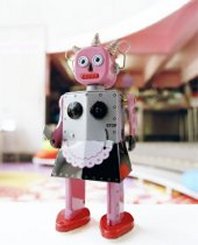
The CIRT consortium, composed by Tokyo University and a group of 7 companies (Toyota, Olympus, Sega, Toppan Printing, Fujitsu, Matsushita, and Mitsubishi), has started a project to develop robotic assistants for Japan’s aging population.
The robots envisioned by the project should support the elderly with housework and serve as personal transportation capable of replacing the automobile.
The Ministry of Education, Culture, Sports, Science and Technology (MEXT) will be the major sponsor of the research, whose total cost is expected to be about 1 billion yen (US$9 million) per year.
14:20 Posted in AI & robotics, Emotional computing | Permalink | Comments (0) | Tags: robotics, artificial intelligence
Relevant psychology journals in new media/communication technology
The website of University of Twente (faculty of Behavioral Sciences) has a list of relevant journals in HC/ergonomics; ISI impact factors is also provided for most of them.
The complete list can be accessed here
12:54 Posted in Call for papers, Research tools | Permalink | Comments (0) | Tags: research tools, human-computer interaction