




May 10, 2006
Toward direct biocontrol using surface EMG signals
Toward direct biocontrol using surface EMG signals: Control of finger and wrist joint models.
Med Eng Phys. 2006 May 6;
Authors: Reddy NP, Gupta V
Increased interest in virtual reality (VR) and telemanipulation has created a growing need for the development of new interfacing devices for measuring controlling actions of the human hand. The objective of the present study was to determine if surface electromyography signals (SEMG) from the flexor digitorum superficialis (FDS), and flexor carpi ulnaris (FCU) generated during flexion-extension of the human index finger and wrist can be used for controlling the flexion-extension of the finger and wrist of a simple geometric computer model. A simple geometric computer model of finger and wrist joints was developed. Eighteen subjects controlled the computer model using the SEMG signals from their FDS and FCU. The results indicate that the SEMG signals from the FDS and FCU muscles can be used as a direct biocontrol technique for controlling the finger and wrist models. This study establishes the proof of concept for direct biological control of the dynamic motion of the finger and wrist models for use in virtual reality environments and telemanipulation.
22:54 Posted in Virtual worlds | Permalink | Comments (0) | Tags: Positive Technology
Neural substrates for motor imagery in severe hemiparesis
Neural substrates for motor imagery in severe hemiparesis.
Neurorehabil Neural Repair. 2006 Jun;20(2):268-77
Authors: Kimberley TJ, Khandekar G, Skraba LL, Spencer JA, Van Gorp EA, Walker SR
BACKGROUND: . The beneficial effects of imagined movements on motor learning and performance suggest that motor imagery is functionally close to preparatory and executive motor processes. OBJECTIVE: . The purpose of this study was to examine the cortical processes associated with imagery of movement of the wrist in subjects with severe hemiparesis. METHODS: . During fMRI, subjects with stroke performed alternating blocks of imagining wrist-tracking movements with the hemiparetic hand, active wrist-tracking movements with the unaffected hand, and resting. Control subjects performed the same tasks using an assigned hand. Cortical activation in the primary motor (M1), primary sensory (S1), supplementary motor area (SMA), and pre-SMA regions was determined through a laterality index of active voxels and signal intensity. Ability to imagine was assessed with an Imagery Rating Scale. RESULTS: .All subjects displayed primarily contralateral control during the track condition. Healthy subjects demonstrated contralateral control in all areas during the imagine condition, whereas subjects with stroke displayed primarily contralateral activation in S1 but ipsilateral in M1 and SMA. The percentage change in signal intensity was greater in the ipsilateral hemisphere in subjects with stroke than in the ipsilateral hemisphere in healthy subjects during the imagine condition. Additionally, subjects with self-reported low ability to imagine displayed no difference in activation compared to those with high imagery ability. CONCLUSIONS: . These findings are consistent with other works demonstrating primarily ipsilateral control of the hemiparetic hand in subjects with functional movement and lay the groundwork for further investigation into the ability of mental imagery to affect functionally relevant cortical control in subjects recovering from stroke.
22:53 Posted in Mental practice & mental simulation | Permalink | Comments (0) | Tags: Positive Technology
VR-based schizophrenia training program
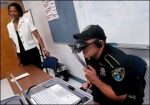
Janssen Pharmaceutical, a manufacturer of prescription medications for the treatment of schizophrenia and bipolar mania, has developed a schizophrenia training program based on virtual reality technology.
In the program, the participant chooses a virtual experience and is led through a range of visual and auditory hallucinations during a ride on a bus, a trip to the doctor's office or a trip to a pharmacy located in the back of grocery store.
In the virtual program simulating a trip to the pharmacy, the participant hears voices popping in and out of their head. Some are soft, some loud -- even yelling -- and many of them are paranoid. People stare at you from every aisle, some seem to be able to read your mind, others are afraid of you. A person in a television monitor screams at you. As you get to the pharmacy counter you can hear the pharmacists whispering and laughing and then they hand you a prescription of what looks like "poison," with a big scull and cross bones on the bottle's label.
22:44 Posted in Cybertherapy | Permalink | Comments (0) | Tags: Positive Technology
PaPeRo
Via Pink Tentacle
NEC has recently announced a technology that allows PaPeRo household robot to connect with a variety of personal devices. The technology provides PaPeRo with a digital avatar that “follows” you to the device of your choice, where it appears on the screen and interacts with you.
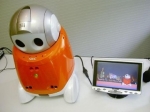
VIDEO of PaPeRo QuickTime, 1.24 MB
22:36 Posted in AI & robotics | Permalink | Comments (0) | Tags: Positive Technology
Enhanced humans
From New Scientist
People with enhanced senses, superhuman bodies and sharpened minds are already walking among us. Are you ready for your upgrade?They're here and walking among us: people with technologically enhanced senses, superhuman bodies and artificially sharpened minds. The first humans to reach a happy, healthy 150th birthday may already have been born. And that's just the start of it. Are you ready for your upgrade, asks Graham Lawton
IT IS 2050, and Peter Schwartz is deciding what to do with the rest of his life. He has already had two successful careers and he wants another one before he dies, which he expects to happen in around 50 years. By then he'll be about 150, which isn't bad for a baby boomer, but he expects his son, now 60, to live a lot longer than that.
The world that Schwartz lives in is radically different from the one he grew up in. The industrial and information age has passed into history, overtaken by a revolution in bioscience that began around
Link to the complete article
22:29 Posted in Brain training & cognitive enhancement | Permalink | Comments (0) | Tags: Positive Technology
Cognitive Development Research Assistant
Via Neurodudes
Applications are invited for the post of a Cognitive Neuroscience Research Assistant in the Department of Psychiatry & Behavioral Sciences. The RA will participate in several ongoing research studies of cognitive development and cognitive disorders (Alzheimer’s disease in particular).
Responsibilities include: assembling assessment instruments; screening and recruiting subjects; obtaining informed consent; scheduling subjects for testing; tracking progress of the study; designing fMRI and EEG experiments; acquiring, archiving and analyzing fMRI, MRI, DTI, EEG and behavioral data; verifying data and entering pertinent information into database for statistical analysis; and assistance with manuscript preparation. For creative and highly motivated candidates, the position offers plenty of opportunities to co-author publications.
QUALIFICATIONS:
*Requires a BS/BA degree in psychology, human biology, neuroscience, symbolic systems or related fields.
*One to two years of work experience is required.
*A strong academic record is essential; past research experience with fMRI and children and/ or elderly subjects is desirable.
*Experience with any of the following would be an added advantage: EEG, computer programming, statistical analysis, and neuropsychological assessment.
*The candidate must have strong organizational and interpersonal skills; the ability to work well with children and elderly subjects; a willingness to tackle complex tasks in an independent manner; and a strong sense of responsibility towards work.
Please call 650.736.0128 if interested. More information will be given (limited info here to avoid spam bots).
22:20 Posted in Research institutions & funding opportunities | Permalink | Comments (0) | Tags: Positive Technology
We Feel Fine
From We Feel Fine project's website

Since August 2005, We Feel Fine, An Exploration of Human Emotion, in Six Movements, has been harvesting human feelings from a large number of weblogs. Every few minutes, the system searches the world's newly posted blog entries for occurrences of the phrases "I feel" and "I am feeling". When it finds such a phrase, it records the full sentence, up to the period, and identifies the "feeling" expressed in that sentence (e.g. sad, happy, depressed, etc.). Because blogs are structured in largely standard ways, the age, gender, and geographical location of the author can often be extracted and saved along with the sentence, as can the local weather conditions at the time the sentence was written. All of this information is saved.The result is a database of several million human feelings, increasing by 15,000 - 20,000 new feelings per day. At its core, We Feel Fine - by Jonathan Harris & Sepandar Kamvar - is an artwork authored by everyone. It will grow and change as we grow and change, reflecting what's on our blogs, what's in our hearts, what's in our minds. We hope it makes the world seem a little smaller, and we hope it helps people see beauty in the everyday ups and downs of life.
22:18 Posted in Emotional computing | Permalink | Comments (0) | Tags: Positive Technology
Inside the Autistic Mind
Via Mind Hacks
The upcoming edition of Time Magazine has a cover story about autism. The story, entitled "Inside the Autistic Mind", is available online and discusses the recent developments in the psychology and neuroscience of autism.

22:08 Posted in Positive Technology events | Permalink | Comments (0) | Tags: Positive Technology
Motiva
Philips has announced the launch of the remote monitoring system Motiva for the U.S. market (press release). The system is an interactive healthcare platform which uses broadband television, along with home vital sign measurement devices, to connect patients to their healthcare providers and medical support system.
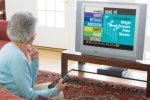
Motiva was the winner of a Medical Design Excellence Award and named one of the "Top 5 Disease Management Ideas of 2005"
22:00 Posted in Pervasive computing | Permalink | Comments (0) | Tags: Positive Technology
Smartshirt
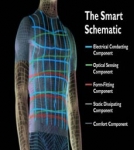
The company Sensatex is looking for beta testers for its SmartShirt System, a wearable physiological information management platform based on technology developed at the Georgia Institute of Technology.
From the website:
the SmartShirt is made using any type of fiber. It is woven or knitted incorporating a patented conductive fiber/sensor system designed specifically for the intended biometric information requirements. Heart rate, respiration, and body temperature are all calibrated and relayed in real time for analysis.
According to Sensatex, the shirt can be used to remotely monitor home-based patients, first responders, hazardous materials workers and soldiers. It also can be used to monitor signs of fatigue in truck drivers and to support athletic training.
21:53 Posted in Wearable & mobile | Permalink | Comments (0) | Tags: Positive Technology