




May 01, 2006
PsychNology Journal - Call for Papers

PsychNology Journal will host three special issues on the following themes:
- "Designing technology to meet the needs of the older user", edited by Eva Lindh Waterworth and John Waterworth
- "Mobile media and communication – reconfiguring human experience and social practices?", edited by Ilkka Arminen
- "Emerging trends in Cybertherapy", edited by Giuseppe Riva and Brenda K. Wiederhold
12:26 Posted in Call for papers | Permalink | Comments (0) | Tags: Positive Technology
ENKI
Via WMMNA
In the field of psychology, it has long been known that brain wave activity of persons subjected to a light flashing at a certain frequency would fall in sync with the flashing of the lights. Drawing on this observation, several devices have been developed to entrain brain waves. These systems are used by psychologists in their practices and by the general public for relaxation, stress management, insomnia, accelerated learning and retention, phobias, anxiety, fun, etc.
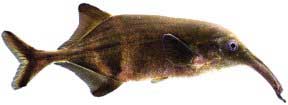
It uses sound and light pulses - to induce a state of 'extreme relaxation' similar to the way traditional Sound and Light Entrainment devices (SLEDs) work - the difference is that ENKI uses the electric communication signals from Electric Fish rather than a pre-programmed chip. Ultimately ENKI offers the possibility of becoming one with the mind of 'nature' - and by default, achieving an altered, beneficial state through this experience.

The ENKI prototype has been developed through research into interactive biotechnological systems, biophysics, as well as other, believed scientific theories and ideas, used to develop similar technologies in the realm of medicine, neuroscience and other more obscure healing technologies.
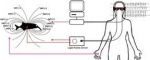
A list of movies documenting the project can be found here
11:55 Posted in Neurotechnology & neuroinformatics | Permalink | Comments (0) | Tags: Positive Technology
Interactive Media Studies Tenure-Track Positions, National University of Singapore
In view of government and industry interest to develop Singapore as an interactive media hub, the National University of Singapore seeks to expand its research and teaching expertise in the area. The Communications and New Media (CNM) Programme in the Faculty of Arts and Social Sciences invites applications for five tenure-track positions at either Assistant or Associate Professor levels.
We are seeking media scholars (Ph.D. /M.F.A. preferred) who conduct research, do creative work and/or have industry experience in one or more of the following areas:
1. Interactive Media content design and development—including games/interactive entertainment/serious games/e-learning, virtual/immersive environments, visual interface design, information architecture, interaction design, mobile and web-based content, e-learning
2. HCI and evaluation research—including observational research, mobile and pervasive computing, usability, presence & VR, social computing (virtual collaboration, social software and social networks), parasocial relationships
3. User experience design/strategy and innovation—including understanding the impact, desirability and context of interactive media technology from the perspectives of sociology, anthropology, psychology, ethnography, ergonomics/human factors
4. Interactive advertising/business/marketing—including electronic customer relationship management, interactive campaigns, mobile advertising
5. Media arts—storytelling, cyberculture and cyberarts, new media arts (theory and practice)
The successful applicant will teach core CNM courses as well as courses in his/her area of specialization. Examples of courses offered by our programme include Aesthetics of New Media, Critical Introduction to Gaming, Visual Design and Game Design. New courses include User Experience Design, Interactive Storytelling, and Interactivity and Everyday Life. For more details please see http://www.fas.nus.edu.sg/cnm
Preference will be given to candidates who show evidence of (1) completing their Ph.D. by May 2006 (ABDs may apply); (2) effective teaching; (3) research/creative productivity; and (4) experience or promise in obtaining external grant funding.
Review of applications will commence immediately and chosen applicants will be able to start in August 2006 or January 2007. The search will continue until all the positions are filled.
Send
(1) letter of application (addressing teaching/ research/creative interests and teaching effectiveness),
(2) C.V. and
(3) three letters of reference
to Dr. Sun Sun Lim at cnmjob@nus.edu.sg, or fax (65) 6779-4911.
-----------------------------------
To find out more about living and working in Singapore, see http://www.contactsingapore.org.sg/
To find out more about the National University of Singapore, see http://www.nus.edu.sg In the recent Times Higher Education Supplement World University Rankings, NUS was ranked 22nd in the world and amongst the top three universities in Asia.
11:39 Posted in Research institutions & funding opportunities | Permalink | Comments (0) | Tags: Positive Technology
Ethicbots Workshop

International Workshop
Naples , 17-18 October, 2006
This workshop aims at exploring the techno-ethics of human interactions with adaptive and cognitive systems developed in the framework of Robotics, Bionics, and Artificial Intelligence. These interactions notably include:
• human-robot non-invasive interactions, involving autonomous robots which inhabit human environments;
• human-machine invasive interactions, involving bionic systems for restoring or enhancing human functionalities;
• human-softbot interactions, involving AI systems for information access and communication.
Critical ethical issues arising in these domains concern
• preservation and promotion of human freedom, rights, and identity;
• fair access to adaptive machinery resources;
• scientific method and techno-ethical policies;
• precautionary principles in human-machine interactions;
• responsibilities for cooperative human-machine deliberation and action;
• machine autonomy and accountability;
• individual and societal impact of human-machine cognitive and affective bonds;
• intercultural aspects of robot development, design, and use.
The joint effort of researchers in various areas of inquiry - including robotics, bionics, the cognitive (neuro-)sciences, artificial intelligence, anthropology, philosophy, and law - is needed to identify and analyze techno-ethical issues concerning the interaction of human beings with adaptive and cognitive machines. This workshop aims at providing a multidisciplinary forum for discussing these techno-ethical issues and understanding their import on the proper implementation of ethical monitoring, triaging, warning, and institutional opinion generation.
The workshop is supported by the ETHICBOTS European Project (http://ethicbots.na.infn.it).
Scientific Board (to be completed): Daniela Cerqui (Switzerland), Paolo Dario (Italy), Rüdiger Dillmann (Germany), Armin Grunwald (Germany), Alan Mackworth (Canada), Abbe Mowshowitz (USA) Brian O'Connell (USA), Richard Rosenberg (Canada), Jutta Weber (Austria).
Organizing committee: Rafael Capurro (Hochschule der Medien, Stuttgart, GER), Raja Chatila (LAAS-CNRS, Toulouse, FR), Thomas Christaller (Fraunhofer Institut-AIS, Sankt Augustin, GER), Adriano Fabris (Università di Pisa, IT), Satinder Gill (Middlesex University, London, UK), Alessandro Giordani (Facoltà di Teologia, Lugano, CH), Cecilia Laschi (Scuola Superiore S. Anna, Pisa, IT), Guglielmo Tamburrini (Università Federico II, Napoli, IT), Gianmarco Veruggio (Scuola di Robotica, Genova, IT), Kevin Warwick (Dept. of Cybernetics, University of Reading, UK)
Important dates:
Extended abstract (max 4 pages) : Submission by June 15, 2006
Venue : Centro Congressi Università di Napoli Federico II, Via Partenope 36, 80121 Napoli, Italy http://www.centrocongressi.unina.it/lungomare/lungomare.h...
Fees: 75 euros. Free admission for students.
11:32 Posted in Call for papers | Permalink | Comments (0) | Tags: Positive Technology
Free Network Visible Network

 Via
Via 
Free Network Visible Network is a project that combines different tools and processes to visualize, floating in the space, the interchanged information between users of a network. The people are able to experience in a new exciting way about how colorful virtual objects, representing the digital data, are flying around. These virtual objects will change their shape, size and color in relation with the different characteristics of the information that is circulating in the network.

11:20 Posted in Augmented/mixed reality | Permalink | Comments (0) | Tags: Positive Technology
Deep brain stimulation (DBS): the Next Revolution in Depression Treatment?
Researchers from the Cleveland Clinic and Brown University’s Butler Hospital have conducted anl experiment to assess the potential of deep brain stimulation (DBS) for the treatment of Major Depression, the most severe category of depression. In a MD, more of the symptoms of depression are present, and they are usually more intense or severe.
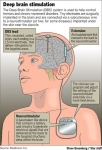
Participants underwent standardized and detailed psychiatric, quality-of-life, and neuropsychological assessments on a regularly scheduled basis, both pre- and postsurgically. At a minimum of six months postsurgery, four of the six patients showed a clinically significant reduction in depression severity of 50 percent or greater on the Montgomery-Asberg Depression Rating Scale. Quality-of-life measures improved as well, and patients showed progressive improvements in mood and functioning over time. One patient experienced persistent occipital pain that was alleviated with repositioning of a subcutaneous connector wire.
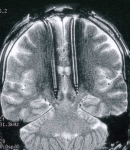
Larger-scale clinical trials are needed to demonstrate the effectiveness (or lack thereof) of the DBS treatment for depression.
11:00 Posted in Neurotechnology & neuroinformatics | Permalink | Comments (0) | Tags: Positive Technology
"Shrug-detecting" software recognizes your disinterest
Via Engadget
A team of computer vision researchers at the University of Illinois has developed "Shrug-detecting" technology that recognizes the level of confusion or disinterest. The system works by allowing a webcam-equipped computer to pick up on the "relative fast movement of the shoulder toward the face". Researchers hope that the Shrug-detector will soon be complemented with real-time blink, hand-motion and facial expression detectors.
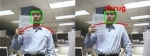 More technical information about the Shrug-detector can be found in this paper (PDF).
10:38 Posted in AI & robotics | Permalink | Comments (0) | Tags: Positive Technology