




Feb 21, 2006
Assistive technology helps disabled kids find their voice
Via Science Daily
18:45 Posted in Brain training & cognitive enhancement | Permalink | Comments (0) | Tags: Positive Technology
PsycBITE
 PsycBITE is available online free of charge
15:34 Posted in Research tools | Permalink | Comments (0) | Tags: Positive Technology
MSc in Human-Centred Systems, City University, London
The City University, London, offers a part-time, full-time, and flexible learning MSc in Human-Centred Systems, delivered by the world-renowned Centre for Human Computer Interaction Design.
Postgraduate internships in industry can also be undertaken as part of the degree.
Book online to attend the Open Evening:
then drop in any time between 5 and 7 pm to meet the Course Director and find out more.
14:58 Posted in Research institutions & funding opportunities | Permalink | Comments (0) | Tags: Positive Technology
Meditation may increase the thickness of the cortex
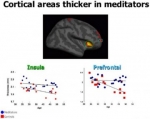
Science and Consciousness Review has interviewed brain researcher Sara Lazar on how meditation affects the brain. Lazar is the author of a recent study, in which magnetic resonance imaging was used to assess cortical thickness in 20 participants with extensive Insight meditation, a technique that involves focusing attention on internal experiences. Findings showed that brain regions associated with attention, interoception and sensory processing were thicker in meditation participants than matched controls, including the prefrontal cortex and right anterior insula. According to Lazar and her colleagues, these results provide preliminary evidence for experience-dependent cortical plasticity associated with meditation practice.
14:35 Posted in Meditation & brain | Permalink | Comments (0) | Tags: Positive Technology, meditation