


Ok

By continuing your visit to this site, you accept the use of cookies. These ensure the smooth running of our services. Learn more.

Oct 17, 2010

Mapping virtual content on 3d physical constructions

Via Augmented Times

This video shows the results achieved in the paper "Build Your World and Play In It: Interacting with Surface Particles on Complex Objects" presented at the conference ISMAR 2010 by Brett Jones and other researchers from the University of Illinois. The paper presents a way to map virtual content on 3d physical constructions and "play" with them. Nice stuff.

When your liver blogs

Imec Netherlands has demonstrated a new type of wireless body area network (BAN). The Human++ BAN platform converts Imec's ultra-low-power electrocardiogram sensors into wireless nodes in a short-range network, transmitting physiological data to a hub (the patient's cellphone). From there, the readings can be forwarded to doctors via a Wi-Fi or 3G connection.

Body sensing comes to smartphones

Via New York Times

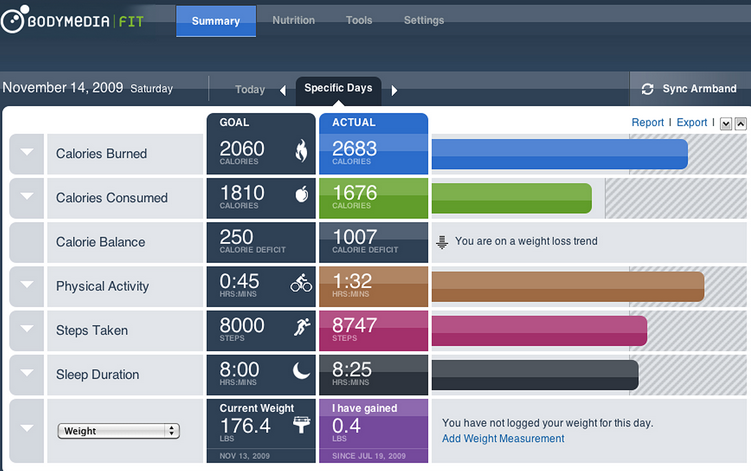
BodyMedia FIT (BodyMedia)

BodyMedia has announced that its armband sensors will be able to communicate with smartphones, and wirelessly, using Bluetooth. Its health sensors will be one of the first devices, other than ear buds, that link to smartphones with Bluetooth short-range communications.

It opens the door to allowing a person to monitor a collection of the 9,000 variables — physical activity, calories burned, body heat, sleep efficiency and others — collected by the sensors in a BodyMedia armband in real-time, as the day goes on.
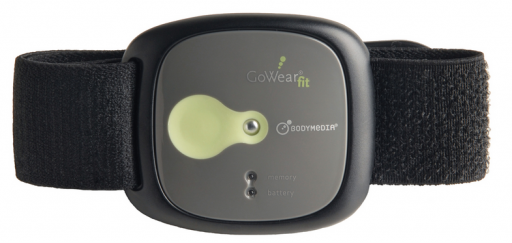


GoWear fit Armband (BodyMedia)

The Bluetooth-enabled armband costs $249 and the BodyMedia data service costs $7 a month and go on sale next month. In the past, BodyMedia users had to consult personal data downloaded to a Web site or observe a few measurements on a special watchband display, sold for $100.

19:55 Posted in Self-Tracking | Permalink | Comments (0) | Tags: self-tracking

Growing neurons on silicon chips

Via Robots.net

Researchers at University of Calgary have developed neurochips capable of capable of interfacing to and sensing activity of biological neurons in very high resolution. The new chips are automated so it's now easy to connect multiple brain cells eliminating the years of training it once required. While researchers say this technology could be used for new diagnostic methods and treatments for a variety of neuro-degenerative diseases, this advancement could ultimately lead to the use of biological neurons in the central or sub-processing units of computers and automated machinery.


Oct 12, 2010

New issue of Cybertherapy and Rehabilitation now online fulltext

The new issue of Cybertherapy and Rehabilitation magazine (3/2) is now online and available for full-text download. Topics covered by this issue include brain-computer interface, cognitive enhancement and trainers and the use of massive multiplayer online games in rehabilitation and therapy.