




Mar 10, 2007
Performance on a virtual reality spatial memory navigation task in depressed patients
Performance on a virtual reality spatial memory navigation task in depressed patients.
Am J Psychiatry. 2007 Mar;164(3):516-9
Authors: Gould NF, Holmes MK, Fantie BD, Luckenbaugh DA, Pine DS, Gould TD, Burgess N, Manji HK, Zarate CA
OBJECTIVE: Findings on spatial memory in depression have been inconsistent. A navigation task based on virtual reality may provide a more sensitive and consistent measure of the hippocampal-related spatial memory deficits associated with depression. METHOD: Performance on a novel virtual reality navigation task and a traditional measure of spatial memory was assessed in 30 depressed patients (unipolar and bipolar) and 19 normal comparison subjects. RESULTS: Depressed patients performed significantly worse than comparison subjects on the virtual reality task, as assessed by the number of locations found in the virtual town. Between-group differences were not detected on the traditional measure. The navigation task showed high test-retest reliability. CONCLUSIONS: Depressed patients performed worse than healthy subjects on a novel spatial memory task. Virtual reality navigation may provide a consistent, sensitive measure of cognitive deficits in patients with affective disorders, representing a mechanism to study a putative endophenotype for hippocampal function.
20:23 Posted in Virtual worlds | Permalink | Comments (0) | Tags: virtual reality
BCI for communication and motor control
Breaking the silence: brain-computer interfaces (BCI) for communication and motor control.
Psychophysiology. 2006 Nov;43(6):517-32
Authors: Birbaumer N
Brain-computer interfaces (BCI) allow control of computers or external devices with regulation of brain activity alone. Invasive BCIs, almost exclusively investigated in animal models using implanted electrodes in brain tissue, and noninvasive BCIs using electrophysiological recordings in humans are described. Clinical applications were reserved with few exceptions for the noninvasive approach: communication with the completely paralyzed and locked-in syndrome with slow cortical potentials, sensorimotor rhythm and P300, and restoration of movement and cortical reorganization in high spinal cord lesions and chronic stroke. It was demonstrated that noninvasive EEG-based BCIs allow brain-derived communication in paralyzed and locked-in patients but not in completely locked-in patients. At present no firm conclusion about the clinical utility of BCI for the control of voluntary movement can be made. Invasive multielectrode BCIs in otherwise healthy animals allowed execution of reaching, grasping, and force variations based on spike patterns and extracellular field potentials. The newly developed fMRI-BCIs and NIRS-BCIs, like EEG BCIs, offer promise for the learned regulation of emotional disorders and also disorders of young children.
20:22 Posted in Brain-computer interface | Permalink | Comments (0) | Tags: brain-computer interface
International PhD program in Computational Neuroscience
Via Neurobot
Bernstein Center for Computational Neuroscience
Berlin, Germany
The Bernstein Center Berlin solicits applications for an international PhD program in Computational Neuroscience
The PhD program is full-time for three years, and will start in October 2007. Course language is English. There are no tuition fees and the program offers a limited number of scholarships of up to € 1800,- per month initially for two years. The doctoral degree is awarded by the department of the student’s principal thesis advisor. Successful candidates additionally receive a certificate from the Bernstein Center for Computational Neuroscience including a transcript of records.
20:19 Posted in Research institutions & funding opportunities | Permalink | Comments (0) | Tags: computational neuroscience
Heart Rate Variability Biofeedback for the Treatment of Major Depression
Preliminary Results of an Open Label Study of Heart Rate Variability Biofeedback for the Treatment of Major Depression.
Appl Psychophysiol Biofeedback. 2007 Mar 1;
Authors: Karavidas MK, Lehrer PM, Vaschillo E, Vaschillo B, Marin H, Buyske S, Malinovsky I, Radvanski D, Hassett A
Major depressive disorder (MDD) is a common mood disorder that can result in significant discomfort as well as interpersonal and functional disability. A growing body of research indicates that autonomic function is altered in depression, as evidenced by impaired baroreflex sensitivity, changes in heart rate, and reduced heart rate variability (HRV). Decreased vagal activity and increased sympathetic arousal have been proposed as major contributors to the increased risk of cardiovascular mortality in participants with MDD, and baroreflex gain is decreased. Study objectives: To assess the feasibility of using HRV biofeedback to treat major depression. Design: This was an open-label study in which all eleven participants received the treatment condition. Participants attended 10 weekly sessions. Questionnaires and physiological data were collected in an orientation (baseline) session and Treatment Sessions 1, 4, 7 and 10. Measurements and results: Significant improvements were noted in the Hamilton Depression Scale (HAM-D) and the Beck Depression Inventory (BDI-II) by Session 4, with concurrent increases in SDNN, standard deviation of normal cardiac interbeat intervals) an electrocardiographic estimate of overall measure of adaptability. SDNN decreased to baseline levels at the end of treatment and at follow-up, but clinically and statistically significant improvement in depression persisted. Main effects for task and session occurred for low frequency range (LF) and SDNN. Increases in these variables also occurred during breathing at one's resonant frequency, which targets baroreflex function and vagus nerve activity, showing that subjects performed the task correctly Conclusions: HRV biofeedback appears to be a useful adjunctive treatment for the treatment of MDD, associated with large acute increases in HRV and some chronic increases, suggesting increased cardiovagal activity. It is possible that regular exercise of homeostatic reflexes helps depression even when changes in baseline HRV are smaller. A randomized controlled trial is warranted.
20:17 Posted in Biofeedback & neurofeedback | Permalink | Comments (0) | Tags: biofeedback, neurofeedback
Scientists claim first in using brain scans to predict intentions
Via kurzweilAI.net
Researchers at Berlin's Bernstein Center for Computational Neuroscience claim they have identified people's decisions about how they would later do a high-level mental activity - in this case, adding versus subtracting.
Read the full story
20:13 Posted in Research tools | Permalink | Comments (0) | Tags: research tools
Connecting Your Brain to the Game
Via KurzweilAI.net

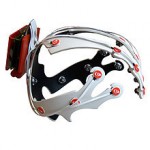
The startup company Emotiv Systems has developed a wearable EEG system that allows players to mentally interact with video games, by controlling the on-screen action.


From Technology Review
Emotiv's system has three different applications. One is designed to sense facial expressions such as winks, grimaces, and smiles and transfer them, in real time, to an avatar. This could be useful in virtual-world games, such as Second Life, in which it takes a fair amount of training to learn how to express emotions and actions through a keyboard. Another application detects two emotional states, such as excitement and calm. Emotiv's chief product officer, Randy Breen, says that these unconscious cues could be used to modify a game's soundtrack or to affect the way that virtual characters interact with a player. The third set of software can detect a handful of conscious intentions that can be used to push, pull, rotate, and lift objects in a virtual world.
20:12 Posted in Future interfaces | Permalink | Comments (0) | Tags: neuroinformatics
Mar 05, 2007
Mindfulness meditation and alcohol use
The role of thought suppression in the relationship between mindfulness meditation and alcohol use.
Addict Behav. 2007 Jan 23;
Authors: Bowen S, Witkiewitz K, Dillworth TM, Marlatt GA
Previous studies have demonstrated that attempts to suppress thoughts about using substances may actually lead to increases in substance use. Vipassana, a mindfulness meditation practice, emphasizes acceptance, rather than suppression, of unwanted thoughts. A study by Bowen and colleagues examining the effects of a Vipassana course on substance use in an incarcerated population showed significant reductions in substance use among the Vipassana group as compared to a treatment - usual control condition [Bowen S., Witkiewitz K., Dillworth T.M., Chawla N., Simpson T.L., Ostafin B.D., et al. (2006). Mindfulness Meditation and Substance Use in an Incarcerated Population. Psychology of Addictive Behaviors.]. The current study further examines the mediating effects of thought suppression in the relationship between participation in the course and subsequent alcohol use. Those who participated in the course reported significant decreases in avoidance of thoughts when compared to controls. The decrease in avoidance partially mediated effects of the course on post-release alcohol use and consequences.
19:38 Posted in Meditation & brain | Permalink | Comments (0) | Tags: meditation