




Feb 06, 2007
Diagnosis and rehabilitation of patients with hemispatial neglect using VR
Diagnosis and rehabilitation of patients with hemispatial neglect using virtual reality technology.
Conf Proc IEEE Eng Med Biol Soc. 2004;7:4908-11
Authors: Baheux K, Yoshikawa M, Tanaka A, Seki K, Handa Y
Our objective is to develop and test a system for diagnosis and rehabilitation of patients with hemispatial neglect. The system consists of a 3D-haptic virtual world seen through stereo shutter-glasses. Patients interact by manipulating a haptic interface. The software adapts the virtual world accordingly to haptic interface and eye tracking feedback. Offline analysis is possible by reviewing recorded data. Observations made during experimentations with hemiplegics patients and future works with hemispatial neglect patients are discussed.
16:30 Posted in Cybertherapy, Virtual worlds | Permalink | Comments (0) | Tags: cybertherapy
Programmable Media: Open Platforms for Creativity and Collaboration

Programmable Media: Open Platforms for Creativity and Collaboration :: A symposium organized and presented by New Radio and Performing Arts, Inc., hosted by Pace Digital Gallery :: Date: March 2, 2007 :: Time: 10 am to 3:30 pm :: Venue: Multipurpose Room, 1 Pace Plaza, Pace University :: Contact: Helen Thorington (newradio[at]turbulence.org); Jillian McDonald (jmcdonald2[at]pace.edu). Registration is encouraged: email turbulence at turbulence.org.
In July 2004 the not-for-profit media organization New Radio and Performing Arts, Inc. began the networked_performance blog to chronicle observations that internet based creative practice is expanding due to the ready availability of wireless, mobile, and GPS computational devices and the emergence of the programmable web. We observe that artists, designers and researchers working in digitally networked and programmable environments are increasingly making projects that are media platforms, tools and services which are open and contingent upon participation and the contribution of content to realize them.
Programmable Media: Open Platforms for Creativity and Collaboration, hosted by Pace University, will explore two forms of current practice. First, the creation of original software to create tools and services for creative and social use, such as a freely available 3-D drawing tool and musical instrument, or a public commons meta layer conceived as a continuous public space for collaboration. Second, the creation of original work using the tools available within open platforms such as Second Life and MySpace to build community and raise awareness.
16:24 Posted in Creativity and computers | Permalink | Comments (0) | Tags: creativity and computers
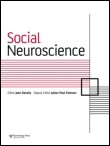
Special issue on ToM
The new issue (number 3-4, September-December 2006) of Social Neuroscience is dedicated to the topic of Theory of Mind.
The special issue is edited by Rebecca Saxe and Simon Baron-Cohen
16:14 Posted in Research tools | Permalink | Comments (0) | Tags: social neuroscience
Mindfulness meditation alleviates depressive symptoms in women with fibromyalgia
Mindfulness meditation alleviates depressive symptoms in women with fibromyalgia: Results of a randomized clinical trial.
Arthritis Rheum. 2007 Jan 31;57(1):77-85
Authors: Sephton SE, Salmon P, Weissbecker I, Ulmer C, Floyd A, Hoover K, Studts JL
OBJECTIVE: Depressive symptoms are common among patients with fibromyalgia, and behavioral intervention has been recommended as a major treatment component for this illness. The objective of this study was to test the effects of the Mindfulness-Based Stress Reduction (MBSR) intervention on depressive symptoms in patients with fibromyalgia. METHODS: This randomized controlled trial examined effects of the 8-week MBSR intervention on depressive symptoms in 91 women with fibromyalgia who were randomly assigned to treatment (n = 51) or a waiting-list control group (n = 40). Eligible patients were at least 18 years old, willing to participate in a weekly group, and able to provide physician verification of a fibromyalgia diagnosis. Of 166 eligible participants who responded to local television news publicizing, 49 did not appear for a scheduled intake, 24 enrolled but did not provide baseline data, and 2 were excluded due to severe mental illness, leaving 91 participants. The sample averaged 48 years of age and had 14.7 years of education. The typical participant was white, married, and employed. Patients randomly assigned to treatment received MBSR. Eight weekly 2.5-hour sessions were led by a licensed clinical psychologist with mindfulness training. Somatic and cognitive symptoms of depression were assessed using the Beck Depression Inventory administered at baseline, immediately postprogram, and at followup 2 months after the conclusion of the intervention. RESULTS: Change in depressive symptoms was assessed using slopes analyses of intervention effects over time. Depressive symptoms improved significantly in treatment versus control participants over the 3 assessments. CONCLUSION: This meditation-based intervention alleviated depressive symptoms among patients with fibromyalgia.
05:38 Posted in Meditation & brain | Permalink | Comments (0) | Tags: meditation