




Aug 06, 2006
iPointer
Via Textually.org
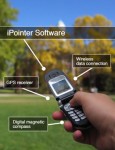
iPointer is a location-based application developed by Intelligent Spatial Technologies, which allows delivering on-demand information about the user location and surroundings.
From the company website:
"When users wish to identify a landmark, they point the hand-held device and press a button. The iPointer device receives coordinate signals from GPS satellites and orientation information from the digital magnetic compass to identify the user's location and device's pointing angle. These coordinates are then sent over the wireless network to the database. iST's geospatial database's selection algorithms identify the selected landmark and sends information back over the wireless network to be displayed in text, visuals and audio on the user's device"
20:28 Posted in Pervasive computing, Wearable & mobile | Permalink | Comments (0) | Tags: pervasive computing
Institute for Ethics and Emerging Technologies
The Institute for Ethics and Emerging Technologies is an organization that fosters "the ethical use of technology to expand human capacities"
From the Institute website:
Futurists have been examining the potential impacts of emerging technologies for decades, creating scenarios that inform anticipatory democratic debate and prospective social policy-making. In the program on the Consequences and Ethics of Emerging Technologies the IEET seeks to catalog the emerging technologies we believe will extend human capacities and to create a database of their projected consequences. This database will then be the basis for proposed policies to ensure the fullest realization of human potential.
The IEET portal has interesting stuff, including full-text articles, podcasts and reports covering a range of different topics (i.e. health, life, emerging technologies).
There is also a blog (RSS)
12:00 Posted in Research institutions & funding opportunities | Permalink | Comments (0) | Tags: research organizations
The ASSC William James Prize for Contributions to the Study of Consciousness
11:15 Posted in Research institutions & funding opportunities | Permalink | Comments (0) | Tags: funding opportunities and awards