




Jul 03, 2006
Wish progress bar
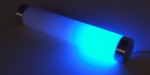
the "wish project bar" is a tool which measures long-term goals or whishes, as it creates an emotional link to the passing of time. the progress bar runs for 18 years with each band represents 1 year, serving as a gentle reminder & requiring very little attention. Users can make a wish, set the time by turning the top cap & then leave to do its thing.
23:56 Posted in Emotional computing | Permalink | Comments (0)
Navigated brain stimulation
Via Emerging Technology Trends
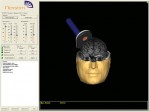
A young Finnish company, Nexstim, has developed a non-invasive brain scanning and stimulation system called navigated brain stimulation (NBS). This system is already in use in 20 hospitals worldwide.
From the company's website:
Medical professionals have always dreamt of the ability to actively reach into the brain - touch instead of looking. Modern brain scanners, such as MRI, already offer sophisticated views into the human brain. Yet, these images are passive views of structures.
Nexstim's Navigated Brain Stimulation (NBS) system reaches actively into the brain. NBS guides the precise delivery of targeted transcranial magnetic stimulation (TMS) pulses to discrete brain areas. The eXimia NBS system is the only device available for accurate prediction of the TMS stimulus location and dose within the human brain.
The safe and non-invasive mapping using eXimia NBS can support neurologists and neurosurgeons to diagnoze and treat the human brain diseases, trauma, and dysfunctions.
The earliest possible diagnosis of neuronal disorders rely on detection of functional changes with active, interventive tools such as NBS.

23:52 Posted in Neurotechnology & neuroinformatics | Permalink | Comments (0) | Tags: neuroinformatics
New device for reproducing smells
Via Cognitive Daily
A team of researchers in Japan has built a device that is capable of reproducing an impressively large array of smells, says a report in New Scientist.
The system will use 15 chemical-sensing microchips, or electronic noses, to pick up a broad range of aromas. These are then used to create a digital recipe from a set of 96 chemicals that can be chosen according to the purpose of each individual gadget. When you want to replay a smell, drops from the relevant vials are mixed, heated and vaporised. In tests so far, the system has successfully recorded and reproduced the smell of orange, lemon, apple, banana and melon. "We can even tell a green apple from a red apple," Team member Pambuk Somboon says.
23:43 Posted in Virtual worlds | Permalink | Comments (0)
Cell phone emissions excite the brain cortex
More than 500 million people in the world use cell phones which emit electromagnetic fields (EMFs). Though many studies have looked at the effects of EMFs on the body, few have focused on their effects on the brain. Such effects could be harmful, neutral, or beneficial and might be particularly important for individuals with conditions involving cortical excitability, such as epilepsy.
Researchers in Italy, led by Paolo M. Rossini, M.D., Ph.D. of Fatebenefratelli, used Transcranial Magnetic Stimulation (TMS) to investigate brain function under exposure to electromagnetic fields from a common type of cell phone. Their study reports the effects of EMF exposure on brain physiology for the first time.
The researchers developed a double-blind study in which 15 young male volunteers were exposed to EMF signals from a GSM 900 cell phone for 45 minutes. They measured Motor Evoked Potentials (MEPs) during motor cortex TMS before, and immediately after EMF exposure, and also one hour later.
In 12 of the 15 subjects, the data showed an excitability change in the motor cortex adjacent to the cell phone. "Intracortical excitability was significantly modified, short intracortical inhibition was reduced and facilitation enhanced," the authors report. They found that the effects of the EMF were transient and the subjects' brains tended to return toward baseline conditions one hour after the exposure.
It would be premature to presume that this work implies that using a cell phone is bad for the brain in any way. Much more work needs to be done to understand whether these electrical changes in the brain make any difference whatsoever in the way we think or in any disease process in which cortical excitability is affected.
Article: "Mobile phone emissions and human brain excitability." Ferreri, Florinda; Curcio, Giuseppe; Pasqualetti, Patrizio; De Gennaro, Luigi; Fini, Rita; Rossini, Paolo. Annals of Neurology; July 2006; (DOI: 10.1002/ana.20906 ).
Objective |
To test - via Transcranial Magnetic Stimulation (TMS) - the excitability of each brain hemisphere after  real real or sham exposure to the electromagnetic field (EMF) generated by a mobile phone operating in the Global System for Mobile Communication (GSM). or sham exposure to the electromagnetic field (EMF) generated by a mobile phone operating in the Global System for Mobile Communication (GSM). |
Methods |
| Fifteen male volunteers attended two experimental sessions, one week apart, in a cross-over, double-blind paradigm. In one session the signal was turned ON (EMF-on, real exposure), in the other it was turned OFF (EMF-off, sham exposure), for 45 minutes. Motor Evoked Potentials (MEPs) were recorded using a paired-pulse paradigm (testing intracortical excitability with 1 to 17 ms interstimulus intervals), both before and at different times after exposure to the EMF. Short Intracortical Inhibition (SICI) and Facilitation (ICF) curves were evaluated both on the exposed and non-exposed hemispheres. Tympanic temperature was collected during each session. |
Results |
| The intracortical excitability curve becomes significantly modified during real exposure, with SICI being reduced and ICF enhanced in the acutely exposed brain hemisphere as compared to the contralateral, non-exposed hemisphere or to sham exposure. Tympanic temperature showed no significant main effect or interactions. |
23:39 Posted in Wearable & mobile | Permalink | Comments (0) | Tags: mobile phones
Ethics of Persuasive Technology
BJ Fogg has posted to his blog "Captology Notebook" an unpublished article on the ethics of persuasive technology that is really worth reading...
ANALYZING THE ETHICS OF PERSUASIVE TECHNOLOGY
2005
DANIEL BERDICHEVSKY
B.J. FOGG
RAMIT SETHI
MANU KUMAR
Stanford Persuasive Technology Lab
Authors' addresses: Daniel Berdichevsky, 1006 Wall St. Los Angeles, CA 90015; B.J. Fogg, Ramit Sethi and Manu Kumar, Persuasive Technology Lab, Stanford University, Box 20456, Stanford, CA 94309
________________________________________________________________________
1. INTRODUCTION
When a doctor tells you your blood pressure is too high, you may modify your lifestyle to compensate: less salt, more exercise, fewer freedom fries. In a sense, the doctor has committed a persuasive act. We are unlikely to question the ethics of her having done so. But what if the doctor were out of the picture? Suppose a device at your bedside not only informed you of your blood pressure each morning, but shifted colors to convey the likelihood of your suffering a heart attack. Would such a persuasive technology be as ethical as a doctor giving you advice in her office? What if it were co-marketed with a treadmill?
The objective of this article is to describe and test a framework for analyzing the ethics of technologies that change people’s attitudes and behaviors. We focus on computerized persuasive technologies—the field known as “captology”—though similar considerations apply to non-computerized technologies, and even to technologies that change attitudes and behaviors by accident.
This idea of unintended persuasive outcomes is one reason we are revisiting this topic four years after the publication of an earlier piece by one of the authors, “Toward an Ethics of Persuasive Technology.” [Berdichevsky & Neuenschwander, 1999] Since 1999, persuasive elements have become common enough in both hardware and software—and especially on the web—that designers may not always be conscious of their persuasive nature. They may take them for granted. This telephone beeps to remind you to check your voice mail; that search engine changes its logo every day in a continuing narrative to pull you back more often . But even when persuasion is incidental to other design motives, it requires ethical attention—particularly because end users may not be expecting it and are therefore caught with their defenses down. [Fogg, 2002]
Why pay special attention to computerized persuasive technologies? The chief reason is that while non-computerized technologies can certainly be persuasive, only rarely can they stand on their own . A television with no infomercial to display will not convince you to buy new cutlery. A whip without someone to wield it will cow no slave into obedience. Even a carpool lane requires enforcement.
What makes computerized persuasive technologies more interesting than these examples is that they can persuade independently. Computerized persuasive technologies are also dynamic, changing in response to different users and their inputs. They allow persuasion—and the persuasive experience—to be simultaneously mass-manufactured and user-specific. For instance, a wristwatch that encourages you to keep running by congratulating you on the specific number of calories you have burned is completely self-contained. This leads to questions of agency: do you blame the wristwatch if a runner suffers a heart attack trying to achieve a certain pulse?
The full article can be accessed here
23:25 Posted in Persuasive technology | Permalink | Comments (0) | Tags: persuasive technology
Brain waves allows disabled to take a virtual stroll
From The Observer
A new 'virtual helmet' which harnesses the power of brain waves is allowing severely disabled people to feel as if they can walk and move again, opening up the prospect of using the mind to help them control wheelchairs, computers and even false limbs.
Just by imagining their feet moving, patients using wheelchairs can again experience what it feels like to stroll down a high street, thanks to the work of British scientists who have found a new way of using the power of thought. They have devised the helmet which can link brain wave patterns to a virtual reality system, allowing the wearer to enter an illusory world of movement.
The new system has been tried out for the first time by an Austrian man who became a paraplegic after a swimming accident. Tom Schweiger was injured on holiday in Greece seven years ago when a huge wave swept him on to rocks, severing the spinal cord in his neck and leaving him paralysed apart from some movement in his left arm.
Last week 31-year-old Schweiger was able to enter a different virtual world when the scientists from his home country and a team at University College London tested the new system. When he was asked by researchers to think about moving either his foot or his hand, the changes in his brain waves - or electroencephalogram (EEG) signals - were recorded by electrodes on the top of his head. These were then turned into a control signal which was linked up to the virtual reality system.
Schweiger was given special 3D glasses to wear so that the images created in the 'virtual cave' created for the experiment, made up of a four-sided room complete with stereo sound and projected images, gave him the illusion of walking through a street. Different characters appeared on the screen and talked to him and he was asked to respond...
Read the full article
18:05 Posted in Brain-computer interface | Permalink | Comments (0)