



May 23, 2006
Lateralization of unimanual and bimanual motor imagery
Lateralization of unimanual and bimanual motor imagery.
Brain Res. 2006 May 18;
Authors: Stinear CM, Fleming MK, Byblow WD
Most studies of motor imagery have examined motor cortex function during imagery of dominant hand movement. The aim of this study was to examine the modulation of excitability in the dominant and non-dominant corticomotor pathways during kinesthetic motor imagery of unimanual and bimanual movement. Transcranial magnetic stimulation (TMS) was applied over the contralateral motor cortex (M1) to elicit motor-evoked potentials (MEPs) in the abductor pollicis brevis (APB) and abductor digiti minimi (ADM) muscles of each hand, in two separate sessions. Transcutaneous electrical stimuli were also delivered to the median nerve at each wrist, to elicit F-waves from APB. Fifteen right-handed volunteers imagined unimanual and bimanual phasic thumb movements, paced with a 1-Hz auditory metronome. Stimuli were delivered at rest, and either 50 ms before (ON phase), or 450 ms after (OFF phase), the metronome beeps. Significant MEP amplitude facilitation occurred only in right APB, during the ON phase of motor imagery of the right hand and both hands. Significant temporal modulation of right APB MEP amplitude was observed during motor imagery of right, left and bimanual performance. F-wave persistence and amplitude were unaffected by imagery. These results demonstrate that the motor imagery is lateralized to the left (dominant) hemisphere, which is engaged by imagery of each hand separately, and bimanual imagery. This finding has implications for the use of motor imagery in rehabilitation.
22:23 Posted in Mental practice & mental simulation | Permalink | Comments (0) | Tags: Positive Technology
Limits of brain-computer interface
Limits of brain-computer interface. Case report.
Neurosurg Focus. 2006;20(5):e6
Authors: Bakay RA
22:19 Posted in Brain-computer interface | Permalink | Comments (0) | Tags: Positive Technology
Emilio Servadio
Emilio Servadio has been one of the most important Italian psychologists, along with Cesare Musatti and Roberto Assagioli.
A student of Freud, Servadio was renowned primarily for his contributions to psychoanalysis (he was among the founders of the Italian Psychoanalytic Society), but he was also well known for his work in parapsychology and altered states of consciousness.
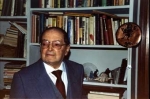
In this commemorative article (download the Servadio_SISSC.zip: 2.8 Mb), Pierangelo Garzia, a science writer who had personally known Servadio, describes the main scientific achievements and the phylosophical approach of this great thinker.
18:20 | Permalink | Comments (0) | Tags: Positive Technology