




Apr 27, 2006
Researchers develop thought-controlled limbs
From VRoot.org (via MSNBC)
With Pentagon support, researchers develop thought-controlled limbs. Work on artificial arms that would be controlled by the human mind is ramping up, thanks to a helping financial hand from the Defense Advanced Research Projects Agency. DARPA announced in February that it would pour $55 million into a prosthetic arm research project to be led by Johns Hopkins University’s Applied Physics Laboratory. The work will be spread among more than two dozen institutions.
23:10 Posted in Neurotechnology & neuroinformatics | Permalink | Comments (0) | Tags: Positive Technology
Mobile VR Glasses
From 3pointd.com:
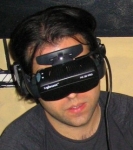
SpatiaLight, which manufactures “ultra high-resolution Liquid Crystal on Silicon (LCoS) microdisplays for the high definition television market,” has a press release accouncing that it’s now developing “a 3-D eyeglass-type display device for use with wireless phones, personal digital assistants and personal media players, which enable the viewing of broadband content, cable and satellite television, music videos as well as playing of video games, all with the experience of high definition large screen television.” Imagine: instead of all the laptops at Starbucks, we’ll one day see a bunch of people logging into the virtual world via a hyper-powered Blackberry and their SpatiaLight VR glasses.
23:10 Posted in Virtual worlds | Permalink | Comments (0) | Tags: Positive Technology
Mobile phone may impair your ability to make snap decisions
From textually.org
Electromagnetic radiation from your mobile phone may impair your ability to make snap decisions, such as when driving a car, an Australian study shows, reports Optus.net via Engadget Mobile and Techdirt Wireless.
"The study, which will be published in the journal Neuropsychologia found evidence of slowed reactions, on both simple reactions and more complex reactions, such as choosing a response when there is more than one alternative.
The researchers found these effects after people were exposed to electromagnetic radiation equivalent to spending 30 minutes on the phone."
... Another interesting finding of the study was that the participants showed a slight improvement in working memory, such as remembering a phone number long enough to dial it."
23:07 Posted in Wearable & mobile | Permalink | Comments (0) | Tags: Positive Technology
Deep Brain Stimulation Shows Promise in Treatment of Obsessive Compulsive Disorder
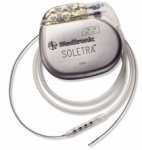
DBS has been used to treat intractable pain for several decades, and more recently, use of this technology has expanded to the FDA-approved indications for Parkinson’s disease and other movement disorders. DBS is also under investigation in the treatment of epilepsy and other debilitating neurological conditions. DBS surgery involves the placement of tiny implantable electrodes into specific parts of the brain that are functioning abnormally. These electrodes emit tiny pulses of electrical stimulation to block the abnormal activity in the brain, which causes a variety of symptoms – such as pain, tremors, movement problems; as well as obsessions, moods and anxieties associated with psychiatric disorders. The success of DBS is dependent on the surgical team’s ability to precisely pinpoint the specific brain area for stimulation. The advantage of DBS is that it is reversible, nondestructive, and can be modified by adjustment of the stimulator settings after implantation.
This study was conducted with Institutional Review Board (IRB) and Food and Drug Administration (FDA) Investigational Device Exemptions (IDE) approval. Six patients, four females and two males, with an average age of 48, were enrolled in the study from 2003 to 2005. All six patients had a history of being highly resistant to other treatments, including medication, psychotherapy, and electroconvulsive therapy (ECT). Bilateral DBS leads were implanted stereotactically in a region of the brain known as the ventral anterior internal capsule. Participants underwent standardized and detailed psychiatric, quality-of-life, and neuropsychological assessments on a regularly scheduled basis, both pre- and postsurgically.
At a minimum of six months postsurgery, four of the six patients showed a clinically significant reduction in depression severity of 50 percent or greater on the Montgomery-Asberg Depression Rating Scale. Quality-of-life measures improved as well, and patients showed progressive improvements in mood and functioning over time. One patient experienced persistent occipital pain that was alleviated with repositioning of a subcutaneous connector wire.
22:58 Posted in Neurotechnology & neuroinformatics | Permalink | Comments (0) | Tags: Positive Technology
Your Thoughts Are Your Password
17:50 Posted in Brain-computer interface | Permalink | Comments (0) | Tags: Positive Technology