




Apr 12, 2006
Neural Interfaces: Chip ramps up neuron-to-computer communication
Via VRoot (From New Scientist):
A specialised microchip that could communicate with thousands of individual brain cells has been developed by European scientists.
The device will help researchers examine the workings of interconnected brain cells, and might one day enable them to develop computers that use live neurons for memory.
The computer chip is capable of receiving signals from more than 16,000 mammalian brain cells, and sending messages back to several hundred cells. Previous neuron-computer interfaces have either connected to far fewer individual neurons, or to groups of neurons clumped together.
22:59 Posted in Brain-computer interface | Permalink | Comments (0) | Tags: Positive Technology
Social Network Mnemonics for Teenagers
Nicolas Nova (Pasta and Vinegar) has found an article describing a a curious device: Telebeads: Social Network Mnemonics for Teenagers by Jean-Baptiste Labrune and Wendy Mackay (IDC2006)
From the article:
This article presents the design of Telebeads, a conceptual exploration of mobile mnemonic artefacts. Developed together with five 10-14 year olds across two participatory design sessions, we address the problem of social network massification by allowing teenagers to link individuals or groups with wearable objects such as handmade jewelery. We propose different concepts and scenarios using mixed-reality mobile interactions to augment crafted artefacts and describe a working prototype of a bluetooth luminous ring. We also discuss what such communication appliances may offer in the future with respect to interperception, experience networks and creativity analysis.
The ring addresses two primary functions requested by the teens: providing a physical instantiation of a particular person in a wearable object and allowing direct communication with that person. (…) We have just completed an ejabberd server, running on Linux on a PDA, which will serve as a smaller, but more powerful telebead interface


22:51 Posted in Wearable & mobile | Permalink | Comments (0) | Tags: Positive Technology
Computer simulations of the mind
Scientific American Mind has a free online article about computer simulations of the mind. The article analyzes how recent technological advances are narrowing the gap between human brains and circuitry.

22:42 Posted in AI & robotics | Permalink | Comments (0) | Tags: Positive Technology
New BCI shown off at CEBIT
Via New Scientist
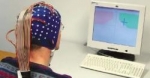
Researchers at the Fraunhofer Institute in Berlin and Charité, the medical school of Berlin Humboldt University in Germany, have developed and succesfully tested a brain-computer interface, which could provide a way for paralysed patients to operate computers, or for amputees to operate electronically controlled artificial limbs.
The device allows to type messages onto a computer screen by mentally controlling the movement of a cursor. A user must wear a cap containing EEG electrodes, and imagine moving their left or right arm in order to manoeuvre the cursor around.
The device was recently presented at the CeBit electronics fair in Hanover, Germany.
Read full article
22:34 Posted in Brain-computer interface | Permalink | Comments (0) | Tags: Positive Technology