




Mar 26, 2006
Tango!
Via Engadget
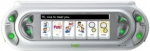 A company named AbleNet is busting out an interesting new handheld device called Tango! which does the "AAC" thing (Augmentative and Alternative Communication - new one on us) to help kids learn English, or for those that are hearing or speech impaired, allowing for the easy creation of sentences. You can use predetermined phrases by punching through a few sub-categories, or make your own with the device's intuitive interface. The Tango! also allows the creation of your own items; the built-in camera can capture a new image to serve as an icon, and then an adult can record the correct phrase for the item, even with a simulated child's voice. The device can expand its functionality via USB, CompactFlash, and SD, with the option to use a keyboard, or even work over a cellphone down the line. Sadly the unit runs for a steep $6899, but hopefully AbleNet can get some quantity orders in and cut that down a bit.
20:40 Posted in Brain training & cognitive enhancement | Permalink | Comments (0) | Tags: Positive Technology
Textually: Mobile phones in healthcare
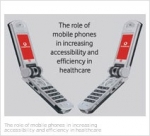
In a lengthy and thorough article entitled Mobile phones and health, The Economist, reports on a study carried out by Rifat Atun and his colleagues at Imperial College, London, rounding up 150 examples of the use of text-messaging in the delivery of health care. "These uses fall into three categories: efficiency gains; public-health gains; and direct benefits to patients by incorporating text-messaging nto treatment regimes. The study, funded by Vodafone.
20:26 Posted in Wearable & mobile | Permalink | Comments (0) | Tags: Positive Technology
Textually: Small screens a contributing factor to visual fatigue
 Studies have found that the majority of people who work at a computer experience some eye or vision problems, and that the level of discomfort appears to increase with the amount of computer use, reports medical news today . "But, increased use of smaller, portable work and recreational gadgets such as PDAs, laptops and cell phones may also be contributing factors to the visual fatigue and discomfort experienced by millions, according to leading expert, Dr. Jeffrey Anshel."
20:23 Posted in Wearable & mobile | Permalink | Comments (0) | Tags: Positive Technology
Smart Mobs: Bioengineering professor hopes to mimic the brain on a chip
Kwabena Boahen, an associate professor in the Department of Bioengineering, leads a research group that is trying to mimic the functions of the brain’s complex neural system using silicon chips.
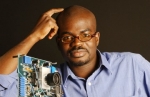
Read the Stanford's report
20:19 Posted in Neurotechnology & neuroinformatics | Permalink | Comments (0) | Tags: Positive Technology
CIO: Visualization of Internet Ownership


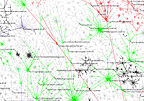
From CIO: What is this ball of colors? It is the North American Internet, or more specifically a map of just about every router on the North American backbone, (there are 134,855 of them for those who are counting). The colors represent who each router is registered to. Red is Verizon; blue AT&T; yellow Qwest; green is major backbone players like Level 3 and Sprint Nextel; black is the entire cable industry put together; and gray is everyone else, from small telecommunications companies to large international players who only have a small presence in the U.S. If you click on the map it will take you to much bigger version complete with labels that tell you the address of many of the routers
20:13 Posted in Information visualization | Permalink | Comments (0) | Tags: Positive Technology