




Dec 04, 2005
Dementia and Caregiver Quality of Life
Via Brain Blog
Thomas P, Lalloue F, Preux PM, Hazif-Thomas C, Pariel S, Inscale R, Belmin J, & Clement JP. Dementia patients caregivers quality of life: The PIXEL study. International Journal of Geriatric Psychiatry. 2005 Dec 2; [Epub ahead of print]
University Department of Psychogeriatrics & Memory Clinic CH Limoges, France.
14:10 Posted in Brain training & cognitive enhancement | Permalink | Comments (0) | Tags: Positive Technology, Cognitive prosthetics
Post Doctoral Proposal on Virtual Reality and 3D Interaction
Via VRPSYCH mailing list
A one year post-doc position is available at INRIA in Grenoble on VR and 3D interaction.
The candidate should have defended his PhD less than 1 year ago and should have an excellent CV.
The post-doc is available "immediately".
For more information, contact as soon as possible:
Sabine Coquillart
Sabine.Coquillart@inria.fr
Tel: +33 (0)4 76 61 52 65
11:30 Posted in Research institutions & funding opportunities | Permalink | Comments (0) | Tags: Positive Technology
Dec 02, 2005
Ecstasy exibition: in and about altered states
 Ecstasy presents recent and specially commissioned works that challenge notions of interactivity while generating a heightened aural and visual experience for the individual. Featured artists include Franz Ackermann, Eija-Liisa Ahtila, Francis Alÿs, Chiho Aoshima, assume vivid astro focus, Massimo Bartolini, Tatsurou Bashi, Glenn Brown, Janet Cardiff and Georges Bures Miller, Olafur Eliasson, Lara Favaretto, Sylvie Fleury, Tom Friedman, Rodney Graham, Jeppe Hein, Carsten Höller, Pierre Huyghe, Ann Veronica Janssens, Ann Lislegaard, Matt Mullican, Takashi Murakami, Paul Noble, Roxy Paine, Charles Ray, Erwin Redl, Pipilotti Rist, Paul Sietsema, Fred Tomaselli, and Klaus Weber. The exhibition is organized by Chief Curator Paul Schimmel with Gloria Sutton and is accompanied by a fully illustrated catalogue.
18:51 Posted in Cyberart | Permalink | Comments (0) | Tags: Positive Technology
Dec 01, 2005
Characterization of four-class motor imagery EEG data for the BCI-competition 2005
J Neural Eng. 2005 Dec;2(4):L14-22
Authors: Schlögl A, Lee F, Bischof H, Pfurtscheller G
To determine and compare the performance of different classifiers applied to four-class EEG data is the goal of this communication. The EEG data were recorded with 60 electrodes from five subjects performing four different motor-imagery tasks. The EEG signal was modeled by an adaptive autoregressive (AAR) process whose parameters were extracted by Kalman filtering. By these AAR parameters four classifiers were obtained, namely minimum distance analysis (MDA)-for single-channel analysis, and linear discriminant analysis (LDA), k-nearest-neighbor (kNN) classifiers as well as support vector machine (SVM) classifiers for multi-channel analysis. The performance of all four classifiers was quantified and evaluated by Cohen's kappa coefficient, an advantageous measure we introduced here to BCI research for the first time. The single-channel results gave rise to topographic maps that revealed the channels with the highest level of separability between classes for each subject. Our results of the multi-channel analysis indicate SVM as the most successful classifier, whereas kNN performed worst.
23:15 Posted in Brain-computer interface | Permalink | Comments (0) | Tags: Positive Technology, brain-computer interface
A wavelet-based time-frequency analysis approach for classification of motor imagery for brain-computer interface applications
J Neural Eng. 2005 Dec;2(4):65-72
Authors: Qin L, He B
Electroencephalogram (EEG) recordings during motor imagery tasks are often used as input signals for brain-computer interfaces (BCIs). The translation of these EEG signals to control signals of a device is based on a good classification of various kinds of imagination. We have developed a wavelet-based time-frequency analysis approach for classifying motor imagery tasks. Time-frequency distributions (TFDs) were constructed based on wavelet decomposition and event-related (de)synchronization patterns were extracted from symmetric electrode pairs. The weighted energy difference of the electrode pairs was then compared to classify the imaginary movement. The present method has been tested in nine human subjects and reached an averaged classification rate of 78%. The simplicity of the present technique suggests that it may provide an alternative method for EEG-based BCI applications.
23:15 Posted in Brain-computer interface | Permalink | Comments (0) | Tags: Positive Technology, brain-computer interface
Game to teach street crossing safety
From The Birmingham News
When pilots learn to fly and surgeons to cut, virtual reality comes in handy where blunders can be fatal.
Learning to cross the street is no different, so David Schwebel, associate professor of psychology at UAB, is developing a virtual reality game to teach school children how to cross safely. Of 4,641 pedestrians who died nationwide last year, 363 were 14 and younger, according to the National Highway Traffic Safety Administration...
read the full article here
23:10 Posted in Cybertherapy | Permalink | Comments (0) | Tags: serious gaming, cybertherapy
Nov 30, 2005
BrainML project
One such extension is provided by the new NIH-supported neuroinformatics initiative of the Society for Neuroscience, which supports the development of expert-derived terminology sets for several areas of neuroscience. Under a cooperative agreement, these term lists will be made available Open Source.
This site provides a complete description of BrainML, and it also serves as a public repository of BrainML models.
23:30 Posted in Research tools | Permalink | Comments (0) | Tags: Positive Technology, research tools
Influence of imagined posture and imagery modality on corticospinal excitability
Behav Brain Res. 2005 Nov 25
Authors: Fourkas AD, Ionta S, Aglioti SM
23:25 Posted in Mental practice & mental simulation | Permalink | Comments (0) | Tags: Positive Technology, mental practice, motor imagery
Nov 29, 2005
11th Annual CyberTherapy Conference
The Interactive Media Institute and the Cyberpsychology Lab of the UQO announce the first call for abstracts for CyberTherapy 11. The submission deadline is February 20th 2006.
Guest speaker: Pierre-Gilles de Gennes, Nobel Prize of Physics in 1991
Tentative title of his talk: Contributions of Physics to Medicine
Preconference Workshops: June 12th, 2006
Conference: June 13th - 15th, 2006, Gatineau (Province of Quebec, Canada)
Cyberarium : June 13th, 2006
Submission and Registration Deadlines: February 20th, 2006
Submission for posters, orals and symposiums.
March 6th, 2006: Authors are informed if their submission has been accepted.
March 30th, 2006: Deadline to submit a full paper (for those interested).
April 30th, 2006: Deadline for early pre-registration (see web site for details)
Early pre-registration: 350 $ (Can), 175 $ (Can) for students.
Pre-registration: 450 $ (Can), 225 $ (Can) for students.
May 20th, 2006: Deadline to register for workshops (75 $ (Can) per workshop).
June 6th, 2006: Deadline for pre-registration (only on-site registration after that date: 500 $ (Can), 275 $ (Can) for students).
Note that abstracts will be published in a regular issue of the journal Cyberpsychology and Behavior and presentations will be available in pdf on the CT11 web site the day after the conference.
More information about the CT11 conference can be found on the Interactive Media Institute website
17:06 Posted in Positive Technology events | Permalink | Comments (0) | Tags: Positive Technology
Nov 28, 2005
Wireless care for dementia patients
Via Medical Informatics Insider
Safe at Home project has evaluated the viability and clinical effectiveness of telecare and assistive technology in supporting the independence of people with dementia.
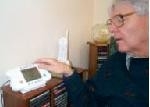
According to the project's final report, the Safe at Home project has enabled people with dementia to remain independent for longer, receiving the care and support they need in their own homes through the use of assistive technology, and has brought the local agencies in Northamptonshire equivalent savings of over £1.5 million over the 21 months during which research took place.
Emerging from ideas developed from the EU-funded ASTRID project that was led by Northamptonshire County Council, Safe at Home began as a small-scale project in 2000, and an initial evaluation published in 2002 provided evidence that supported a decision to expand the project. A second evaluation of this larger project was undertaken from June 2002 to March 2004, and involved 233 individuals and their carers. The study aimed to assess the reliability of the assistive technology used, the extent to which it supported unpaid carers, the extent to which it supported the independence of people with dementia and the cost effectiveness of the technology.
20:10 Posted in Brain training & cognitive enhancement | Permalink | Comments (0) | Tags: Positive Technology, Cognitive prosthetics
Nominate Positive Technology for the Medical Weblog Award!
Medgadget has announced the second annual Medical Weblog Awards. These awards are designed to honor the very best in the medical blogosphere, as decided by the readers.

The categories for this year's awards will be:
-- Best Medical Weblog
-- Best New Medical Weblog (established in 2005)
-- Best Literary Medical Weblog
-- Best Clinical Sciences Weblog
-- Best Health Policies/Ethics Weblog
-- Best Medical Technologies/Informatics Weblog
Nominations are now accepted here.
This will help the PT community to grow up and gain more visibility.
I remind all readers that Positive Technology is a not-for-profit initiative for disseminating the applications of interactive technology in mental health and well-being.
16:56 Posted in Positive Technology events | Permalink | Comments (0) | Tags: Positive Technology
Disruptive Innovations in Healthcare Conference
The Healthcare Innovation and Convergence Summit (Health IC) focuses on the most disruptive innovations occurring today, showcases the business and convergence opportunities, presents a roadmap for the future, and provides a forum specifically geared towards matching today’s most innovative new companies with investors and developers.
A two-day, four-track conference program of seminars, panels and roundtables covers new science, technology and business approaches in regenerative medicine, innovative patient care, and medical informatics.
More information on the conference website
15:28 Posted in Positive Technology events | Permalink | Comments (0) | Tags: Positive Technology
60 seconds trip

15:00 Posted in Cyberart | Permalink | Comments (0) | Tags: Positive Technology