




Oct 24, 2005
Third International Design and Engagability Conference
Via Usability News
The third International Design and Engagability Conference (IDEC) will be held in late 2006.
The conference consists of international researchers from Europe, the United States and Australasia. The conference is targeted at other researchers interested in engagability, and businesses interested in designing their products and services around engagement with consumers. Guest speakers so far include David Benyon of Napier, University, Mike Williams and Suzanne Begley of Public Life.
IDEC 2006 format will consist of a short keynote address at the beginning followed by speakers presenting their papers in twenty minute slots. Delegates will be able to ask questions and there will be. Delegates will be able to ask questions and take away the proceedings.
The themes include, but are not limited to:
• Aesthetics
• E-commerce
• E-health
• Games
• Industrial design
• Interactive arts
• Mobile Computing
• Mobile Media
• Performance
• Product Design
• Three Dimensional Design
• Visual Communication
14:13 Posted in Positive Technology events | Permalink | Comments (0) | Tags: Positive Technology
Aging by Design conference

The two-days conference has explored the intersection of the rapidly-growing aging population and the world of business and technology. Topics included current research on the impact of aging on design, methods for interacting with the aging population (requirements gathering and testing), aging in the workplace, design case studies and business opportunities.
14:08 Posted in Positive Technology events | Permalink | Comments (0) | Tags: Positive Technology
Brain Oxygenation monitoring through noninvasive sensor
Via Medgadget
Medgadget reports about a new technology, which allows measuring cerebral oxygenation and indirectly cerebral perfusion. These paramethers can be used by anesthesiologists during a surgical procedure to prevent potential harm in the brain.Designed by CAS Medical Systems, Inc., the monitor, called a cerebral oximeter, uses one or more sensors attached to the forehead that emit non-harmful, 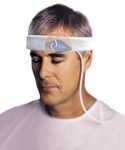 low-level laser light through the skin and skull into the brain. Since the near-infrared light absorption characteristics of the hemoglobin in red blood cells are known, the system can calculate the brain tissue oxygen saturation by measuring the differences in intensity of light as it passes through the brain. When combined with pulse oximetry, the cerebral oximeter may be used to estimate the cerebral venous oxygen saturation.
13:57 | Permalink | Comments (0) | Tags: Positive Technology
Tenured faculty position on Modeling of Cognitive Processes - Berlin University
Tenured faculty position on Modeling of Cognitive Processes is available within the Department of Computer Science and Electrical Engineering of the Berlin University of Technology and the recently established Bernstein Center for Computational Neuroscience Berlin. The Berlin Bernstein Center, which is funded by the German federal government, integrates interdisciplinary research initiatives in the brain sciences and in AI across the city's three major universities and across several research institutes in Berlin, covering neuroscience, medicine, physics, mathematics, computer science and engineering. The Center plans to launch an international Master/PhD program in Computational Neuroscience by fall 2006.
The Department of Computer Science and Engineering is currently creating a focus area in AI and machine learning with at least four core faculty positions (Artificial Intelligence, Machine Learning, Modelling of Cognitive Processes, Neural Information Processing) and several other labs with AI related research. The Department will introduce "intelligent systems" as an area of specialization in its new Master program in Computer Science by fall 2006.
13:31 Posted in Research institutions & funding opportunities | Permalink | Comments (0) | Tags: Positive Technology