




Apr 25, 2006
Transcranial direct current stimulation
From New Scientist
It sounds like quackery, but it's not. A growing body of evidence suggests that passing a small electric current through your head can have a profound effect on the way your brain works. Called transcranial direct current stimulation (tDCS), the technique has already been shown to boost verbal and motor skills and to improve learning and memory in healthy people - making fully-functioning brains work even better. It is also showing promise as a therapy to cure migraine ...
Read the full article
23:20 Posted in Research tools | Permalink | Comments (0) | Tags: Positive Technology
Neuroelectronics
Via Mind Hacks
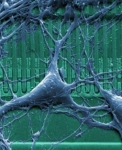
The New Atlantis has a comprehensive article on 'neuroelectronics' - the science of interfacing digital components with neural wetware. From the article:
The potential merging of mind and machine thrills, frightens, and intrigues us. For decades, experiments at the border between brains and electronics have led to sensationalistic media coverage, vivid science fiction portrayals, and dreams of cyborgs and bionic men. But recently, this area of science has seen remarkable advances—from robotic limbs controlled directly by brain activity, to brain implants that alter the mood of the depressed, to rats steered by remote control. Adam Keiper explores the peculiar history and present directions of this research, and considers the challenges of staying human in the age of neuroelectronics.
23:11 Posted in Neurotechnology & neuroinformatics | Permalink | Comments (0) | Tags: Positive Technology
Takeluma sonic alphabet

[pcho.net & pcho.net (avi, 13mb)]
23:02 Posted in Cyberart | Permalink | Comments (0) | Tags: Positive Technology
Games for Health Day
Davidson Executive Conference Center 3415 South Figueroa Street :: Los Angeles, California 90089
The Games for Health Project, Robert Wood Johnson Foundation, TATRC, and USC’s Annenberg School for Communication & Institute for Creative Technologies invite you to join us on May 9 for a full-day event devoted to the use of games and game technologies in health and healthcare, including an evening reception.
This one-day event, just before the opening of the Electronic Entertainment Expo will bring together researchers, game developers, and health & healthcare professionals for a series of talks devoted to how games and game technologies are addressing critical health & healthcare issues.
Talks will focus on:
• Health messaging using games
• Combat & emergency medicine
• Psychotherapy and Post Traumatic Stress Disorder
• Pain Distraction & Anxiety
• Cancer treatment
• Disease management
• Coping with family ailments
• Cognitive health
• Off-the-Shelf consumer health & exergaming titles
22:57 Posted in Positive Technology events | Permalink | Comments (0) | Tags: Positive Technology
Humanlike robots
Via the Presence Listserv
 Japan boasts the most advanced humanoid robots in the world, represented by Honda's Asimo and other bipedal machines. They are expected to eventually pitch in as the workforce shrinks amid the dwindling and aging population. But why build a robot with pigmented silicone skin, smooth gestures and even makeup? To Repliee's creator, Hiroshi Ishiguro, the answer is simple: "Android science."
Read the full story from Scientific American
22:45 Posted in AI & robotics | Permalink | Comments (0) | Tags: Positive Technology