



May 02, 2007
The Aesthetic Interface
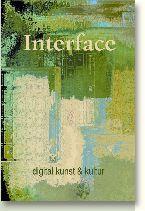
The Aesthetic Interface :: 9-13 May 2007 :: Aarhus University, Denmark.
The interface is the primary cultural form of the digital age. Here the invisible technological dimensions of the computer are given form in order to meet human perception and agency. This encounter is enacted through aesthetic forms stemming not only from the functional domains and tools, but increasingly also from aesthetic traditions, the old media and from the new media aesthetics. This interplay takes place both in software interfaces, where aesthetic and cultural perspectives are gaining ground, in the digital arts and in our general technological culture - keywords range from experience oriented design and creative software to software studies, software art, new media, digital arts, techno culture and digital activism.
This conference will focus on how the encounter of the functional and the representational in the interface shapes contemporary art, aesthetics and culture. What are the dimensions of the aesthetic interface, what are the potentials, clashes and breakdowns? Which kinds of criticism, aesthetic praxes and forms of action are possible and necessary?
The conference is accompanied by an exhibition and workshops.
Christian Ulrik Andersen(DK): 'Writerly gaming' - social impact games
Inke Arns (DE): Transparency and Politics. On Spaces of the Political beyond the Visible, or: How transparency came to be the lead paradigm of the 21st century.
Morten Breinbjerg (DK): Music automata: the creative machine or how music and compositional practices is modelled in software
Christophe Bruno (F): Collective hallucination and capitalism 2.0
Geoff Cox (UK): Means-End of Software
Florian Cramer (DE/NL): What is Interface Aesthetics?
Matthew Fuller (UK): The Computation of Space
Lone Koefoed Hansen (DK): The interface at the skin
Erkki Huhtamo (USA/Fin): Multiple Screens - Intercultural Approaches to Screen Practice(s)
Jacob Lillemose (DK): Interfacing the Interfaces of Free Software. X-devian: The New Technologies to the People System
Henrik Kaare Nielsen (DK): The Interface and the Public Sphere
Søren Pold (DK): Interface Perception
Bodil Marie Thomsen (DK): The Haptic Interface
Jacob Wamberg (DK): Interface/Interlace, Or Is Telepresence Teleological?
Organised by: The Aesthetics of Interface Culture, Digital Aesthetics Research Center, TEKNE, Aarhus Kunstbygning, The Doctoral School in Arts and Aesthetics, .
Supported by: The Danish Research Council for the Humanities, The Aarhus University Research Foundation, The Doctoral School in Arts and Aesthetics, Aarhus University's Research Focus on the Knowledge Society, Region Midtjylland, Aarhus Kommune. The exhibition is supported by:Region Midtjylland, Århus Kommunes kulturpulje, Kunststyrelsen, Den Spanske Ambassade, Egetæpper.
23:44 Posted in Future interfaces | Permalink | Comments (0) | Tags: future interface
Virtual reality device helps multiple sclerosis patients walk
Via Medgadget
Via Medgadget

Researchers at Technion Institute of Technology in Israel have developed a wearable virtual reality that device to provide patients suffering from balance disorders with supplemental auditory and visual information to restore normal gait.
From the press release
The visual component presents users with a virtual, tiled-floor image displayed on one eye via a tiny piece that clips onto glasses worn by the user. This allows the user to distinguish between the virtual floor and real obstacles, making it possible to navigate even rough terrain or stairs.
The researchers found that auditory feedback significantly improved the gait of both MS and Parkinson's patients (though the improvement was less pronounced in Parkinson's patients). With regard to walking speed, patients showed an average improvement of 12.84% while wearing the device. There were also positive residual short-term therapeutic effects (18.75% improvement) after use. Average improvement in stride was 8.30% while wearing the device and 9.93% residually.
"Healthy people have other tools, such as sensory feedback from muscles nerves, which report on muscle control, telling them whether or not they are using their muscles correctly," says Baram. "This feedback is damaged in Parkinson and MS patients and the elderly, but auditory feedback can be used to help them walk at a fixed pace."
Results from a small study (14 randomly selected patients with gait disturbances predominantly due to MS) on the device are published in the February 2007 issue of the Journal of the Neurological Sciences .
The integrated device - the first to respond to the patient's motions rather than just providing fixed visual or auditory cues - is already in use at a number of medical centers in Israel and the United States, including the University of Cincinnati and the State University of New York.
23:40 Posted in Cybertherapy | Permalink | Comments (0) | Tags: virtual reality, cybertherapy
Mirror therapy enhances lower-extremity motor recovery and motor functioning after stroke
Mirror therapy enhances lower-extremity motor recovery and motor functioning after stroke: a randomized controlled trial.
Arch Phys Med Rehabil. 2007 May;88(5):555-9
Authors: Sütbeyaz S, Yavuzer G, Sezer N, Koseoglu BF
OBJECTIVE: To evaluate the effects of mirror therapy, using motor imagery training, on lower-extremity motor recovery and motor functioning of patients with subacute stroke. DESIGN: Randomized, controlled, assessor-blinded, 4-week trial, with follow-up at 6 months. SETTING: Rehabilitation education and research hospital. PARTICIPANTS: A total of 40 inpatients with stroke (mean age, 63.5y), all within 12 months poststroke and without volitional ankle dorsiflexion. INTERVENTIONS: Thirty minutes per day of the mirror therapy program, consisting of nonparetic ankle dorsiflexion movements or sham therapy, in addition to a conventional stroke rehabilitation program, 5 days a week, 2 to 5 hours a day, for 4 weeks. MAIN OUTCOME MEASURES: The Brunnstrom stages of motor recovery, spasticity assessed by the Modified Ashworth Scale (MAS), walking ability (Functional Ambulation Categories [FAC]), and motor functioning (motor items of the FIM instrument). RESULTS: The mean change score and 95% confidence interval (CI) of the Brunnstrom stages (mean, 1.7; 95% CI, 1.2-2.1; vs mean, 0.8; 95% CI, 0.5-1.2; P=.002), as well as the FIM motor score (mean, 21.4; 95% CI, 18.2-24.7; vs mean, 12.5; 95% CI, 9.6-14.8; P=.001) showed significantly more improvement at follow-up in the mirror group compared with the control group. Neither MAS (mean, 0.8; 95% CI, 0.4-1.2; vs mean, 0.3; 95% CI, 0.1-0.7; P=.102) nor FAC (mean, 1.7; 95% CI, 1.2-2.1; vs mean, 1.5; 95% CI, 1.1-1.9; P=.610) showed a significant difference between the groups. CONCLUSIONS: Mirror therapy combined with a conventional stroke rehabilitation program enhances lower-extremity motor recovery and motor functioning in subacute stroke patients.
23:35 Posted in Mental practice & mental simulation | Permalink | Comments (0) | Tags: mental practice
Mental practice in chronic stroke: results of a randomized, placebo-controlled trial
Mental practice in chronic stroke: results of a randomized, placebo-controlled trial.
Stroke. 2007 Apr;38(4):1293-7
Authors: Page SJ, Levine P, Leonard A
BACKGROUND AND PURPOSE: Mental practice (MP) of a particular motor skill has repeatedly been shown to activate the same musculature and neural areas as physical practice of the skill. Pilot study results suggest that a rehabilitation program incorporating MP of valued motor skills in chronic stroke patients provides sufficient repetitive practice to increase affected arm use and function. This Phase 2 study compared efficacy of a rehabilitation program incorporating MP of specific arm movements to a placebo condition using randomized controlled methods and an appropriate sample size. Method- Thirty-two chronic stroke patients (mean=3.6 years) with moderate motor deficits received 30-minute therapy sessions occurring 2 days/week for 6 weeks, and emphasizing activities of daily living. Subjects randomly assigned to the experimental condition also received 30-minute MP sessions provided directly after therapy requiring daily MP of the activities of daily living; subjects assigned to the control group received the same amount of therapist interaction as the experimental group, and a sham intervention directly after therapy, consisting of relaxation. Outcomes were evaluated by a blinded rater using the Action Research Arm test and the upper extremity section of the Fugl-Meyer Assessment. RESULTS: No pre-existing group differences were found on any demographic variable or movement scale. Subjects receiving MP showed significant reductions in affected arm impairment and significant increases in daily arm function (both at the P<0.0001 level). Only patients in the group receiving MP exhibited new ability to perform valued activities. CONCLUSIONS: The results support the efficacy of programs incorporating mental practice for rehabilitating affected arm motor function in patients with chronic stroke. These changes are clinically significant.
23:34 Posted in Mental practice & mental simulation | Permalink | Comments (0) | Tags: mental practice
Psychnology: special issue on Mobile Media and Communication
The special issue of Psychnology Journal on "Mobile Media and Communication: Reconfiguring Human Experience and Social Practices?" is online
Contents (click on the links to download the full paper)
Editorial Preface
Ilkka Arminen
Is It Fun to Go to Sydney? Common-Sense Knowledge of Social Structures and WAP
Ilpo Koskinen
Texters and Talkers: Phone Call Aversion among Mobile Phone Users
Ruth Rettie
Discourses on Mobility and Technological Mediation: The Texture of Ubiquitous Interaction
Giuseppina Pellegrino
Mobile Fantasies on Film: Gathering Metaphoric Evidence of Mobile Symbiosis and the Mobile Imaginary
Kathleen M. Cumiskey
23:00 Posted in Wearable & mobile | Permalink | Comments (0) | Tags: mobile
IBM Looks to Hybrid Platform for Advanced 3D Simulations
From IBM news release (thx Luca)
ARMONK, NY & FLORIANOPOLIS, BRAZIL - 26 Apr 2007: IBM (NYSE: IBM) today disclosed a cross-company project to integrate the Cell Broadband Engine™ (Cell/B.E.) with the IBM mainframe for the purpose of creating a hybrid that is blazingly fast and powerful, with security features designed to handle a new generation of "virtual world" applications, such as the 3D Internet.
The project capitalizes on the mainframe's ability to accelerate work via "specialty processors," as well as its unique networking architecture, which enables the kind of ultra-fast communication needed to create virtual worlds with large numbers of simultaneous users sharing a single environment.
Drawing on IBM's research, software and hardware expertise, the project is being undertaken in cooperation with with Hoplon Infotainment, a Brazilian online game company whose software is a key component of testing the capabilities of the new environment.
"As online environments increasingly incorporate aspects of virtual reality -- including 3D graphics and lifelike, real-time interaction among many simultaneous users -- companies of all types will need a computing platform that can handle a broad spectrum of demanding performance and security requirements," said Jim Stallings, general manager, IBM System z. "To serve this market, the Cell/B.E. processor is the perfect complement to the mainframe, the only server designed to handle millions of simultaneous users."
At its heart, the project intends to create an environment that can seamlessly run demanding simulations -- such as massive online virtual reality environments; 3D applications for mapping, enterprise resource planning and customer relationship management; 3D virtual stores and meeting rooms; collaboration environments; and new types of data repositories. It plans to achieve this goal by parceling the workload between the mainframe and the Cell/B.E.
22:56 Posted in Virtual worlds | Permalink | Comments (0) | Tags: virtual worlds
Apr 30, 2007
Benefits of virtual world learning
13:39 Posted in Virtual worlds | Permalink | Comments (0) | Tags: virtual reality