




Feb 24, 2007
Performing Presence: From the Live to the Simulated
from the project website:
what creates a sense of presence? - the presence of a live performer ... the presence of the past ... in a memory ... in ruined remains ... the sense of 'being there' in an online community ... in a VR or mixed reality environment ...
In 2007 and 2008 The Presence Project will be conducting two exercises at UCL's CAVE, the first of which is now in development.
The Presence Project is exploring such questions through a documentation of extended processes engaging with presence. Follow these links to explore our work with Lynn Hershman Leeson | Gary Hill | Tony Oursler | Blast Theory | The Builders Association | Paul Sermon
We are also fully documenting a series of performance workshops, led by Tim Etchells | Bella Merlin | Vayu Naidu | Mike Pearson and Mike Brookes | Fiona Templeton | Phillip Zarrilli
15:39 Posted in Telepresence & virtual presence | Permalink | Comments (0) | Tags: presence, telepresence
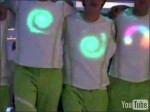
Light-emitting shirts
check out ths cool wearable display developed by Philips researchers. They are integrating LEDs into fabrics to obtain light-emitting clothes


15:34 Posted in Wearable & mobile | Permalink | Comments (0) | Tags: wearable
RFID Powder Developed By Hitachi

Hitachi researchers have developed a new micro-miniaturized radio frequency identification (RFID) chip that is 64 times smaller than their currently available 0.4 x 0.4 mm mu-chips.
At 5 microns thick, the RFID chips can more easily be embedded in sheets of paper, meaning they can be used in paper currency, gift certificates and identification
15:23 Posted in Pervasive computing | Permalink | Comments (0) | Tags: rfid, ambient intelligence
Virtual reality and biofeedback training for balance
Functional balance and dual-task reaction times in older adults are improved by virtual reality and biofeedback training.
Cyberpsychol Behav. 2007 Feb;10(1):16-23
Authors: Bisson E, Contant B, Sveistrup H, Lajoie Y
15:13 Posted in Cybertherapy | Permalink | Comments (0) | Tags: cybertherapy