




Oct 07, 2006
Spatial updating in virtual reality
Spatial updating in virtual reality: the sufficiency of visual information.
Psychol Res. 2006 Sep 23;
Authors: Riecke BE, Cunningham DW, Bülthoff HH
Robust and effortless spatial orientation critically relies on "automatic and obligatory spatial updating", a largely automatized and reflex-like process that transforms our mental egocentric representation of the immediate surroundings during ego-motions. A rapid pointing paradigm was used to assess automatic/obligatory spatial updating after visually displayed upright rotations with or without concomitant physical rotations using a motion platform. Visual stimuli displaying a natural, subject-known scene proved sufficient for enabling automatic and obligatory spatial updating, irrespective of concurrent physical motions. This challenges the prevailing notion that visual cues alone are insufficient for enabling such spatial updating of rotations, and that vestibular/proprioceptive cues are both required and sufficient. Displaying optic flow devoid of landmarks during the motion and pointing phase was insufficient for enabling automatic spatial updating, but could not be entirely ignored either. Interestingly, additional physical motion cues hardly improved performance, and were insufficient for affording automatic spatial updating. The results are discussed in the context of the mental transformation hypothesis and the sensorimotor interference hypothesis, which associates difficulties in imagined perspective switches to interference between the sensorimotor and cognitive (to-be-imagined) perspective.
17:44 Posted in Telepresence & virtual presence, Virtual worlds | Permalink | Comments (0) | Tags: virtual reality, presence
Gamescenes
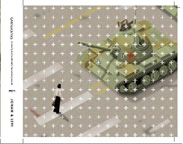
GameScenes. Art in the Age of Videogames is the first volume entirely dedicated to Game Art. Edited by Matteo Bittanti and Domenico Quaranta, GameScenes provides a detailed overview of the emerging field of Game Art, examining the complex interaction and intersection of art and videogames.
Video and computer game technologies have opened up new possibilities for artistic creation, distribution, and appreciation. In addition to projects that might conventionally be described as Internet Art, Digital Art or New Media Art, there is now a wide spectrum of work by practitioners that crosses the boundaries between various disciplines and practices. The common denominator is that all these practitioners use digital games as their tools or source of inspiration to make art. They are called Game Artists.
GameScenes explores the rapidly expanding world of Game Art in the works of over 30 international artists. Included are several milestones in this field, as well as some lesser known works. In addition to the editors' critical texts, the book contains contributions from a variety of international scholars that illustrate, explain, and contextualize the various artifacts.
M. Bittanti, D. Quaranta (editors), GameScenes. Art in the Age of Videogames, Milan, Johan & Levi 2006. Hardcover, 454 pages, 25 x 25 cm, 200+ hi-res illustrations, available from October 2006.
17:26 Posted in Cyberart | Permalink | Comments (0) | Tags: cyberart
Song and speech
Song and speech: brain regions involved with perception and covert production.
Neuroimage. 2006 Jul 1;31(3):1327-42
Authors: Callan DE, Tsytsarev V, Hanakawa T, Callan AM, Katsuhara M, Fukuyama H, Turner R
This 3-T fMRI study investigates brain regions similarly and differentially involved with listening and covert production of singing relative to speech. Given the greater use of auditory-motor self-monitoring and imagery with respect to consonance in singing, brain regions involved with these processes are predicted to be differentially active for singing more than for speech. The stimuli consisted of six Japanese songs. A block design was employed in which the tasks for the subject were to listen passively to singing of the song lyrics, passively listen to speaking of the song lyrics, covertly sing the song lyrics visually presented, covertly speak the song lyrics visually presented, and to rest. The conjunction of passive listening and covert production tasks used in this study allow for general neural processes underlying both perception and production to be discerned that are not exclusively a result of stimulus induced auditory processing nor to low level articulatory motor control. Brain regions involved with both perception and production for singing as well as speech were found to include the left planum temporale/superior temporal parietal region, as well as left and right premotor cortex, lateral aspect of the VI lobule of posterior cerebellum, anterior superior temporal gyrus, and planum polare. Greater activity for the singing over the speech condition for both the listening and covert production tasks was found in the right planum temporale. Greater activity in brain regions involved with consonance, orbitofrontal cortex (listening task), subcallosal cingulate (covert production task) were also present for singing over speech. The results are consistent with the PT mediating representational transformation across auditory and motor domains in response to consonance for singing over that of speech. Hemispheric laterality was assessed by paired t tests between active voxels in the contrast of interest relative to the left-right flipped contrast of interest calculated from images normalized to the left-right reflected template. Consistent with some hypotheses regarding hemispheric specialization, a pattern of differential laterality for speech over singing (both covert production and listening tasks) occurs in the left temporal lobe, whereas, singing over speech (listening task only) occurs in right temporal lobe.
17:18 Posted in Mental practice & mental simulation | Permalink | Comments (0) | Tags: mental practice