




Apr 25, 2006
Is technology changing our brains?
From Smart Mobs
Neuro-biologist Susan Greenfield asked this interesting question:
" In just a couple of decades, we have slipped away from a culture based essentially on words to one based essentially on images, or pictures. This is probably one of the great shifts in the story of modern humans but we take it almost for granted.There can be little doubt that the structures, never mind the surface form, of the English language are changing fast.
The process of traditional book-reading, which involves following an author through a series of interconnected steps in a logical fashion. We read other narratives and compare them, and so "build up a conceptual framework that enables us to evaluate further journeys... One might argue that this is the basis of education ... Traditional education, she says, enables us to "turn information into knowledge."
Put like that, it is obvious where her worries lie. The flickering up and flashing away again of multimedia images do not allow those connections , and therefore the context, to build up. ...
23:40 Posted in Persuasive technology | Permalink | Comments (0) | Tags: Positive Technology
Text messaging in psychotherapy
From Smart Mobs
Instant messaging, favored by chatting teens and office gossips, is a growing tool for therapists counseling people on everything from smoking cessation to sexual-abuse trauma, reports the Pioneer Press.
Proponents say the text-based conversations are appealing because they're fast and anonymous — users can log onto a number of online services and connect with therapists who know them only by screen names. But many in the mental-health community say the format is too impersonal for effective treatment and should be only an adjunct to face-to-face counseling.... Text messaging, critics say, doesn't allow therapists to pick up on important visual cues to a patient's true state of mind.
"What one gleans as a psychiatrist in a clinical assessment is not just from the words one says but from the emotions," says Paul Appelbaum, a psychiatry professor at Columbia University and past president of the American Psychiatric Association. He says doctors need to assess the way a person walks, sits, smiles or tears up.
23:38 Posted in Cybertherapy | Permalink | Comments (0) | Tags: Positive Technology
Toward brain correlates of natural behavior: fMRI during violent video games
Toward brain correlates of natural behavior: fMRI during violent video games.
Hum Brain Mapp. 2006 Apr 20;
Authors: Mathiak K, Weber R
Modern video games represent highly advanced virtual reality simulations and often contain virtual violence. In a significant amount of young males, playing video games is a quotidian activity, making it an almost natural behavior. Recordings of brain activation with functional magnetic resonance imaging (fMRI) during gameplay may reflect neuronal correlates of real-life behavior. We recorded 13 experienced gamers (18-26 years; average 14 hrs/week playing) while playing a violent first-person shooter game (a violent computer game played in self-perspective) by means of distortion and dephasing reduced fMRI (3 T; single-shot triple-echo echo-planar imaging [EPI]). Content analysis of the video and sound with 100 ms time resolution achieved relevant behavioral variables. These variables explained significant signal variance across large distributed networks. Occurrence of violent scenes revealed significant neuronal correlates in an event-related design. Activation of dorsal and deactivation of rostral anterior cingulate and amygdala characterized the mid-frontal pattern related to virtual violence. Statistics and effect sizes can be considered large at these areas. Optimized imaging strategies allowed for single-subject and for single-trial analysis with good image quality at basal brain structures. We propose that virtual environments can be used to study neuronal processes involved in semi-naturalistic behavior as determined by content analysis. Importantly, the activation pattern reflects brain-environment interactions rather than stimulus responses as observed in classical experimental designs. We relate our findings to the general discussion on social effects of playing first-person shooter games. Hum. Brain Mapping 2006. (c) 2006 Wiley-Liss, Inc.
23:35 Posted in Cybertherapy | Permalink | Comments (0) | Tags: Positive Technology
VRoot.org -: Neural Interfaces: Scientists Probe the Use of the Tongue

PENSACOLA, Fla. - In their quest to create the super warrior of the future, some military researchers aren't focusing on organs like muscles or hearts. They're looking at tongues. By routing signals from helmet-mounted cameras, sonar and other equipment through the tongue to the brain, they hope to give elite soldiers superhuman senses similar to owls, snakes and fish.
23:27 Posted in Neurotechnology & neuroinformatics | Permalink | Comments (0) | Tags: Positive Technology
Video introducing eyetracking
23:24 Posted in Research tools | Permalink | Comments (0) | Tags: Positive Technology
Transcranial direct current stimulation
From New Scientist
It sounds like quackery, but it's not. A growing body of evidence suggests that passing a small electric current through your head can have a profound effect on the way your brain works. Called transcranial direct current stimulation (tDCS), the technique has already been shown to boost verbal and motor skills and to improve learning and memory in healthy people - making fully-functioning brains work even better. It is also showing promise as a therapy to cure migraine ...
Read the full article
23:20 Posted in Research tools | Permalink | Comments (0) | Tags: Positive Technology
Neuroelectronics
Via Mind Hacks
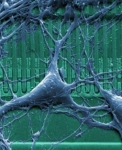
The New Atlantis has a comprehensive article on 'neuroelectronics' - the science of interfacing digital components with neural wetware. From the article:
The potential merging of mind and machine thrills, frightens, and intrigues us. For decades, experiments at the border between brains and electronics have led to sensationalistic media coverage, vivid science fiction portrayals, and dreams of cyborgs and bionic men. But recently, this area of science has seen remarkable advances—from robotic limbs controlled directly by brain activity, to brain implants that alter the mood of the depressed, to rats steered by remote control. Adam Keiper explores the peculiar history and present directions of this research, and considers the challenges of staying human in the age of neuroelectronics.
23:11 Posted in Neurotechnology & neuroinformatics | Permalink | Comments (0) | Tags: Positive Technology
Takeluma sonic alphabet

[pcho.net & pcho.net (avi, 13mb)]
23:02 Posted in Cyberart | Permalink | Comments (0) | Tags: Positive Technology
Games for Health Day
Davidson Executive Conference Center 3415 South Figueroa Street :: Los Angeles, California 90089
The Games for Health Project, Robert Wood Johnson Foundation, TATRC, and USC’s Annenberg School for Communication & Institute for Creative Technologies invite you to join us on May 9 for a full-day event devoted to the use of games and game technologies in health and healthcare, including an evening reception.
This one-day event, just before the opening of the Electronic Entertainment Expo will bring together researchers, game developers, and health & healthcare professionals for a series of talks devoted to how games and game technologies are addressing critical health & healthcare issues.
Talks will focus on:
• Health messaging using games
• Combat & emergency medicine
• Psychotherapy and Post Traumatic Stress Disorder
• Pain Distraction & Anxiety
• Cancer treatment
• Disease management
• Coping with family ailments
• Cognitive health
• Off-the-Shelf consumer health & exergaming titles
22:57 Posted in Positive Technology events | Permalink | Comments (0) | Tags: Positive Technology
Humanlike robots
Via the Presence Listserv
 Japan boasts the most advanced humanoid robots in the world, represented by Honda's Asimo and other bipedal machines. They are expected to eventually pitch in as the workforce shrinks amid the dwindling and aging population. But why build a robot with pigmented silicone skin, smooth gestures and even makeup? To Repliee's creator, Hiroshi Ishiguro, the answer is simple: "Android science."
Read the full story from Scientific American
22:45 Posted in AI & robotics | Permalink | Comments (0) | Tags: Positive Technology