




Apr 09, 2006
VRoot: OpenEyes
Via VRoot
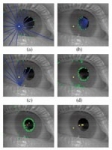 openEyes is an open-source open-hardware toolkit for low-cost real-time eye tracking.
Given the increasing demands for more intuitive computer interfaces, tracking the eye movements of users, which precisely indicates users’ attention states, provides researchers and usability experts with invaluable data. However, the high cost of eye-tracking hardware and the lack of available software that implements long-established eye-tracking methods prohibit many interface developers and researchers from accessing or utilizing critical eye-movement data. In response to the need for more widely accessible eye-tracking hardware and software, Derrick Parkhurst, assistant professor of psychology and associate director of VRAC, created the first open source toolkit for low-cost eye tracking, known as openEyes.
20:39 Posted in Research tools | Permalink | Comments (0) | Tags: Positive Technology
IEEE: Tangible Interaction in Collaborative Environments
26 June 2006 to 28 June 2006
International IEEE Workshop on Tangible Interaction in Collaborative Environments (TICE) at WETICE-2006
June 26 - June 28, 2006
The University of Manchester, Manchester, U.K.
Web site: http://wetice.co.umist.ac.uk/
OVERVIEW
--------
Motivated by these developments, we see this workshop as an opportunity for exploring the potentials and perspectives of tangible interaction for supporting collaborative work. Because of its interdisciplinary topic, TICE 2006 aims at bringing together researchers of various fields, including Human Computer Interaction, Tangible User Interfaces, Computer Supported Collaborative Work, Sociology, Communication Technologies, Embedded Systems and Ubiquitous Computing, to discuss key issues, approaches, open problems, innovative applications, and trends of tangible interaction in collaborative environments.
TOPICS
------
We welcome participants from all disciplines related to the topic of this workshop, including but not limited to Tangible User Interfaces, CSCW and Ubiquitous Computing environments. We invite original research papers and experience reports in all areas of collaborative methods and systems development. Additionally, position papers outlining novel research domains and approaches are welcome. Topics of interest include but are not limited to:
Interaction design of collaborative tangible environments
* Design process for embodied/tangible interaction
* Guidelines, methods and methodologies for collaborative interaction design
* Concepts and patterns for physical and tangible interaction
* Programming paradigms for building tangible environments
* New paradigms for collaborative environments
Technological aspects of tangible user interfaces
* Middleware, platforms and tools
* Architectural concepts for enhancing tangible interaction in groups
* Enabling technologies for instrumenting tangible artefacts
* Innovative technological solutions
Case studies and application scenarios
* Usability studies and evaluations of collaborative tangible environments
* Visions and application scenarios
* Security, privacy and trust in collaborative tangible environments
* Collaborative tangible interaction for mobile users
CO-CHAIRS
---------
Alois Ferscha
Department of Pervasive Computing
Johannes Kepler University Linz
Altenberger Straße 69
4040 Linz, Austria
Web: http://www.pervasive.jku.at/About_Us/Staff/Ferscha
20:33 Posted in Positive Technology events | Permalink | Comments (0) | Tags: Positive Technology
Road-crossing safety in virtual reality
Road-crossing safety in virtual reality: a comparison of adolescents with and without ADHD.
J Clin Child Adolesc Psychol. 2006 Jun;35(2):203-15
Authors: Clancy TA, Rucklidge JJ, Owen D
20:29 Posted in Virtual worlds | Permalink | Comments (0) | Tags: Positive Technology
Cognews: navigation skills used in robots
From Cognews
How does the ant, without maps and satellite naviation, make regular trips home without getting lost? Dr Markus Knaden, from the University of Zurich, reports that a visit back to the nest is essential for ants to reset their navigation equipment and avoid getting lost on foraging trips. "Knowledge about path integration and landmark learning gained from our experiments with ants has already been incorporated in autonomous robots. Including a 'reset' of the path integrator at a significant position could make the orientation of the robot even more reliable", says Dr Knaden who spoke on Tuesday 4th April at the Society for Experimental Biology's Main Annual Meeting in Canterbury, Kent. ...
20:24 Posted in AI & robotics | Permalink | Comments (0) | Tags: Positive Technology