




Mar 20, 2006
Synthetic character trains medical students
14:55 Posted in Telepresence & virtual presence | Permalink | Comments (0) | Tags: Positive Technology
Positive Psychology Award from John Templeton Foundation
Via the APA Monitor
The John Templeton Foundation seeks applications for the eighth annual Martin E.P. Seligman Award for Outstanding Dissertation Research in Positive Psychology. The prize awards $1,000 to a scholar who has completed a PhD dissertation in any area of positive psychology research and who plans to continue research in this area. Candidates must have completed their dissertation after March 30, 2003.
The award also includes travel to and one day’s lodging and expenses for the 2006 Positive Psychology Summit, Oct. 6–8, in Washington, D.C., where the award will be presented.
To apply, candidates should send six copies of both their curriculum vitae and a summary of their dissertation research. The summary—limited to no more than eight pages, including tables and figures, but excluding references—should contain:
• A description of the problem investigated.
• An explanation of the methods.
• A summary of the findings.
• A discussion of the significance of the findings in relation to positive psychology.
• An outline of how the work might be continued.
A selection committee, chaired by Kennon M. Sheldon, PhD, of the University of Missouri–Columbia, will determine three finalists by June 1. Finalists will then submit a copy of their completed dissertations for review.
Materials must be postmarked no later than April 15. Send them to Communications Department, John Templeton Foundation, 300 Conshohocken State Road, Suite 500, West Conshohocken, PA 19428.
11:12 Posted in Research institutions & funding opportunities | Permalink | Comments (0) | Tags: Positive Technology
WMMNA: Instant Feeling Messages
emosive is a service for mobile devices which allows capturing, storing and sharing of fleeting emotional experiences. Based on the Cognitive PrimingGo theory, as we become more immersed in digital media through our mobile devices, our personal media inventories constantly act as memory aids, "priming" us to better recollect associative, personal (episodic) memories when facing an external stimulus. Being mobile and in a dynamic environment, these recollections are moving, both emotionally and quickly away from us. emosive bundles text, sound and image animation to allow capturing these fleeting emotional experiences, then sharing and reliving them with cared others. emosive proposes a new format of instant messages, dubbed IFM – Instant Feeling Messages.
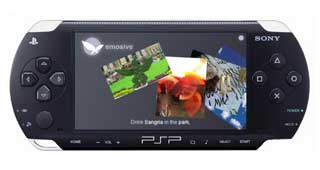
Have a look at the demo, it's a Flash application developed using FlickrFling and live data.
User scenario
While walking in the park and listening to a verse from his and his girlfriend Tina’s favorite tune – Madonna’s Little Star (“Never forget how to dream, Butterfly”), Jake sees a butterfly on a flower. Primed by the romantic musical immersion, Jake notices the colors of the butterfly and immediately loads a memory of Tina’s same-colored summer dress. Jake quickly clicks the emosive shortcut key sequence on his device. He snaps a photo of the butterfly and tags the image as "Butterfly". As Jack walks around the city, he captures other fleeting moments, making sure they are tagged to correspond with lyric words. He even adds some tagged images from his Flickr account. He then "wraps" everything as an IFM, previews it and sends it to Tina. When Tina accepts the IFM, it will stream to her phone and synchronize the tune and the images, based on the tagged lyric words. The stored IFM can also be viewed effectively as an emosive experience from any web-enabled browser.
The emosive (formerly e:sense) project was developed by the design team of the Designs Which Create Design workshop, held at the University Institute of Architecture of Venice (IUAV) 2006.
11:00 Posted in Emotional computing | Permalink | Comments (0) | Tags: Positive Technology
Branding the brain
via Sci-Con
Researchers from the University of Michigan and Harvard University have used fMRI to find out which brain areas are activated by specific qualities of brands and products. The study, forthcoming in the Journal of Consumer Research, is the first to use fMRI to assess consumer perceptions and has important implications for the use of metaphorical human-like traits in branding.
10:56 Posted in Persuasive technology | Permalink | Comments (0) | Tags: Positive Technology