




Jan 28, 2005
VR to treat PTSD
From Wired
SAN DIEGO -- While the real Iraq is more than enough for most people to handle, there's a virtual Iraq lurking on the laptop of psychologist Skip Rizzo, a research scientist at the University of Southern California.
With a push of a button, special effects will appear -- a mosque's call to prayer, a sandstorm, the sounds of bullets or bombs. "We can put a person in a VR headset and have them walk down the streets of Baghdad," Rizzo said. "They can ride in a Humvee, fly in a helicopter over a battle scene or drive on a desert road."
This is no video game, nor is it a training device. Rizzo and colleagues are developing a psychological tool to treat post-traumatic stress disorder, or PTSD, by bringing soldiers back to the scenes that still haunt them. A similar simulation is in the works for victims of the World Trade Center attacks.
PTSD treatment, the newest frontier in the intersection between virtual reality and mental health, is one of the hot topics this week at the 13th annual Medicine Meets Virtual Reality conference, which began Wednesday in Long Beach, California. Rizzo and others will explore plans to expand virtual reality's role in mental health by adding more elements like touch and the ability to interact with simulations. "The driving vision is a holodeck," Rizzo said. "If you look at the holodeck, and all the things people do in Star Trek, that's what we'd like to be able to do."
Powerful computers are cheaper -- the necessary machines used to cost as much as $175,000 but now the Virtual Reality Medical Center in San Diego, one of about 10 private VR mental-health clinics in the United States, picks up its hardware at Fry's Electronics. VR helmets -- which allow users to turn their heads and see things above, below and behind them in the 360-degree virtual world -- cost as little as a few thousand dollars. And perhaps most importantly, the graphics are more advanced, thanks to partnerships with video-game developers.
At the San Diego clinic, graphics designers are developing a remarkably realistic virtual world based on digital photos and audio from San Diego International Airport. Patients afraid of flying will be able to take a virtual tour of the airport, from the drop-off area through the ticket counter, metal detectors and waiting areas. The simulation is so precise that users can enter restrooms, peruse magazines at the newsstand or wander around the food court; recordings will allow the virtual PA system to offer the requisite incomprehensible announcements.
The clinic already offers a simulation of a flight. At $120 a session, patients sit in actual airplane seats and watch a simulation of a takeoff, accurate all the way down to announcements by flight attendants and pilots. At takeoff, actual airplane audio -- engines revving, landing gear retracting -- is channeled into subwoofers below the seat, providing a dead-on simulation of what a passenger feels. Even the view outside the window is based on actual digital video from a flight.
"Exposure therapy" has long been a common treatment for phobias. "It's a gradual reversal of avoidance," said psychologist Hunter Hoffman, a researcher who studies VR at the University of Washington. "You start by having them hold their ground. A lot of phobics have mental misunderstandings about what would happen if they face the thing they're afraid of. A spider phobic, they may think they're going to have a heart attack -- they think if they don't leave the room, they'll go insane. They have these unrealistic theories about what will happen."
With a push of a button, special effects will appear -- a mosque's call to prayer, a sandstorm, the sounds of bullets or bombs. "We can put a person in a VR headset and have them walk down the streets of Baghdad," Rizzo said. "They can ride in a Humvee, fly in a helicopter over a battle scene or drive on a desert road."
This is no video game, nor is it a training device. Rizzo and colleagues are developing a psychological tool to treat post-traumatic stress disorder, or PTSD, by bringing soldiers back to the scenes that still haunt them. A similar simulation is in the works for victims of the World Trade Center attacks.
PTSD treatment, the newest frontier in the intersection between virtual reality and mental health, is one of the hot topics this week at the 13th annual Medicine Meets Virtual Reality conference, which began Wednesday in Long Beach, California. Rizzo and others will explore plans to expand virtual reality's role in mental health by adding more elements like touch and the ability to interact with simulations. "The driving vision is a holodeck," Rizzo said. "If you look at the holodeck, and all the things people do in Star Trek, that's what we'd like to be able to do."
Powerful computers are cheaper -- the necessary machines used to cost as much as $175,000 but now the Virtual Reality Medical Center in San Diego, one of about 10 private VR mental-health clinics in the United States, picks up its hardware at Fry's Electronics. VR helmets -- which allow users to turn their heads and see things above, below and behind them in the 360-degree virtual world -- cost as little as a few thousand dollars. And perhaps most importantly, the graphics are more advanced, thanks to partnerships with video-game developers.
At the San Diego clinic, graphics designers are developing a remarkably realistic virtual world based on digital photos and audio from San Diego International Airport. Patients afraid of flying will be able to take a virtual tour of the airport, from the drop-off area through the ticket counter, metal detectors and waiting areas. The simulation is so precise that users can enter restrooms, peruse magazines at the newsstand or wander around the food court; recordings will allow the virtual PA system to offer the requisite incomprehensible announcements.
The clinic already offers a simulation of a flight. At $120 a session, patients sit in actual airplane seats and watch a simulation of a takeoff, accurate all the way down to announcements by flight attendants and pilots. At takeoff, actual airplane audio -- engines revving, landing gear retracting -- is channeled into subwoofers below the seat, providing a dead-on simulation of what a passenger feels. Even the view outside the window is based on actual digital video from a flight.
"Exposure therapy" has long been a common treatment for phobias. "It's a gradual reversal of avoidance," said psychologist Hunter Hoffman, a researcher who studies VR at the University of Washington. "You start by having them hold their ground. A lot of phobics have mental misunderstandings about what would happen if they face the thing they're afraid of. A spider phobic, they may think they're going to have a heart attack -- they think if they don't leave the room, they'll go insane. They have these unrealistic theories about what will happen."
17:25 Posted in Cybertherapy | Permalink | Comments (0) | Tags: Positive Technology, virtual reality, cybertherapy
Jan 26, 2005
Second-generation VR headset
FROM THE PRESENCE-L LISTSERV:
From The East Valley (Arizona) Tribune
Tempe company has vision of future
By Ed Taylor, Tribune
Vincent F. Sollitto Jr. can’t be accused of lacking vision. The president and chief executive officer of Brillian Corp., a Tempe- based developer of high-definition televisions, sees a world in which millions of kids will play video games with sleek headsets that immerse them in a virtual reality world of their choosing — displaying bright, full-color, three-dimensional, high resolution scenes.
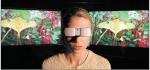
Best of all, the wireless headsets can be taken just about anywhere.
"This has medical and military applications, but gaming is the big market," Sollitto said. "Some day we’ll be producing millions of units a month. The kids are the real target."
Such technology is already here, but Brillian is trying to expand the market with an improved second-generation headset.
Brillian displayed a second generation prototype head-mounted display for video applications at the Consumer Electronics Show earlier this month in Las Vegas. The company is looking for partners that want to use the Brillian developed technology to bring their own head-mounted displays to the consumer market.
Already the company’s near-to-eye display technology is being used in headsets sold by i-O Display Systems and Shimadzu Corp.
The new second-generation version is intended to be leased to original equipment manufacturers that would put their own brand name on the product and bring it to the market quickly without having to design all of the technology pieces themselves, said Rainer Kuhn, vice president of sales and product marketing.
The headsets can plug into television sets, computers, DVD players, portable video recorders or game consoles. Another possibility is attaching them to mobile phones that can receive streaming video, providing an alternative to the tiny viewing screens on most cell phones. Miniature earphones can be attached to the headsets to provide audio.
The headset runs on a battery that provides 2 1 /2 to three hours of viewing. When combined with a player that also runs on batteries, consumers can take their programs wherever they want.
"Imagine sitting on an airplane and watching a movie privately at your seat," said Hope Frank, Brillian’s vice president of marketing.
The device demonstrated at the electronics show displays text, graphics, full motion video and 3-D content. The picture is equivalent to viewing a 42-inch diagonal television set from about
6 feet away, the company said.
Brillian makes the tiny microdisplay chips that go inside the headset at its Tempe headquarters, 1600 N. Desert Drive. The company also designed the electronics and optics for the system but outsources the manufacturing.
The design of the headsets will be key to making the product commercially successful, Frank said. The company has partnered with Ideo, an industrial design firm based in Palo Alto, Calif., to help.
"It’s not just the picture inside. It has to have the right weight and form factor," she said.
The prototype weighs about 4 ounces, making it lighter than displays currently on the market. Also it can fit over eyeglasses and has an adjustable headband for a comfortable fit.
"We think it’s not if, but when the market will take off with this,"
said Kuhn, adding that the second-generation technology could be available to consumers by the end of this year.
14:30 | Permalink | Comments (0)