




Oct 26, 2005
Deliver PubMed search results with an RSS feed

To add PubMed searches to your collection of RSS feeds, just follow these steps:
| (1) Run your search in PubMed. | |
| (2) Select RSS Feed from the Send to menu. | |
| (3) Click Create Feed and copy the XML icon into your RSS Reader. |
18:30 Posted in Research tools | Permalink | Comments (0) | Tags: Positive Technology, research tools
Gulliver's Box
Gulliver's Box, developed by Mixed Reality Lab, the Human Interface Lab of Osaka, the Ars Electronica Futurelab and Zaxel, is a mixed reality theatrical application which allows users to modify characters and give specific features to them. The environment can be revised and customized according to the desires of the users each time. In dealing with the individual interfaces, players are introduced into mixed reality environments on different levels of interaction.
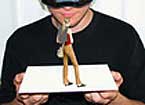
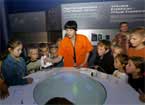
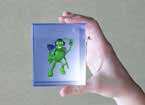
Gulliver's Box has won a mention at the World Summit Award
17:00 Posted in Augmented/mixed reality | Permalink | Comments (0) | Tags: Positive Technology, Augmented/mixed reality
Theta brainwave triggered training boosts old brains
It has long been known that hippocampus is involved in the learning process. A study published on the Proceedings of the National Academy of Science (USA) has shown that theta brainwave triggered training can enhance learning rate in old rabbits, contrasting the deficit determined by the aging process. This study could have important implications in the development of nonpharmacological treatments for age-related memory deficits.

Nonpharmacological amelioration of age-related learning deficits: The impact of hippocampal  -triggered training
 rhythm, is known to enhance hippocampal plasticity and accelerate learning rate in young subjects, suggesting that manipulations of activity might be used as a means to counteract impairments related to the aging process. Here, young and older rabbits were given eyeblink conditioning trials either when exhibiting hippocampal (+) or regardless of hippocampal activity (yoked control). Although, as expected, older-yoked control animals showed a learning deficit, the older + group learned as fast as young controls, demonstrating that aging deficits, at least in eyeblink classical conditioning, can be overcome by giving trials during episodes of hippocampal activity. The use of several learning criteria showed that the benefits of hippocampal -triggered training in both age groups during the early phase of acquisition, the enhancement persisted in older animals, peaking during later performance. These findings have implications for theories of age-related memory deficits and may contribute to the development of beneficial treatments. depend on different cognitive or motor processes. Whereas there was a benefit of
16:35 Posted in Mental practice & mental simulation | Permalink | Comments (0) | Tags: Positive Technology, mental practice, motor imagery
Technological innovations in clinical assessment and psychotherapy
Psychother Psychosom. 2005;74(6):336-43
Authors: Emmelkamp PM
In this paper the application of computer technology and the use of the Internet in mental health care are critically reviewed. A number of on-line screening devices have been developed for anxiety disorders, mood disorders, and substance abuse disorders, with great potential for clinical practice. On line assessment is generally equivalent to clinical assessment. A number of studies have shown that self-help treatment programmes on stand-alone computers are as effective as routine clinical care. The Internet enhances the therapeutic possibilities of computers by offering feedback of therapists and more tailor-made treatment. A number of randomized clinical trials (RCTs) have shown that Internet-based treatment is more effective than no-treatment and as effective as face-to-face treatment. Research so far has been limited to anxiety disorders, burn-out, depression, headache, insomnia, tinnitus and obesity. Further, exposure through virtual reality has been found effective in a number of RCTs in specific phobias, but results with respect to the effects of the use of virtual reality techniques to other disorders are inconclusive. It is concluded that computer-driven assessment and treatment has many advantages and few disadvantages. A number of reasons are discussed which will preclude large-scale implementation of computer-driven assessment and therapy in the near future.
PMID: 16244509 [PubMed - in process]
16:05 Posted in Cybertherapy | Permalink | Comments (0) | Tags: Positive Technology, virtual reality, cybertherapy
Visual Art & the Brain Conference
Via BrainBlog
The conference Visual Art & the Brain: At the Interface of Art and Science will be held at the City University of New York (CUNY) November 5, 2005. The goal of the conference is to explore the link between science and art.

This conference will explore the nature of the science-art interface, the inspiration this interface provides to scientists and artists alike, and the impact of such interactions on areas of research and other human endeavors. The morning session will explore scientific perspectives: What is vision? How do we perceive art and why do we respond to it emotionally? The afternoon session will focus on the interface of art and science, and will feature discussions with artists and scientists on communicating the beauty and power of science as well as its social and ethical implications. This event is suitable for scientists interested in art, and artists interested in science.
For more information, visit the conference web site
15:47 Posted in Positive Technology events | Permalink | Comments (0) | Tags: Positive Technology