



Feb 10, 2005
Cyberart Festival
The Boston Cyberarts Festival is an international biennial festival of art and technology in all media. The next Festival will take place April 22 through May 8, 2005. It will include visual and performing arts and explore how artists throughout the world are using computers to advance traditional artistic disciplines and create new interactive worlds.
The 2005 Festival will also feature two conferences during the opening weekend: eMerging Arts and Technologies, for artists and high-tech company professionals; and Ideas in Motion, focused on innovations in dance, movement, and technology.
13:46 Posted in Cyberart | Permalink | Comments (0)
Speaking with objects
The art and soul of a new machine
by Missy Sullivan, Forbes Magazine, 09.20.99
Did you ever notice how a chicken wishbone, turned upside down, looks remarkably like a bowlegged cowboy in chaps? Ever imagine a cloud gliding down from the sky bearing gifts? C'mon, admit it. In some idiotic moment of utter boredom you have fantasized about blowing something up.
For most people, these are idle thoughts. But reveries like these are what inspired sculptor, inventor and award-winning toy designer Arthur Ganson, 44, to create his wondrous machines.
He had that wishbone epiphany. It's embodied in a clattering contraption of wires, gears and pulleys that makes a chicken wishbone swagger like a miniature John Wayne. The cloud fantasy? On their first anniversary his wife looked up to see a tray of chocolate and sake descending on a mechanical cloud that he was diligently lowering from the ceiling.

You can see the outcome of Ganson's big-kaboom dream for yourself on your next trip to Boston. Just head over to his exhibition at the Massachusetts Institute of Technology Museum--he's an artist-in-residence at the school--where a wildly popular machine repeatedly blows up and reconfigures a miniature yellow chair.
These are just a few of the fantastical creations from Ganson's studio outside of Boston. Frank Maresca, co-owner of the Ricco/Maresca Gallery in New York (where a Ganson sculpture goes for between $15,000 and $60,000), describes the studio as a cross between Santa's workshop and mission control for the moon launch.

This helps explain why Ganson has something of a cult following among local college students, some of whom return to the MIT exhibit 40 to 50 times. A comment in the visitors book from an even younger fan: "You're either a psycho or a genius, or both. Either way, you rule!"
But Ganson's machines are a lot more than just clever gadgets. The art part comes in the way his mechanical gestures so intuitively and eloquently convey human feelings. Wriggling inchworms, mincing feather dusters, Kabuki-dancing miniature plastic swords. Ganson's work celebrates life with a sense of wonderment and humor that's all too rare in the self-important world of contemporary art.
You can see it in the reactions to Ganson's work up at MIT. Eyes widen in front of torn-paper "wings" fluttering poignantly atop a forest of thin wire poles. And people actually blush before the machine that erotically spurts grease on itself.
One recent work, "Machine with Artichoke Petal," stands a dried-up little leaf atop a wheel, its curled tip perfectly evoking a dejected head. Set the wheel in motion and the schlumpy little guy starts trudging slowly along like Willy Loman after a bad sales day.
"It's astounding to me that someone can make a machine with such nuanced and complex emotional resonances," says Nicholas Capasso, curator of Ganson's first one-person museum show in 1993 at the DeCordova Museum & Sculpture Park in Lincoln, Mass. "Anyone can make a machine that waves, but only Arthur can make a machine that waves good-bye. There's a big difference."
About the artist
Arthur Ganson has been making kinetic sculpture for 27 years, having received a BFA from the University of New Hampshire in 1978. He has exhibited his machines in galleries and museums in the United States and Europe. A former artist-in-residence at the Massachusetts Institute of Technology, he maintains an ongoing exhibition of sculpture at the MIT Museum in Cambridge. Recently he appeared as a cartoon bear on the animated children's series "Arthur," and his friends say the likeness is remarkable. Ganson is the inventor of the award-winning children's toy Toobers and Zots. He lives and works near Boston. More work may be seen at his Web site, www.arthurganson.com.
13:38 Posted in Cyberart | Permalink | Comments (0)
Brain-imaging study on action observation and acquired motor skills
Earlier studies with monkeys revealed that brain cells called “mirror neurons” respond both when we do something, like pick up an object, and when we simply watch someone else do it. It was known that these neurons fire when we perform an action, but it was unexpected that the same cells also fired when we only saw that action being performed. This new study by Calvo-Merino and coll., recently published on the journal “Cerebral Cortex”, goes a step further by showing that such a system operates differently depending on what a person is physically expert at doing.
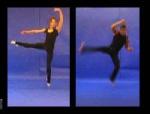
According to the authors of the experiment, this is the first proof that our personal motor repertoire - the things that we have learned to do - changes the way that our brain responds when we see the movement. In particular, these findings suggest that once the brain has learned a skill, it may simulate the skill without even moving, through simple observation: an injured dancer might be able to maintain his skill despite being temporarily unable to move, simply by watching others dance.
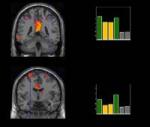
These results provide further support to the I-Learning Project clinical rationale, and justify the use of I-Learning technology to better rehabilitate people whose motor skills were damaged by stroke.
Reference: B. Calvo-Merino, D.E. Glaser, J. Grezes, R.E. Passingham and P. Haggard, Action Observation and Acquired Motor Skills: An fMRI Study with Expert Dancers, Cerebral Cortex, Dec. 2004
13:20 Posted in Mental practice & mental simulation | Permalink | Comments (0) | Tags: mental practice, motor imagery